"Support Funds and Tax Benefits Should Be Expanded If SMEs Hire More Young and Older Workers"
SME Sector Holds Workforce Forum
1.48 Million Workers Subject to Retirement Age Extension
Need for Policies to Expand Intergenerational Employment
As discussions on extending the retirement age gather momentum, suggestions have emerged that policy support and tax incentives enabling small and medium-sized enterprises (SMEs) to expand employment opportunities for both young and older workers should be increased. Proposals have included expanding subsidies for continued employment of older workers, as well as introducing policies such as tax credits or allowances for wage increases for SMEs that expand their workforce with both young and elderly employees.

The Korean Society for Small and Medium Business Policy, jointly with the Korea Federation of SMEs and the Korea Institute for Small and Medium Business, held the "SME Workforce Forum" on the 11th at the Korea Federation of SMEs headquarters in Yeouido, Seoul, under the theme "Measures to Revitalize Employment for Intergenerational Coexistence in SMEs in Response to Retirement Age Extension." Korea Federation of SMEs
View original imageThe Korean Society for Small and Medium Business Policy, together with the Korea Federation of SMEs and the Korea Institute for Small and Medium Business, held a Small and Medium Business Workforce Forum on August 11 at the Korea Federation of SMEs in Yeouido, Seoul, under the theme "Measures to Activate Employment for Generational Coexistence in Small and Medium Enterprises in Response to Retirement Age Extension."
Roh Minseon, director at the Korea Institute for Small and Medium Business, delivered a presentation titled "Strategies to Promote Intergenerational Employment in SMEs: For Young and Senior Workers." According to Director Roh’s analysis of raw data from the Ministry of Data and Statistics, the number of people aged 55–59 who will be subject to the extended retirement age over the next five years is estimated at 1,767,000. Of these, 1,483,000 are regular employees in SMEs, and among them, about 855,000 are estimated to be working at companies that operate retirement-age schemes. By company size, the operation rate of retirement-age schemes declines as the number of employees decreases: ▲ 13.2% for companies with 1–4 employees ▲ 30.5% for 5–9 employees ▲ 55.5% for 10–29 employees ▲ 79.1% for 30–99 employees.
In particular, compared to the high rates in finance and insurance (79.0%) and health and social welfare (35.8%), the prevalence of retirement-age schemes was much lower in wholesale and retail (17.0%), construction (12.1%), and accommodation and food service (8.8%). Among SMEs, 90.1% operate a unified retirement-age system, while only 5.1% have rank-based retirement ages and 3.9% have occupation-based systems. By industry, the proportion of companies operating a unified retirement-age system is highest in manufacturing (97.8%), followed by service industries (87.9%).
The proportion of companies with a reemployment system after retirement is increasing every year. In SMEs, the share rose from 23.9% in 2020 to 40.4% last year. Among large corporations it increased from 43.3% to 59.2% over the same period. Meanwhile, the proportion of SMEs operating a wage peak system decreased from 22.2% in 2020 to 16.3% last year, and for large enterprises, from 51.7% to 46.4%.
Currently, the statutory retirement age is 60, but the national pension is only available from age 65. To reduce income gaps and address demographic changes, lawmakers are discussing a gradual extension of the retirement age. Proposals submitted to the National Assembly include raising the retirement age by one year every 2–3 years, or applying different extension timings by company size.
Director Roh suggested the need for policies that encourage SMEs to hire both young and senior generations evenly. One proposal is to increase the monthly subsidy for continued employment of older workers from the current 300,000 won to 500,000 won per person, and to extend the support period from three to five years. It was also proposed to expand tax incentives for companies that hire both young and older workers. This includes providing a deduction of 1 million won per each matched pair for companies that increase their regular workforce by hiring employees aged 15–34 and 60 and over, as well as raising the earned income tax credit rate to 25% if the average wage for young workers rises above a certain threshold.
Director Roh stated, "Mutual cooperation between generations is essential for an effective extension of the retirement age. It is necessary to provide tax support for SMEs that increase their workforce of both young and elderly employees and raise young employees’ wages, to support generation-convergent startups with participation from both, and to provide payroll subsidies when foreign workers are replaced by senior domestic employees."
Oh Kiwoong, Standing Vice Chairman of the Korea Federation of SMEs, said, "For SMEs that have long struggled with labor shortages, securing skilled talent directly translates to competitiveness, so companies are already voluntarily retaining needed workers after retirement. While the current practice of continued employment should be respected, this must be backed up by flexible institutional design and financial and tax support tailored to each company’s circumstances."
It was also pointed out that effective employment policies are required for SMEs, since experienced workers can continue to contribute their skills while providing youth with valuable job and growth opportunities.
Cho Joohyun, president of the Korea Institute for Small and Medium Business, emphasized, "The key issue in the retirement-age debate is not simply how many years to extend it, but rather how to design policies that reflect the complex realities of SMEs, with their diverse company sizes, industries, and workforce structures. Creating an employment structure where generations work and grow together will form the foundation for sustainable growth and competitiveness in SMEs."
Hot Picks Today
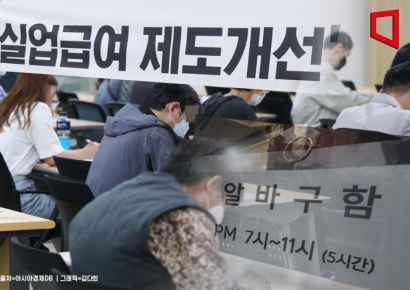 "Let's Give Unemployment Benefits to Those Who Find Jobs Quickly and Stay Long-Term"... Petition Takes Aim at Compensation for 'Voluntary Resignations'
- "How Much Can You Buy for 20,000 Won?" Bustling... Millennials and Gen Z Flock to an 'Unexpected Shopping Hotspot' [China.zip]
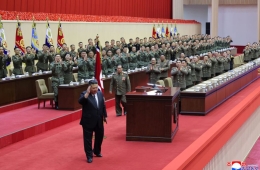
- "Same facial mole and gait?" ... Kim Jong Un appears in a show of defiance, rendering death rumors moot
- Man in His 30s Who Worked at Fiancée's Restaurant Rapes and Robs Her in a Fit of Anger... 'Prison Sentence Suspended'
- "Shares Hit Daily Limit on 56 Billion Won News"... Marubeni Launches Tender Offer for K-Beauty Firm of 'Chae Sira's Husband' Kim Taewook
Kang Myungsoo, president of the Korean Society for Small and Medium Business Policy, commented, "As discussions on retirement-age extension accelerate, our society is facing a new turning point. At the SME front lines, we confront a triple challenge: an increasing proportion of senior workers, difficulties in hiring young talent, and loss of skilled workers. I hope that these intergenerational employment initiatives will serve as practical policy foundations, not only accommodating institutional changes like retirement-age extension, but also driving a fundamental paradigm shift in the labor market—one where young and old work and grow together."
© The Asia Business Daily. All rights reserved. Unauthorized AI training and use prohibited.