Strong El Nino Approaching... 10 Asia-Pacific Meteorological Agencies Unite in Busan to Tackle Climate Crisis
APEC Climate Center Holds Virtual Working Group Meeting for 2026
With a strong El Nino forecasted, meteorological agencies across the Asia-Pacific region have joined forces to address abnormal climate conditions.
As the potential for regional climate disasters such as heatwaves, heavy rainfall, floods, and droughts increases, the goal is to share accurate climate forecast information and enhance their capacity to respond.
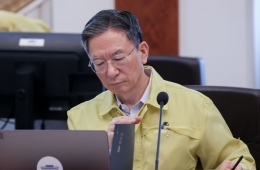
The APEC Climate Center (APCC, Acting President Kim Hyungjin) announced on the 11th that it held the "2026 APCC Working Group Meeting" via video conference on the 6th with climate prediction practitioners from the meteorological agencies of APEC member economies, and discussed the current status of El Nino and ways to strengthen climate prediction services.
The meeting was attended by climate forecasting and services working group members from the meteorological agencies of 10 APEC member economies: Australia, Canada, Japan, Korea, Malaysia, Taiwan, Thailand, Papua New Guinea, the Philippines, and Vietnam. Officials from APCC, including Acting President Kim Hyungjin, also attended and led the meeting.
Recently, abnormal climate phenomena have been occurring worldwide due to climate change, and climate variability associated with El Nino is also increasing. This year in Korea, the highest temperature in meteorological observation history, 42.5°C, was recorded, while heatwaves and large-scale wildfires have continued across regions in Europe and Asia.
The World Meteorological Organization (WMO) projected that a strong El Nino will develop, with sea surface temperatures expected to be at least 2.9°C higher than normal between August and October 2026. When El Nino occurs, some regions are likely to experience heavy rainfall and floods, while other areas such as India and Australia may suffer from droughts and substantial agricultural damage.
El Nino refers to the phenomenon of abnormally high sea surface temperatures in the tropical Pacific. Changes in ocean temperature shift atmospheric flow, potentially causing abnormal climate events worldwide such as heatwaves, heavy rainfall, and droughts. For this reason, it is crucial to secure reliable climate prediction information before abnormal climates occur.
APCC produces and analyzes climate prediction information related to ENSO—including El Nino and La Nina—on a monthly basis by employing a multi-model ensemble technique that synthesizes results from various global climate prediction models. This information is provided to APEC member economies and used to aid national climate response efforts.
During the meeting, practitioners from APEC member meteorological agencies shared updates on APCC's latest advances in climate prediction technology. They also reviewed outlooks for El Nino by region and discussed examples of how the climate prediction information provided monthly by APCC is utilized in practical field applications.
Other key topics included approaches to customizing climate information services according to the climate environments and needs of each member economy, as well as ways to deepen inter-member cooperation.
Kim Hyungjin, Acting President of APCC, pointed out, "Due to climate change and a powerful El Nino, abnormal climate events threatening lives and safety in the Asia-Pacific region are becoming more frequent."
He emphasized, "The APEC Climate Center will actively incorporate the needs and feedback of meteorological practitioners from member economies to provide clear and highly reliable information on El Nino and climate predictions each month, thereby further enhancing abnormal climate monitoring and response capabilities."
Hot Picks Today
 "30,000 Won in Korea, 70,000 Won in Japan"—Koreans Fill Suitcases as Illegal Direct Purchases Soar
- "Never Experienced This in My Aviation Career": Crew Shocked as Stranger Unexpectedly Enters First-Class Suite
- In Korea, It's a Beloved Side Dish... But Miami Spends $4.1 Million to Remove 9,000 Tons from Its Beaches
- "Cash Bundles on the Streets?"... First to Grab Keeps It as Cash Treasure Hunt Craze Takes Off
- Homeless Man with Necrotic Leg Refusing Help Opens Up to Police After Two Months of Consistent Visits
The APCC Working Group consists of meteorological practitioners from APEC member economies who actually use the climate information services provided by APCC. APCC holds annual regular meetings to collect feedback on service satisfaction and suggestions for improvement and applies this feedback to advance its climate prediction technology and information services.

© The Asia Business Daily. All rights reserved. Unauthorized AI training and use prohibited.