"Now Is the Time to Re-enter": U.S. Analysts Pick SK hynix... Target Price Set at 2.6 Million Won
HBM Market Share at 56%: Running Far Ahead, Undervalued vs. Competitors
"Correction Eases Overconcentration, Tactical Re-entry Opportunity"
Morgan Stanley Maintains Target Price at 2.6 Million Won
As the artificial intelligence (AI) memory cycle reshapes the global landscape of semiconductor investment, a recent analysis by a U.S. financial media outlet suggests that the recent price correction for SK hynix is actually providing a buy-the-dip opportunity. While Micron Technology and SanDisk have emerged as leading beneficiaries of the AI memory boom, the report argues that SK hynix offers greater investment appeal thanks to its overwhelming competitiveness in the high bandwidth memory (HBM) market and its relatively lower valuation.

On the 10th, employees are working in the dealing room of Hana Bank in Jung-gu, Seoul. Photo by Yonhap News Agency
View original imageSpecifically, the media outlet attributed the stock correction for SK hynix—despite a record-high quarterly performance—not to any weakening of the company's fundamentals, but rather to excessively heightened market expectations and widespread profit-taking in tech stocks.
The Motley Fool: "SK hynix Over Micron and SanDisk"
On August 10, The Motley Fool published an article titled "Not Micron or SanDisk—The Best AI Memory Stock Is This Korean Company," spotlighting SK hynix as the most noteworthy investment candidate in the AI memory sector.
Recently, as the construction and expansion of AI data centers accelerates, investor interest in the memory semiconductor sector has surged. Micron and SanDisk have risen as major beneficiaries, riding the expectation of booming demand for high-performance memory for AI data centers. According to The Motley Fool, Micron's stock price is up about 212% this year, and SanDisk is up 439%.
Nevertheless, The Motley Fool assessed that there could be a stronger investment case for SK hynix. It argued that the recent decline in the company's share price was not the result of deteriorating business competitiveness or financial outlook, but rather a combination of overheated market expectations and broad-based selling across tech stocks.

Employees are leaving work at the SK hynix headquarters in Icheon, Gyeonggi Province.
View original imageIn fact, in its Q2 2026 earnings report released on July 29, SK hynix posted sales of 79.3187 trillion won, an operating profit of 60.5426 trillion won, and an operating profit margin of 76%, marking the company's highest-ever quarterly results. The share price drop despite these record-breaking earnings suggests that recent corrections were driven primarily by market sentiment rather than fundamentals.
The Motley Fool saw this price correction as a buy-the-dip opportunity. The reasoning: With investments in AI infrastructure driving structurally higher demand for high-performance memory, SK hynix's core competitiveness remains intact.
Controlling 56.4% of HBM Market...A Key Link in the AI Memory Supply Chain
SK hynix's dominance in the HBM market is highlighted as its strongest investment point. Citing research from IDC, The Motley Fool noted that SK hynix captured a 56.4% share of the HBM market in Q1 2026—far ahead of competitors. HBM is a key component in the AI semiconductor ecosystem, serving as the high-performance memory essential for AI accelerators handling vast datasets.
As investments in AI data centers continue to grow, the corresponding demand for HBM is likely to increase, making SK hynix's high market share not just a testament to current performance, but also a foundation for future growth.
The Motley Fool further assessed that SK hynix is competitive in both DRAM and NAND flash. Based on revenue from DRAM and NAND flash, SK hynix ranks second globally after Samsung Electronics. The firm argues that as AI infrastructure expands, the demand structure of the entire memory industry could fundamentally shift toward high-performance memory.
In the past, the memory semiconductor industry was viewed as a classic cyclical sector plagued by supply gluts and falling prices. However, since the advent of generative AI, high-performance memory such as HBM has become a core component of AI data centers—transforming the very nature of demand. The Motley Fool highlighted the potential for this structural change to lead to a long-term growth cycle for the memory segment.
Forward PER 5.5x..."Correction Is an Opportunity"
Valuation was also cited as a factor enhancing the investment appeal of SK hynix. According to The Motley Fool, SK hynix's forward price-to-earnings ratio (PER) is about 5.5. This not only trails SanDisk's 5.9 but is significantly lower than Micron's roughly 12, showing a large valuation gap.

Taking into account the growth prospects for the AI memory market and SK hynix's dominant position in the HBM space, The Motley Fool believes the company is presently undervalued. In particular, the stock’s correction following record-breaking earnings suggests a disconnect between current share price trends and the company’s actual business performance and competitiveness.
The expansion of long-term customer contracts was also viewed positively. With ongoing investments in AI infrastructure structurally boosting demand for high-performance memory, SK hynix could leverage long-term supply contracts to secure greater demand visibility and translate an extended memory supercycle into sustained earnings growth.
Morgan Stanley: "Time to Re-enter Memory Stocks"...Price Growth Deceleration a Variable
A similar analysis was recently offered by Morgan Stanley. In its Asian tech stock report released on August 6, Morgan Stanley stated, "The steepest part of the memory sector correction looks to be behind us," and noted that current valuations provide a tactically attractive re-entry point. The firm interpreted the sharp drops in memory stocks as corrections within a cyclical business, not the onset of a sector downturn.
Morgan Stanley identified share buybacks, other shareholder return programs, and increased AI-related capital expenditures as factors that could drive semiconductor stock prices higher in the future. The firm maintained its target price for SK hynix at 2.6 million won and for Samsung Electronics at 375,000 won.
Hot Picks Today
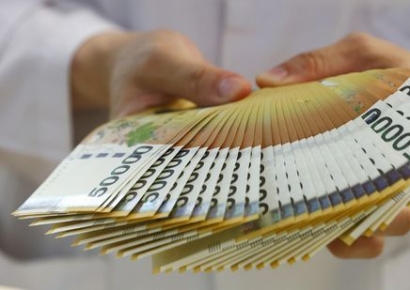 "I’m Withdrawing All My Stocks for the Bank"... Chuseok Spurs Surge in Installment Savings With Up to 13.5% Yields
- Why This Summer? "A Completely Different Strain Emerges" - Norovirus Infections Surge 70-Fold with New Mutation
- [Breaking] Government Practically Confirms Zelensky's Statement on North Korean Prisoners of War Sent to South Korea
- "I Worked Hard Throughout Chuseok"...Why Office Workers Are Quitting in Droves Right After the Holidays
- "Is It Happening Again?" "This Time It's Different"... Millennials and Gen Z Fall for Rice Cakes in a Colorful Comeback [The Way We Buy Now]
However, optimism is not universal. Morgan Stanley also cautioned that from Q4 onward, rising inventory and supply could slow memory price gains, meaning there may be less room for earnings projections to be revised upward. Last month, the firm also warned of a possible short-term correction due to excessive capital flowing into memory-related stocks.
© The Asia Business Daily. All rights reserved. Unauthorized AI training and use prohibited.







![[Breaking] Government Practically Confirms Zelensky's Statement on North Korean Prisoners of War Sent to South Korea](https://cwcontent.asiae.co.kr/asiaresize/307/2026092409541040549_1790211250.png)