SMEs Call for Extension of Employment Retention Tax Support...Propose Regulatory Improvements
Proposal to Expand Local SME Development Funds
Management-innovative small and medium-sized enterprises (SMEs) have requested that the government extend the employment retention tax support—which is set to expire at the end of this year—and expand the deduction rates.

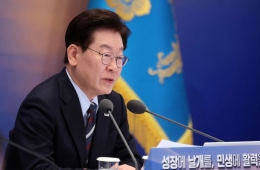
On August 11, the SME Ombudsman announced that a regulatory improvement roundtable was held at the Gwanghwamun Building in Jongno-gu, Seoul, in collaboration with the Korea Management Innovation SME Association (MainBiz Association).
During the meeting, demands were raised to extend the "special tax treatment for employment-retaining SMEs and others," which is scheduled to end this year. This system provides corporate and personal income tax deduction benefits to SMEs and workers who maintain employment by reducing working hours, rather than downsizing staff, despite management difficulties.
The MainBiz Association argued that, due to increased fixed costs for businesses from rising minimum wages, the current deduction level does not sufficiently incentivize employment retention. The association requested raising the relevant deduction rates to 20% and 30%, respectively, and extending the application period until the end of 2028. Kwon Jongsun, Director of the MainBiz Association, said, "If the benefits are too small, when management becomes difficult, companies will inevitably end up choosing to reduce their workforce."
However, given that the government, through the 2026 tax reform plan, has already decided to terminate the system at the end of this year, an extension or increase in deduction rates in the short term will be difficult. Choi Seungjae, SME Ombudsman, explained that it is necessary to first verify the effectiveness of the system through statistical analysis and business cases to determine whether its intended purpose has been achieved, and proposed that the MainBiz Association conduct a survey among its member companies to gather evidence supporting an extension.
There was also a proposal to expand the scope of beneficiaries for local SME development funds. The MainBiz Association pointed out that, while management-innovative SMEs are also considered innovative SMEs such as venture companies and technology-innovative SMEs, eligibility and preferential criteria remain unclear in some local government funds.
In response, the Ombudsman stated that improvement proposals were sent to 15 metropolitan local governments, including Seoul, and replies had been received from 10. Incheon City plans to promote expanding loan support for MainBiz companies in its 2027 business plan. Gyeonggi Province currently grants 10 additional points to management-innovative SMEs and will consider further support for innovative SMEs in its fund operation plans for next year.
The Ombudsman intends to review whether management-innovative SMEs are included as eligible beneficiaries, as well as the additional points and preferential treatment criteria, once the local governments’ 2027 operation plans for SME support funds are finalized.
In addition, participants proposed: ▲expanding policy finance support for the petrochemical crisis response region (Yeosu) ▲temporarily increasing the ceiling on business promotion expenses ▲widening the scope of companies eligible for eased KOSDAQ listing criteria ▲expanding eligibility for acquisition tax exemption in the Seoul metropolitan area, and more.
Hot Picks Today
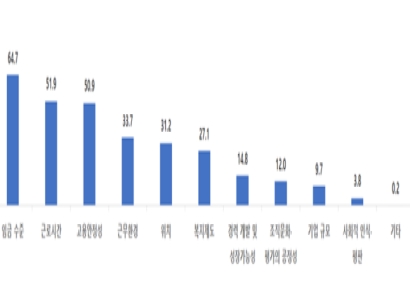 "Please Pay Me at Least 3 Million Won a Month": More Than Half of Young People Today Prioritize "Working Conditions" Over Company Size
- Selling Like Crazy Every Year... 30-Year-Old Hetbahn Takes on a New Challenge: Tastes Better Than "Mom's Home Cooking" [On-Site Report]
- I Thought Only 'Old Guys' Ate It... Young People Are Hooked on This 'Unusual Food' at Risk of Disappearing? [Delicious Stories]
- "Hey, Lady, Teach Your Kids to Behave!" ... 300,000 Won in Cash and a Bodily Injury Claim Demanded Over Child's Door Ding
- Beachgoer Finds 'Plastic' That Turns Out to Be Perfume Ingredient Worth More Than Twice as Much as Gold
Ombudsman Choi said, "Even if these are issues that cannot be answered immediately, if more evidence is collected on the ground, the door for discussion can open again. We will continue to consult with relevant ministries on today’s proposals so that they lead to tangible improvements that SMEs can actually feel."
© The Asia Business Daily. All rights reserved. Unauthorized AI training and use prohibited.