"Saving Essential Medical Services" vs. "Protecting Patient Rights": Ongoing Debate over the Medical Dispute Mediation Act
Legal Community at National Assembly Debate:
"Effectiveness of Special Criminal Exemptions Not Proven"
"Limiting Prosecution Even for Fatal Accidents Infringes on Victims' Rights"
Key Issues Include Scope of High-Risk Essential Medical Procedures
Debate over the revised Medical Dispute Mediation Act, which is set to take effect next year, is intensifying as proponents argue it is an inevitable reform required to save essential medical care, while critics claim it excessively restricts the rights of victims of medical accidents. While there is consensus on the intent to salvage essential medical services by reducing the criminal burden on healthcare professionals, concerns persist that provisions such as statutes of limitation and the abolition of the medical accident advance compensation system could excessively limit the rights of victims of medical accidents.

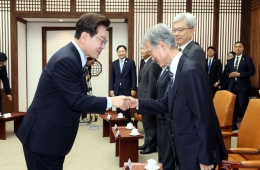
On the 10th, participants are speaking at the forum titled "Amendment of the Medical Dispute Mediation Act, Was the Patient's Voice Heard Enough?" held at the National Assembly Members' Office Building in Yeouido, Seoul. Photo by Jo In-kyung
View original imageOn August 10 at the National Assembly Members' Office Building in Yeouido, Seoul, Assemblywoman Lee Sohui of the People Power Party, members of the legal community, and patient organizations held a forum titled "Amendment of the Medical Dispute Mediation Act, Was the Patient's Voice Heard Enough?" to discuss the key issues and areas for improvement regarding the Medical Dispute Mediation Act, which passed the National Assembly in May.
The core of the amended Medical Dispute Mediation Act is to ease the criminal liability of healthcare professionals by introducing special criminal provisions and a statute of limitation for high-risk essential medical practices, establishing a Medical Accident Deliberation Committee, and at the same time abolishing the advance compensation system, where previously the Mediation Agency would provide immediate compensation to victims unable to collect from insolvent medical institutions or practitioners.
During the forum, participants criticized that while the opinions of the medical community were adequately reflected in the legislative process, the procedural rights and equality of victims, as well as actual relief measures, were in fact rolled back.
The first presenter, attorney Lee Jeongmin of the law firm Hippocrates, pointed out that there is insufficient empirical evidence to support the core premise of the revision—that criminal liability for medical professionals is the main cause of the collapse of essential medical services.
According to Attorney Lee, medical disputes have actually been on the decline recently. The number of court cases for compensation dropped from around 1,000 annually in 2012–2013 to around 850 cases per year in 2021–2023, and in the last five years, the Medical Dispute Mediation and Arbitration Agency recorded a mediation initiation rate of 65.8% and a mediation success rate of 66.2%. Regarding the "proliferation of criminal indictments against doctors," although the medical community has cited over 700 cases per year, a study commissioned by the Ministry of Health and Welfare found that annual criminal trials involving doctors averaged 34.4 cases between 2019 and 2023, and even when including summary indictments, the annual number only approached 50 cases.
Attorney Lee stated, "There is not enough empirical evidence to support the claim that the primary reason for avoidance of essential medical services is the criminal justice risks faced by healthcare professionals," adding, "The crisis in essential medical care results from a complex mix of factors, including low reimbursement rates, long working hours, workforce shortages, and weakened regional medical infrastructure. Criminal law exemptions alone will not achieve the legislative intent."
The constitutionality of the special statute of limitation provisions also emerged as a critical issue. Attorney Lee argued that applying these statutes of limitation even to cases involving patient death or serious injury could violate victims' rights to participate in legal proceedings and suggested at a minimum that cases involving death or serious injury should be excluded from these special provisions. He also criticized the simultaneous expansion of criminal exemptions and the abolition of the advance compensation system, which had served as a victim protection mechanism, for upsetting the balance between the protection of healthcare professionals and the rights of patients.
The second presenter, attorney Park Chunwoo of LKB Pyeongsan, characterized the special statute of limitation clause in the revision as "unexpected lawmaking." Citing the president's public endorsement of special criminal law measures reflecting the demands of the medical community since the end of last year, he argued, "The regulation that precludes prosecution for negligent homicide or injury in cases where medical professionals pay full compensation, even in fatal accidents, carries a high risk of being declared unconstitutional." Given that the Constitutional Court in the past found it unconstitutional to exempt criminal liability for serious traffic accidents, completely blocking criminal charges for fatal medical accidents under the amendment would further restrict victim rights.
Patient organizations emphasized the need to fully reflect patient rights in the preparation of subordinate statutes as the law's implementation approaches. Ahn Ki-jong, head of the Korea Patient Federation, stated, "The scope of 'high-risk essential medical practices' to be defined by Presidential Decree should be set as narrowly as possible and expanded step-by-step, and policies to reduce the liability burden on medical professionals should be balanced with patient compensation schemes."
During the subsequent panel discussion, while participants agreed on the need for institutional reform to prevent the collapse of essential medical services, they also argued that simply easing the criminal burden on medical professionals would not achieve the policy's goals.
Song Kim in, professor of public health at Hanyang University and chairperson of the health care committee at the Citizens' Coalition for Economic Justice, pointed out that "By focusing on easing the criminal liability of medical professionals, the revision could undermine victims' rights to participate in criminal proceedings." Yoon Myung, Secretary General of the Consumers Korea, stated, "The essence of the medical accident relief system should be patient safety and truth-finding, not simply protecting medical professionals," suggesting that fatal and serious injury cases be excluded from the statute of limitation provisions and that participation of patient and consumer representatives on the Medical Accident Deliberation Committee be expanded. Attorney Shin Hyeonho of Haewool Law Offices emphasized, "While excessive punishment for healthcare professionals is undesirable, excessive criminal exemptions are equally dangerous," stressing the need for improvements that would balance protections for both patients and healthcare professionals.
Hot Picks Today
 "Two Spend 500,000 Won in a Flash, Yet Wait Two Hours?" ... 'Dreamland' Shunned by Kids and Foreign Tourists
- The Era of Getting 200 Million Won After 30 Years Is Over... A Japanese Bank's "Perpetual Department Head" Who Just Clocked In Cries Out
- Spain Hit by Its Worst Tragedy... Lee Kangin, Moreno and Real Madrid Join Soccer World in Mourning
- They Said, “Make It Your Home for Life” - Then Suddenly Kicked 200 Passengers Off... What Happened to the Around-the-World Cruise?
- "130 Rice Bowls Sold Out in a Day"... 'Unfiltered Face' Adds 8 Million Won to Night Market Sales: China's Bungeunwoo
Shin Hyun-du, Director of Medical Institution Policy at the Ministry of Health and Welfare, stated, "High-risk essential medical practices are performed out of necessity to save patients, so it is essential to provide institutional support so that healthcare professionals can provide care without excessive criminal risk." He added, "Any issues that emerge during implementation will be continually addressed and improved."
© The Asia Business Daily. All rights reserved. Unauthorized AI training and use prohibited.