Prolonged Major Investigations... Are Police Waiting for Prosecution to Be Abolished?
Major Cases Involving Kim Byunggi, Bang Sihyuk, and Coupang Drag On
After October, Police Hold Sole Authority Over Final Investigative Conclusions
Police: "We Are Continuing All Possible Investigations at Present"
Investigations into major cases considered key tests of police investigative capacity—including the alleged job solicitation for Assemblyman Kim Byunggi's second son, the alleged fraudulent transactions case involving Bang Si-hyuk, chairman of Hybe, and the large-scale personal information leak at Coupang—continue to face repeated delays. With the restructuring of the criminal justice system in October 2026 set to effectively grant police the power to reach final investigative conclusions, some critics are questioning whether these delays are deliberate.
An official from the Seoul Metropolitan Police Agency stated at a regular press briefing on August 10th that the police are "not conducting investigations with consideration to the timing of the amendment to the Criminal Procedure Act," in response to concerns that delays in major investigations could shift investigative authority once the prosecution is abolished and investigative jurisdiction changes. "We are conducting the investigations that are possible at this point," the official added.

Independent lawmaker Byungki Kim, who is under suspicion of bribery and other charges, is appearing at the Public Crime Investigation Unit of the Seoul Metropolitan Police Agency in Mapo-gu, Seoul, on April 5 for his fifth summons investigation. Photo by Yonhap News
View original imageWith the Criminal Procedure Act amendment taking effect this October, the prosecution office will be abolished and prosecutors’ investigative powers will be eliminated. Although transitional measures allow for continued investigations for up to 90 days on cases handed over before the amendment, if police investigations extend beyond the effective date of the law, responsibility for final conclusions will rest entirely with the police. The police are facing criticism for delays in major investigations, as well as for alleged preferential treatment for certain suspects.
Among the most prominent is the series of allegations involving Assemblyman Kim and his second son. Police have been investigating for nearly a year Kim's suspected involvement in his son’s transfer to Soongsil University’s contract department and a separate job solicitation at the cryptocurrency exchange Bithumb. However, authorities have repeatedly stated for months that the investigation is “in its final stages.”
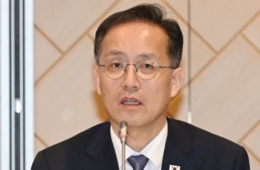
At the start of this month, Hong Seokki, Chief of the National Office of Investigation, emphasized that “most issues have been largely resolved, and the case can be swiftly concluded soon.” Despite this, Seoul Police Chief Jeongbo Park reiterated during the briefing on this day, “We are still meticulously investigating the minor details, and the case is in its final stage,” adding, “Additional details are emerging that require verification, which is taking time.” When asked about possible communication issues with headquarters, he clarified, “We are cooperating closely, and there is no cause for concern.”
Police also announced as early as December last year that the investigation into the alleged fraudulent transactions by Bang Si-hyuk, chairman of Hybe, was in its final stages. However, legal review has now continued for eight months. Counting from the first search and seizure in July last year, the investigation has stretched beyond a year. The situation has been further prolonged by requests from prosecutors for supplementary investigations. Chief Park explained, “There are differing opinions on the legal interpretation, so we are conducting further investigations to clear up suspicions. We are also investigating thoroughly the supplementary matters and legal points raised by the prosecution.”

Seoul Metropolitan Police Agency Commissioner Jungbo Park salutes the national flag at the inauguration ceremony held at the Seoul Metropolitan Police Agency in Jongno-gu, Seoul, last September. Photo by Yonhap News.
View original imageThe massive Coupang data breach case developed into a diplomatic conflict influencing Korea-U.S. relations, but progress has been slow due to complications in international cooperation. Chief Park commented, “A great deal of time is being taken because of international cooperation regarding the suspect who has fled overseas. We are persistently pursuing the investigation through various channels, including criminal justice cooperation, extradition efforts via Interpol, and technical analysis.”
Hot Picks Today
 "I Should Enjoy It After Retirement": Prices Quadruple... Memberships Over 100 Million Won Popular, but Closures Mount
- "I thought getting into a big company was the goal"... The 'position' only 1 in 121 employees reaches
- "Jealous of Koreans" - Now a Must-Do on Every Trip... The Place Where Foreigners Spent KRW 229.8 Billion
- “I Bought Big Packs to Stock Up Because They Were a Better Deal”... Why Are They Disappearing From Grocery Stores?
- "Please Let Me Go Home"... Customers Trapped in Department Store Parking Lot for 5 Hours Vent Their Anger
After confirming in November last year that around 30 million items of personal information were leaked from Coupang, police conducted raids at the year’s end and formed a dedicated task force with more than 80 members. However, since the suspect escaped to China, there has been no significant breakthrough. The call-in and questioning of Harold Rogers, acting head of Coupang Korea, in January and February this year even fueled new trade-related frictions such as conflicts in Korea-U.S. customs negotiations.
© The Asia Business Daily. All rights reserved. Unauthorized AI training and use prohibited.