[Editorial] Tax Reform Revisions Should Broaden Choices and Precisely Block Loopholes
Now that the government has decided to revise both the Individual Savings Account (ISA) reform and the anti-stock price suppression legislation, it is hoped that the system will be redesigned to broaden investors' choices, while precisely blocking only those practices that attempt to artificially lower company value in order to reduce tax liabilities through loopholes.
The ISA was originally established to allow individuals to save over the long term and grow their assets. However, critics have raised concerns that the reform plan makes long-term investing more difficult, as it prevents the rollover of unused annual contribution limits and restricts the contract period. Such rigid rules could even force people with irregular extra funds—like many young people and the self-employed—to give up on long-term investing altogether. The system should instead increase flexibility for making contributions and holding investments, and should provide greater benefits the longer one invests, in line with the account's original intent.
If the goal is to increase domestic investment, incentives should come first. It is not desirable to introduce a new ISA that only allows domestic investment, while also reducing the choices available for existing account holders. Rather than forcing funds to stay locked in, sustainable and productive finance requires that investors themselves have the freedom to choose the domestic market.
The same principle should apply to the “anti-stock price suppression” measure. Actions in which controlling shareholders intentionally lower company value in order to reduce inheritance or gift taxes, thereby harming other shareholders, should indeed be prevented. However, if whether a company exploited loopholes is determined solely on the grounds that the stock traded at an unusually low price for a certain period (i.e., a low price-to-book ratio), then companies that are undervalued due to legitimate reasons, such as industry downturns, could be unfairly subject to regulation. Conversely, some companies may temporarily manage their stock price during the relevant period to avoid regulation altogether.
Hot Picks Today
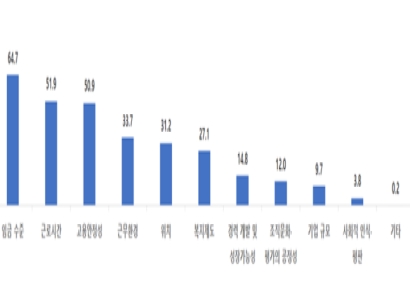 "Please Pay Me at Least 3 Million Won a Month": More Than Half of Young People Today Prioritize "Working Conditions" Over Company Size
- Selling Like Crazy Every Year... 30-Year-Old Hetbahn Takes on a New Challenge: Tastes Better Than "Mom's Home Cooking" [On-Site Report]
- Ran 18 km With 9-Year-Old Tied to Him at the Waist... "Man Banned From Competing for 3 Years"
- "Hey, Lady, Teach Your Kids to Behave!" ... 300,000 Won in Cash and a Bodily Injury Claim Demanded Over Child's Door Ding
- Beachgoer Finds 'Plastic' That Turns Out to Be Perfume Ingredient Worth More Than Twice as Much as Gold
Therefore, attention should be focused less on whether the stock price was low, and more on whether there were actual actions taken that damaged company value. There should be a comprehensive evaluation of whether there were abnormal changes in dividend or treasury stock policies, or in related-party transactions, especially before or after succession, while clear exceptions should be made for normal business judgments. This way, companies can proactively understand in advance what is considered problematic and what is not. The principle for this latest review is simple: legitimate investing and normal corporate activities must be widely protected, while only practices that seek to exploit loopholes for personal gain are precisely identified and blocked.
© The Asia Business Daily. All rights reserved. Unauthorized AI training and use prohibited.





![[Market ING] KOSPI Seeks Rebound in Superweek Packed with Corporate Earnings and FOMC](https://cwcontent.asiae.co.kr/asiaresize/307/2026102514484873155_1792907327.jpg)