Reduced Tax Benefits and Loophole Concerns Spur Predicted Reexamination of 'ISA and Anti-Stock Price Suppression' Tax Reforms
Controversy over Effectiveness and Investor Backlash:
Lee Orders Comprehensive Review
Most Low-PBR Firms Escape "Stock Price Suppression" Regulations
Tax Benefits May Decline with ISA Reform... Current System Likely to Remain
"The tax-saving function has actually been weakened." "There are too many loopholes for circumvention."
Less than a week after the Lee Jaemyung administration released its tax reform plan, the government has hurriedly decided to revise the proposals for the Individual Savings Account (ISA) and the anti-stock price suppression measures. This move comes amid backlash from investors and questions over the effectiveness of the policy. With investor interest in capital market tax policies heightened in the wake of recent KOSPI volatility, the government is particularly sensitive to the potential ripple effects and negative side effects of the reforms.

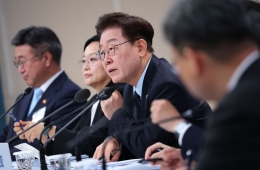
According to government ministries on August 10, the Ministry of Economy and Finance, under the direction of President Lee Jaemyung, has begun reviewing amendments to the ISA reforms and anti-stock price suppression proposal. Given the timetable requiring submission of the tax reform plan to the regular National Assembly session in September, the revised government proposal is expected to be finalized within this month. A Ministry official stated, "We will actively review whether further supplementation is needed, including points raised by the ruling party." Meanwhile, the Democratic Party of Korea also announced plans to pursue revisions and supplements through negotiations between the administration and the legislature.
As anticipated, there is broad recognition both inside and outside the market that a comprehensive overhaul is under way. The core issue of this year's capital market tax reform, the anti-stock price suppression plan, was criticized for being greatly watered down and less effective compared to the existing "Stock Price Suppression Prevention Law" (sponsored by Democratic Party lawmaker Lee Soyoung) when it was unveiled on August 3. President Lee openly pointed out that the proposal failed to embody the original policy goal.
The government's proposal stipulates that KOSPI-listed companies ranking in the bottom 25% of price-to-book ratio (PBR) by industry sector over the past six years, and KOSDAQ-listed companies in the bottom 10%, would be classified as suspected of stock price suppression. The measure strengthens the valuation method for these companies’ shares when calculating inheritance and gift taxes. The aim is to curb deliberate stock price suppression by listed companies, but critics argue that most low-PBR firms could still circumvent regulation. According to a simulation by Mirae Asset Securities, 505 KOSPI companies would fall within the scope if Lee Soyoung's bill were applied, whereas under the tax reform plan, only 80 would. The Korea Corporate Governance Forum similarly estimated only 84–87 KOSPI firms and 43 KOSDAQ firms would be affected, with their average PBRs just 0.27 for KOSPI and 0.29 for KOSDAQ.
Namwoo Lee, chairman of the Korea Corporate Governance Forum, stated, "The effect of preventing controlling shareholders from infringing on the rights of ordinary shareholders—the original intention—is likely to be minimal," adding, "Selecting the bottom 25% in each industry effectively grants a free pass to many low-PBR companies." Professor Horim Yoo of Kangnam University also warned, "Applying a six-year average PBR makes the timeframe too long and reduces the practical impact."

There is also analysis that merely increasing the taxable base amount is not effective. Mirae Asset Securities simulated a firm with net assets of 1 trillion won, a PBR of 0.2 times, and a market capitalization of 200 billion won, and found that while the current taxable base is 240 billion won, the tax reform plan would only increase it to between 312 billion and 360 billion won. In contrast, applying Lee Soyoung's proposal would raise the base to between 800 billion and 1 trillion won—substantially higher. Mirae Asset Securities researcher Geonho Yoo pointed out, "The maximum of the average stock price over the past six years and six months becomes the minimum figure for the taxable base," and warned, "This structure could even encourage companies to keep stock prices low over the long term."
Meanwhile, the revision President Lee Jaemyung harshly criticized regarding the ISA will likely be amended to maintain existing tax benefits. The ISA is a popular product among retail investors as it exempts up to 2 million won in interest and dividend income from taxation, serving both as a tax-saving and wealth-building tool. However, the government's tax reform proposal limited the account maturity to a maximum of five years and restricted the annual contribution carryover. This led to strong backlash from investors, who argued that the long-term tax benefits have been reduced.
If the proposal stands and account maturity comes up every five years, the compounding benefit of maintaining one account over the long term will inevitably decrease. Moreover, while currently unused portions of the annual 20 million won limit can be carried over to the next year, the reform eliminates this option—a disadvantage for young people and self-employed workers with lower or irregular incomes. This contradicts the previous administration’s intent to allow flexible contributions.
Additionally, the move to establish a new "productive finance ISA" limited investment options to domestic stocks and funds, drawing strong backlash especially from younger investors and so-called "overseas ants" (investors in foreign stocks). This is due to restrictions on investments in overseas index ETFs, such as those tracking the S&P 500 or Nasdaq listed on the domestic market. Many investors complained that it effectively forces them to invest domestically. An industry official said, "It is concerning that the government—while claiming to invigorate the capital market—is not enhancing investment appeal, but is instead limiting investment destinations."
Meanwhile, Democratic Party Policy Committee Chairwoman Han Jeong-ae said at a meeting the previous day, "It seems we don't need to touch the existing ISA." She also pointed out the limitations of the anti-stock price suppression law, saying, "There was a specific policy purpose behind the original law, but the government proposal falls far short."
Related Articles
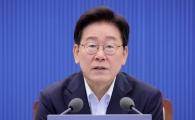 ISA Restricted to 5 Years, Loopholes in Stock Price Suppression Law... President Lee Orders Comprehensive Re-examination of Government Plan
- Claiming to Prevent Stock Price Suppression, But Using COVID-Era Prices as the Standard?... Loopholes Abound
- Governance Forum Criticizes Stock Price Suppression Tax Reform as Disappointing... 'Exemption' for Low-PBR Companies
- "Stock Price Suppression" Criteria Announced... Increased Taxes for Low-PBR Listed Firms Over Six Years [2026 Tax Reform]
This is not the first time that a capital market tax reform bill has been reconsidered due to investor backlash. Last year, there was similar controversy when the government attempted to tighten the criteria for major shareholders subject to taxation on capital gains from shares—from a market cap threshold of 5 billion won per stock to 1 billion won. That plan was ultimately withdrawn during policy consultations over fears it would negatively impact the stock market.
© The Asia Business Daily. All rights reserved. Unauthorized AI training and use prohibited.