Choo Mi-ae Urges Semiconductor Firms to 'Minimize Discharge, Tighten Environmental Standards, and Ensure Transparency to Residents'
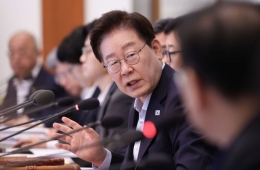
Gyeonggi Province Governor Choo Mi-ae has called on domestic semiconductor companies such as Samsung Electronics and SK hynix to intensify their own efforts to minimize the discharge of process water and reduce environmental impact, given that Gyeonggi Province is supporting them with a plentiful supply of water. She also directed that environmental impact assessments and discharge standards be applied more stringently, and that companies’ compliance be transparently disclosed to local residents.
Governor Choo released three administrative directives proposed at the 4th Semiconductor Super Gap Strategy Meeting, held on August 7, through her social media channels on the 10th.
First, she requested that semiconductor companies reduce process water discharge as much as possible. She emphasized that, given that global semiconductor firms such as Intel and TSMC are investing in technologies to recycle water and achieve zero or minimal discharge at their U.S. facilities, domestic companies should also ramp up efforts to lessen their environmental burden.
"Our inspection of water for semiconductor use shows that a plentiful supply of 1.1 million tons per day is possible, and we are also seeking legislative changes to allow for the supply of water from the Hwacheon Dam, which is used for power generation," Choo said, stressing that since the public sector is providing a stable water supply, companies must make equivalent efforts in environmental management.
She also urged the Ministry of Climate, Environment, and Energy to apply stricter environmental impact assessment criteria, including discharge standards for reservoirs such as the Gosam Reservoir in Anseong. She stated her view that the public sector, including Gyeonggi Province and local governments, should not be forced to shoulder all of the increasing environmental costs that accompany the growth of the semiconductor industry.

Governor Choo emphasized that it is not enough to simply provide administrative guidance and toughen environmental standards for companies; authorities must also fully explain the relevant procedures to residents.
She stated, "Every step of the process—including the conference history, the requirements presented to companies, and continuous supervision and management of whether the companies are complying in good faith—must be thoroughly explained to local residents."
In particular, she insisted that the progress of the ecological retention basin project, being carried out in line with the 2021 win-win cooperation agreement, should be made directly observable for residents, and the smooth implementation of related processes should be transparently released. She added that the principle of no discharge before completion of the ecological retention basin creation must also be clearly communicated to residents.
Governor Choo made it clear that companies' environmental mitigation actions and administrative supervision should come before seeking residents’ understanding.
Hot Picks Today
 "I Believed Them After Seeing the Employee ID"... "Fake Employee" Scammed 12 Million Won
- China and Japan Not in the Top Spot? The Country with the Largest Increase in Foreign Tourists Visiting Korea Is 'Here'
- Two Paejae High School Students Who Chanted "Let's Go to Starbucks" Ultimately Quit Baseball
- "Picked Up on a Walk, Brings Healing to Watch"... Why 'Brick Growing' Is the Latest Gen Z Hobby
- "'Unpleasant Wind from Sweat' vs. 'What Else Can We Do in This Heat'... Subway Handheld Fan Debate Ignites First in Japan"
She stated, "Only after these steps are taken will it be possible to persuade the local residents," adding, "If we attempt to convince residents first, without any prior action, no one will be convinced."
© The Asia Business Daily. All rights reserved. Unauthorized AI training and use prohibited.