Power Plants Halted and Shipping Stalled: 'R' Fear Rises as Climate Change Hits Logistics and Energy
Nuclear Power Plants in Europe Shutting Down Amid Cooling Water Shortages
Hungary Halts 40% of Its Power Supply from Nuclear for the First Time in 44 Years
"Risk of Triggering Inflation and Hindering Economic Recovery"
Major water sources in Europe and North America have simultaneously dried up, signaling a phase in which climate-related risks are dragging down logistics, energy supplies, and economic growth.

On the 3rd (local time), the Danube River in the Rasova region of Romania was exposed due to drought. Photo by AP Yonhap News
View original imageAccording to AP on August 8 (local time), the water level of Lake Mead—the largest reservoir in the United States—fell to 317.1 meters the previous day. This marks the lowest level in 90 years. The reservoir, straddling the border between Arizona and Nevada, supplies water to as many as 30 million people, three-quarters of the Colorado River basin’s population. AP noted, “Of the 54 major reservoirs in the western U.S., 9 have recently recorded their lowest water levels in the past 30 years.”
Europe is experiencing similar scenes as river beds are being exposed. The Danube River, which runs through 10 countries in Europe, is about 90 cm below its usual level. As the water recedes, Nazi warships that sank during World War II are reappearing. The Rhine River, a key artery for European inland logistics, has also dropped below the 20 cm mark at the Kaub section in Germany, the shallowest part of the river. This is the lowest since records began in the 1880s.
This depletion of rivers is the result of record-setting high temperatures. On August 6, one region in southern Slovakia saw temperatures reach 42.2 degrees Celsius, while a region in Austria recorded 41.2 degrees Celsius—both setting new temperature records for their areas.

The site of a large wildfire that occurred in Spain on the 26th of last month (local time). Photo by Reuters Yonhap News
View original imageThe heat has also fueled wildfires. On August 8, British Columbia, Canada, declared a state of emergency as more than 100 wildfires spread uncontrollably across the province, forcing over 20,000 people to evacuate overnight. Earlier this month in Washington State, U.S., three large wildfires broke out simultaneously, prompting the emergency evacuation of about 60,000 residents. The blaze that had persisted for weeks in southern France and Spain has now spread to Italy, the Balkans, and other parts of southern and eastern Europe. The Financial Times estimated the damages caused by wildfires in Spain and France to be 3 billion euros (approximately 5 trillion won).
The damage is now spreading to industrial sites. The power sector was the first to be hit. As river water dried up and coolant became scarce, there were multiple instances of nuclear and thermal power plants cutting back or halting operations. On August 2, Hungary stopped operating its nuclear power plant—which generates 40% of the country’s electricity—for the first time in 44 years. Similar shutdowns of nuclear power plants have occurred in France, Romania, and Italy, and it was reported that two large thermal power plants in Poland have also been halted. Solar power, which had been compensating for energy shortfalls, is expected to see a significant drop in output due to a solar eclipse on August 12.
Logistics have effectively ground to a halt. As the water level of the Rhine River dropped and ship cargo capacity was restricted, road transport increased in Germany, leading to a spike in transportation costs and adding further inflationary pressures. During the drought of 2018, Rhine water transport was halted for 132 days, causing Thyssenkrupp—a German steelmaker—to reduce production by 200,000 tons compared to previous years. At that time, two-thirds of German companies had to seek alternative transportation options.
Hot Picks Today
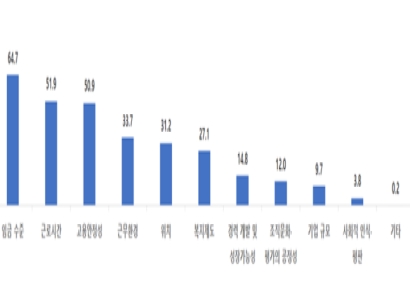 "Please Pay Me at Least 3 Million Won a Month": More Than Half of Young People Today Prioritize "Working Conditions" Over Company Size
- Selling Like Crazy Every Year... 30-Year-Old Hetbahn Takes on a New Challenge: Tastes Better Than "Mom's Home Cooking" [On-Site Report]
- Ran 18 km With 9-Year-Old Tied to Him at the Waist... "Man Banned From Competing for 3 Years"
- "Hey, Lady, Teach Your Kids to Behave!" ... 300,000 Won in Cash and a Bodily Injury Claim Demanded Over Child's Door Ding
- Beachgoer Finds 'Plastic' That Turns Out to Be Perfume Ingredient Worth More Than Twice as Much as Gold
The German Economic Institute (IW) forecast that disruptions to Rhine River shipping alone could reduce Germany's economic growth rate by up to 0.4 percentage points. According to the Kiel Institute for the World Economy, if low water levels persist for a month, Germany's industrial production could decline by around 1%. This means that the German economy, which had just barely escaped negative growth, is at increased risk of falling back into recession. Moritz Kraemer, Chief Economist at LBBW Bank in Germany, pointed out, “The impact of the heatwave—from agriculture to supply chains and energy—could further fuel inflation. This in turn poses a serious risk of hindering recovery and triggering a recession.”
© The Asia Business Daily. All rights reserved. Unauthorized AI training and use prohibited.




![[Market ING] KOSPI Seeks Rebound in Superweek Packed with Corporate Earnings and FOMC](https://cwcontent.asiae.co.kr/asiaresize/307/2026102514484873155_1792907327.jpg)