Trump Responds to Iran’s Additional Demands with "Low-Key Approach"...Economic Pressure Over Military Strikes
"Semi-Negotiating with Iran... It's Like a Chess Game"
Refrains from Further Military Threats
Continues Economic Pressure through Maritime Blockades
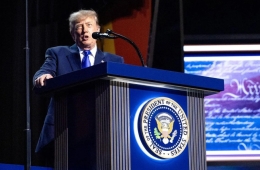
U.S. President Donald Trump has stated that, despite Iran’s hardline additional demands, he will keep the possibility of negotiations open by continuing economic pressure rather than immediately raising the level of military response.

On the 9th (local time), in a phone interview with the U.S. online outlet Axios regarding the Iran issue, President Trump said, "We are low keying it," adding, "We are just semi-negotiating with them."
He also emphasized that the Iranian economy is facing severe difficulties. President Trump said, "We're just watching Iran, which is suffering from massive inflation and is out of money," and pointed out that Iran is in a "very tough spot."
He went on to claim that the Iranian government lacks funds even to pay its soldiers and that the U.S. maritime blockade is further exacerbating the economic hardship faced by the Iranian regime.
President Trump also explained that as international oil prices have fallen to just above $75 per barrel, American consumers are feeling less economic burden from conflict.
He took an optimistic stance on the deadlock in negotiations with Iran, saying, "It will work out well," and, "It always works out well. It's like a chess game."
Notably, President Trump did not mention the possibility of new military actions against Iran during the phone call that day. He also did not express any public dissatisfaction over Iran's delay in announcing an agreement with Oman to reopen the Strait of Hormuz.
Axios assessed that, although Iran continues to reject U.S. demands, President Trump appears to be placing more emphasis on strengthening economic pressure rather than launching additional military attacks.
President Trump had previously announced on the 1st that he had canceled a large-scale military strike against Iran at the request of Middle Eastern countries and called for swift agreement on reopening the Strait of Hormuz.
Afterward, some observed that Iran and Oman had made significant progress in reopening negotiations over the Strait of Hormuz, but the outlook for the talks became uncertain again as Iran introduced new conditions to the United States.
Mohammad Bagher Zolghadr, Secretary of the Supreme National Security Council (SNSC) of Iran, issued a statement the previous day outlining six demands as conditions for reopening the Strait of Hormuz: lifting the U.S.-imposed maritime blockade on Iran, withdrawing U.S. troops from regions surrounding Iran, and compensating for war damages, among others. These are significantly more hardline than the previous memorandum of understanding (MOU) established between the U.S. and Iran.
Hot Picks Today
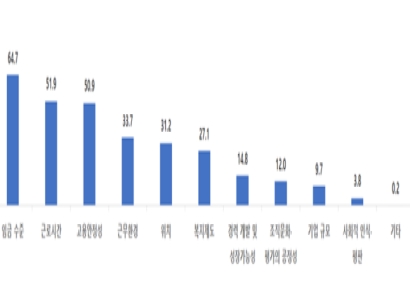 "Please Pay Me at Least 3 Million Won a Month": More Than Half of Young People Today Prioritize "Working Conditions" Over Company Size
- Selling Like Crazy Every Year... 30-Year-Old Hetbahn Takes on a New Challenge: Tastes Better Than "Mom's Home Cooking" [On-Site Report]
- I Thought Only 'Old Guys' Ate It... Young People Are Hooked on This 'Unusual Food' at Risk of Disappearing? [Delicious Stories]
- "Hey, Lady, Teach Your Kids to Behave!" ... 300,000 Won in Cash and a Bodily Injury Claim Demanded Over Child's Door Ding
- Beachgoer Finds 'Plastic' That Turns Out to Be Perfume Ingredient Worth More Than Twice as Much as Gold
Iranian Foreign Minister Abbas Araghchi also told reporters in Tehran on the same day that, while mediator countries are working to establish a foundation for reopening negotiations, "there is no possibility for talks to resume until the U.S. stops violating the MOU and compensates for its violations."
© The Asia Business Daily. All rights reserved. Unauthorized AI training and use prohibited.