Accelerating Supply of 27,000 Units in Quasi-Industrial Districts... Government Mulls Housing Measures Announcement for August 13
As the government considers announcing its new housing supply measures around August 13, accelerating the ongoing plan to supply approximately 27,000 housing units in Seoul’s quasi-industrial areas is emerging as a key component. Rather than drastically expanding new supply targets, the focus is expected to be on increasing the execution of supply by improving systems and providing financial and tax support, in order to ensure that the existing planned volume proceeds to actual groundbreaking and move-in phases.
According to relevant authorities on August 9, the government is reviewing the possibility of announcing its housing supply measures around August 13, following a meeting of real estate-related ministers this week. However, the announcement date remains flexible as final coordination is still ongoing among the ministries involved.
The Ministry of Land, Infrastructure and Transport is prioritizing the seamless supply of about 27,000 housing units currently being developed through redevelopment and urban development projects in Seoul’s quasi-industrial districts. Representative areas include Mullae-dong and Yangpyeong-dong in Yeongdeungpo-gu, Guro and Geumcheon districts, and Seongsu-dong in Seongdong-gu. The total area of these quasi-industrial districts is 19.97 km², which accounts for 3.3% of the entire area of Seoul, and 81.9% of this is concentrated in the southwest regions of Yeongdeungpo, Guro, and Geumcheon.

On February 5, 2026, in front of a real estate agency located within a large apartment complex in downtown Seoul, apartment sale information is posted.
View original imageLast year, the Seoul Metropolitan Government raised the maximum floor area ratio in quasi-industrial districts to up to 400%—from the previous limit of 250%—when establishing district unit plans for building multi-family housing. Currently, supply of about 27,000 units is being promoted across 32 sites. To further boost development, Seoul has also requested that the Ministry of Land, Infrastructure and Transport ease requirements for securing industrial facilities within industrial innovation zones. Existing guidelines require that industrial facilities account for at least 50% of the total gross floor area in mixed-use lots, but Seoul wants this lowered to around 30%.
While the Ministry of Land, Infrastructure and Transport has said it is open to reviewing the relaxation of the industrial facilities requirement, it also noted that for the 27,000-unit supply, each project is being carried out in accordance with individual laws, meaning such deregulation is not essential. In addition to quasi-industrial districts, the government is also considering using the Urban Public Housing Mixed-use Project to provide 20,000 units, plus additional units (“20,000+”), in the urban core of Seoul. Candidate locations have been proposed in 44 sites across 16 districts, including the three core Gangnam districts—Gangnam, Seocho, and Songpa—but as some sites are eliminated during the review process, the final supply is expected to be around 20,000 units plus an additional amount.
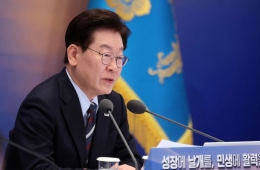
The Urban Public Housing Mixed-use Project enables the public sector to take the lead in streamlining procedures and providing housing quickly in areas where redevelopment is difficult, such as areas near major transit stations, quasi-industrial zones, and aging low-rise neighborhoods. The government reportedly reviewed supply plans prepared by the Ministry of Land, Infrastructure and Transport, by project and region, at the second real estate policy review meeting presided over by President Lee Jaemyung on August 7. It is currently fine-tuning detailed measures based on opinions presented at that meeting.
Hot Picks Today
 "Please Pay Me at Least 3 Million Won a Month": More Than Half of Young People Today Prioritize "Working Conditions" Over Company Size
- Selling Like Crazy Every Year... 30-Year-Old Hetbahn Takes on a New Challenge: Tastes Better Than "Mom's Home Cooking" [On-Site Report]
- I Thought Only 'Old Guys' Ate It... Young People Are Hooked on This 'Unusual Food' at Risk of Disappearing? [Delicious Stories]
- "Hey, Lady, Teach Your Kids to Behave!" ... 300,000 Won in Cash and a Bodily Injury Claim Demanded Over Child's Door Ding
- Beachgoer Finds 'Plastic' That Turns Out to Be Perfume Ingredient Worth More Than Twice as Much as Gold
Some anticipate that the government might announce a plan to supply approximately 50,000 new homes in the greater Seoul area, but the government maintains that the total supply scale has not yet been determined. Last September, through the '9/7 Plan,' the government previously set a goal to begin construction of 1.35 million new housing units in the Seoul metropolitan area by 2030.
© The Asia Business Daily. All rights reserved. Unauthorized AI training and use prohibited.