Three Andong Districts Declared Special Disaster Zones After Heavy Rains, Opening Door for National Recovery Funds
Iljik, Namseon, and Imha Meet Designation Criteria
Damage Totals KRW 3.94 Billion, Transition to Permanent Restoration
Iljik-myeon, Namseon-myeon, and Imha-myeon in Andong-si, Gyeongsangbuk-do sustained significant damage from heavy rainfall last month and have now been declared special disaster zones.
According to Andong City on August 9, President Lee Jaemyung declared the three areas of Iljik, Namseon, and Imha—where damage was concentrated from July 8 to 24 due to heavy rains—as special disaster zones on August 7.

Gwangyong Kim, Director of the Disaster and Safety Management Headquarters at the Ministry of the Interior and Safety; Myungsuk Hwang, Deputy Governor of Gyeongsangbuk-do; and Gichang Kwon, Mayor of Andong, visited the three Iljiknamselinhae myeon areas in Andong-si, Gyeongsangbuk-do, to inspect the site. (Iljiknamselinhae 3 Myeon designated as special disaster areas)
Photo by Andong City
With this declaration, additional national funds will be allocated for disaster recovery in these regions, which is expected to ease the burden on local finances and accelerate both the stabilization of residents' lives and the restoration of public facilities.
The Central Joint Damage Investigation Team, led by the Ministry of the Interior and Safety, established an investigation headquarters at Andong City Hall from August 1 to 5 and conducted on-site inspections to calculate the scale of damages required for special disaster zone designation.
The investigation concluded that the total damage in the Andong area amounted to 3.94 billion won. This figure exceeds the national support threshold of 3.3 billion won, which is calculated based on Andong City's financial capacity, by 640 million won.
In particular, Iljik-myeon, Namseon-myeon, and Imha-myeon each recorded damages exceeding 825 million won, which meets the threshold for township-level special disaster zone designation.
When an area is declared a special disaster zone, the national government provides additional support to cover a portion of the restoration expenses that would otherwise be borne by the local government. As a result, the fiscal burden on local authorities caused by large-scale disasters is reduced, enabling a more rapid implementation of recovery projects.
Support for stabilizing the lives of affected residents will also expand. According to relevant laws and support criteria, indirect relief measures such as deferment of national and local tax payments and reduction of various public utility charges will be provided.
Since immediately after the flooding, Andong City has focused its administrative resources on assessing the scale of the damage, carrying out emergency repairs, and supporting displaced residents in order to prevent additional damage and stabilize livelihoods.
Kigang Kwon, Mayor of Andong, also visited the affected areas to listen to residents' difficulties, check recovery progress, and request swift assistance from the central government and related agencies.
Kwangyong Kim, Director of Disaster Safety Management Headquarters at the Ministry of the Interior and Safety, visited the flood sites as well, inspecting both the extent of the damage and the restoration process while listening to residents' concerns.
The city plans to fully launch permanent restoration of damaged facilities and resident support as soon as the scale of additional national funding tied to the special disaster zone designation is confirmed.
With this declaration, disaster response is expected to shift from emergency restoration to permanent repair and normalization of residents' daily lives. In rural areas, where damage to roads, farmland, and basic living infrastructure has a direct impact on people's livelihoods, not only the pace of recovery but also reinforcing vulnerable facilities to prevent future disasters are highlighted as crucial tasks.
Kigang Kwon, Mayor of Andong, stated, "I would like to thank the Ministry of the Interior and Safety and Gyeongsangbuk-do for responding quickly to facilitate the declaration of the special disaster zone. Based on the additional national support, we will focus all administrative efforts to systematically and swiftly restore damaged facilities so that residents can return to their daily lives as soon as possible."
This special disaster zone declaration is meaningful not only as an expansion of financial recovery assistance, but also as a starting point for rebuilding the shaken foundations of rural communities hit by flooding. In particular, as repeated extreme rainfall becomes a routine disaster risk, critics argue that recovery should not be limited to mere 'restoration to original conditions.'
Instead of simply restoring collapsed infrastructure, a 'prevention-focused recovery' that reevaluates drainage systems, rivers, roads, and other vulnerable structures and upgrades them to withstand future disasters is essential.
Hot Picks Today
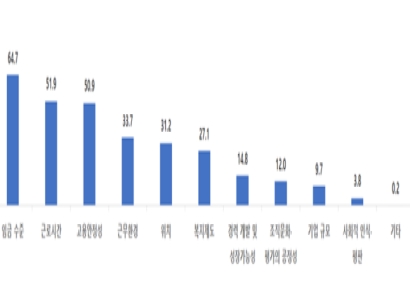 "Please Pay Me at Least 3 Million Won a Month": More Than Half of Young People Today Prioritize "Working Conditions" Over Company Size
- Selling Like Crazy Every Year... 30-Year-Old Hetbahn Takes on a New Challenge: Tastes Better Than "Mom's Home Cooking" [On-Site Report]
- "Americans Would Be Amazed If They Came": Wide-Eyed at a Sight They've Never Seen Before... Foreigners Also Fall for K-Baseball [K-Holic]
- "Hey, Lady, Teach Your Kids to Behave!" ... 300,000 Won in Cash and a Bodily Injury Claim Demanded Over Child's Door Ding
- Beachgoer Finds 'Plastic' That Turns Out to Be Perfume Ingredient Worth More Than Twice as Much as Gold
Ultimately, the success of the special disaster zone declaration will be assessed not by the size of the support provided, but by how quickly residents are able to return to their everyday lives and whether the region becomes resilient against repeated similar damages.
© The Asia Business Daily. All rights reserved. Unauthorized AI training and use prohibited.