ISA Restricted to 5 Years, Loopholes in Stock Price Suppression Law... President Lee Orders Comprehensive Re-examination of Government Plan
Restrictions on ISA Investment Targets and Abolishment of Carry-Forward Spark Controversy
Government's 'Anti-Stock Price Suppression' Plan Also Criticized for Straying from Its Purpose
Design Flaws Emerge in Consecutive Core 'Productive Fina
President Lee Jae-myung has ordered a comprehensive re-examination of the government's recently proposed overhaul of Individual Savings Accounts (ISA) and the so-called "Stock Price Suppression Prevention Law." The revision to ISA, which was introduced to encourage long-term investment, is now being criticized for actually restricting the investment period and limiting investor choices. Meanwhile, the newly created system intended to prevent major shareholders from deliberately suppressing stock prices is drawing backlash for its stringent requirements, which critics argue can easily be circumvented. In response to these growing concerns, President Lee has personally intervened. As President Lee has positioned capital market revitalization as a core pillar of his administration, he is reportedly calling for a thorough reassessment not only of the policy direction but also of its practical effectiveness in the market.

President Lee Jae-myung is speaking at the Senior Secretary Meeting held at the Blue House on August 6, 2026. Photo by Yonhap News Agency
View original imageOn August 8, a senior official from the Blue House stated that on the morning of the previous day, President Lee was briefed on investor reactions to the tax reform package announced on August 3 during an internal review meeting. Following the briefing, he ordered a re-examination of both the ISA overhaul and the measures to prevent stock price suppression. Regarding the ISA revision in particular, the President strongly admonished officials, reportedly asking, "Why did you proceed this way without careful preparation?" He also expressed dissatisfaction that the intended purpose of the stock price suppression prevention measures had not been adequately realized, saying, "Look into it again."
President Lee’s intervention appears to be driven by the gap between the policy objectives and the actual design of the system. The government’s ISA reform plan limits the contract period to a maximum of five years and eliminates the rollover of unused annual contribution limits. The newly created "Productive Finance ISA," which is intended to funnel funds into domestic companies and capital markets, is restricted to investment products based on domestic stocks and domestic asset-focused funds. Even ETFs listed on the Korean market that track foreign indices—such as S&P 500 or Nasdaq 100—would be excluded from the eligible investment targets.
This immediately sparked backlash from long-term investors. ISAs are representative tax-advantaged accounts, offering tax exemptions or separate taxation on interest and dividend income, making them ideal for long-term asset growth. During the 2021 revision, the mandatory subscription period was reduced from five to three years, contract extensions were allowed, and it became possible to carry over unused contribution limits to the next year, thereby increasing operational flexibility. However, the latest overhaul is seen as narrowing both the account management period and investment options, despite being portrayed as pro-long-term investment.
In particular, among younger investors and the so-called "Seohak Ants" (Korean retail investors focusing on overseas stocks), there is growing discontent that the tax benefits are effectively being used as leverage to force domestic stock investment. Although the government has positioned the policy as a move to shift household funds from real estate to capital markets, there are concerns that such a restrictive approach may actually undermine its effectiveness by limiting investment destinations rather than enhancing their attractiveness. The government had initially presented the introduction of the Productive Finance ISA and Youth ISA as key measures to broaden the demand base for the capital market in this year’s economic growth strategy.
The "Stock Price Suppression Prevention Law" has also come under heavy scrutiny for diverging from its original intent. Under the current inheritance and gift tax law, the value of listed stocks is determined based on the average closing price during the two months before and after the reference date—a total of four months. The original rationale for the new policy was that a lower stock price reduces controlling shareholders’ tax burdens, creating an incentive for some to act against shareholder interests (e.g., by limiting dividends or share buybacks) to suppress stock prices for tax advantage purposes.
The bill initially proposed by lawmaker Lee So-young of the Democratic Party stipulated that, for undervalued listed companies (with a price-to-book ratio, or PBR, below 0.8), the taxable value for inheritance and gift purposes should reflect not only the market price but also the company’s asset and earnings value. The idea was to overturn the current system, where keeping the share price low reduces the tax burden, and instead incentivize controlling shareholders to increase corporate value for their own benefit.
However, the government’s version of the plan, as incorporated into the tax reform package, greatly narrows the scope of application. Only companies that rank in the bottom 25% by PBR in the Korea Exchange or bottom 10% in KOSDAQ for 12 out of the latest 13 half-year periods would be considered. Even then, actual intent to suppress the stock price would have to be proven. If willful suppression is acknowledged, the taxable stock valuation would be raised by at least 30% for inheritance or gift tax purposes.
The problem is that these requirements could, paradoxically, become a new "manual for avoidance." If a company temporarily improves its PBR ranking during a specified period, it could escape the definition of an "undervalued company," thereby avoiding penalties. Furthermore, as the law does not rely solely on objective standards but instead gives significant discretionary power to the National Tax Service Evaluation Review Committee, critics argue this undermines the predictability of taxation. Lawmaker Lee So-young publicly criticized the government’s plan for "rendering the original idea behind the Stock Price Suppression Prevention Law meaningless."
There remain substantial challenges to resolve during this review process. Not all low PBRs are the result of intentional actions by major shareholders. A variety of factors—such as industry downturn, weak profitability, regulatory constraints, and holding company discounts—can depress corporate value. Accurately calculating the net asset value (NAV) of businesses with large subsidiaries is also complicated. As a result, both business circles and tax experts are calling for a more refined mechanism to distinguish willful stock price suppression from legitimate undervaluation by the market.
The call for a re-examination is expected to have a significant ripple effect on the government’s broader capital market policy. In its mid-year economic growth strategy last month, the government had placed the introduction of the Productive Finance ISA and the overhaul of listed stock valuation for the purpose of preventing price suppression as central tasks for a "grand transformation of productive finance." The policy’s aim was to shift household funds out of real estate and into capital markets while raising corporate value and eliminating the so-called "Korea Discount." Yet, just a few weeks later, the president has ordered a complete redesign of both of these core policies from the ground up.
Hot Picks Today
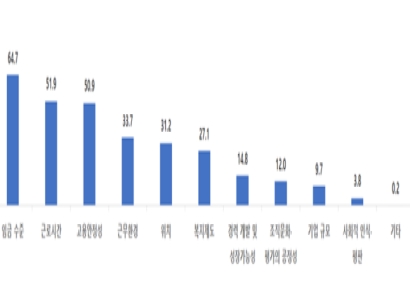 "Please Pay Me at Least 3 Million Won a Month": More Than Half of Young People Today Prioritize "Working Conditions" Over Company Size
- Selling Like Crazy Every Year... 30-Year-Old Hetbahn Takes on a New Challenge: Tastes Better Than "Mom's Home Cooking" [On-Site Report]
- "Americans Would Be Amazed If They Came": Wide-Eyed at a Sight They've Never Seen Before... Foreigners Also Fall for K-Baseball [K-Holic]
- "Hey, Lady, Teach Your Kids to Behave!" ... 300,000 Won in Cash and a Bodily Injury Claim Demanded Over Child's Door Ding
- Beachgoer Finds 'Plastic' That Turns Out to Be Perfume Ingredient Worth More Than Twice as Much as Gold
As a result, relevant ministries including the Ministry of Economy and Finance and the Financial Services Commission are expected to reconsider issues such as the contract period for the ISA, the rollover of unused contribution limits, and the scope of eligible investment assets. They will also likely revisit the application criteria and taxation method for the stock price suppression prevention system. Substantial revisions are expected to be inevitable as the government submits the revised law to the National Assembly.
© The Asia Business Daily. All rights reserved. Unauthorized AI training and use prohibited.