"It Was All Planned"... Surprise U.S.-Japan Joint Currency Intervention Had Been in Preparation Since May [Mwonil Issyu]
Joint Market Intervention to Defend the Yen for the First Time in 28 Years
Bessent and Katayama Hold Over 10 Rounds of Talks
"Some Yen Weakness Will Be Alleviated"
"Proves Yen’s Fundamental Weakness"
Diverging Opinions in Japan
The United States and Japan have intervened jointly in the forex market to defend the yen for the first time in 28 years. This rare move has created disturbance in the market. U.S. President Donald Trump commented, "Japan needed help with the weak yen," framing the yen-buying as a gesture of friendship. As the interest rate gap between the U.S. and Japan keeps widening, it is likely the U.S. has also determined that it can no longer leave the yen's depreciation unchecked. This joint intervention demonstrates that exchange rates have become a key variable in America's trade and industrial policy.
Within Japan, responses have varied. In particular, there is surprise at how suddenly the joint intervention was announced.
However, this was hardly an overnight decision but rather the result of extended discussions between the two countries. According to NHK, U.S. and Japanese monetary authorities had been meticulously preparing for this under the radar since three months ago. Earlier, on April 30, when the yen weakened to the high 160s per dollar, the Japanese government and the Bank of Japan (BOJ) conducted a market intervention to buy yen.

A woman walks past a screen displaying the yen-dollar exchange rate on August 3, when the United States and Japan jointly intervened to purchase yen. Tokyo, Japan – Photo by Reuters Yonhap News.
View original imageLess than a month later, on May 12, U.S. Treasury Secretary Scott Bessent visited Japan. He held talks with Japanese Finance Minister Satsuki Katayama. It is reported that during this meeting, full-scale discussions on joint intervention between the U.S. and Japan were initiated.
Even as these negotiations were conducted in secret, the yen continued to weaken and the dollar to strengthen. The two countries, nonetheless, kept the discussions ongoing. Finance Minister Katayama also held an online meeting with Secretary Bessent on June 22.
According to NHK, "Both countries took time and prepared meticulously to correct the yen's weakness," and "it appears that they also deliberated carefully on when to conduct the intervention." In total, the two officials reportedly coordinated their views in about ten dialogues, including online talks.
At the end of July, the U.S. Federal Reserve's Federal Open Market Committee (FOMC) regular meeting took place, and in Japan, the BOJ's monetary policy meeting was held. Despite these significant market events, there was no announcement of a joint intervention in the forex market. It seems that the two authorities were weighing the timing of their announcement while observing each country's policy meeting outcomes and the market's response.

As the won/yen official exchange rate dropped to the 800-won range, the volume of yen currency exchange recorded its highest level in 19 months. On July 29, an employee at Hana Bank's Anti-Counterfeit Center in Jung-gu, Seoul, is holding up yen banknotes. Photo by Yonhap News.
View original imageThere are also views that joint intervention by the two countries itself is highly unusual. Tatsuo Yamazaki, former Director General of the International Bureau at Japan’s Ministry of Finance who led the 2003 forex intervention, told NHK, "It was a surprise even to me. The United States basically lets the market determine exchange rates as a general principle," adding, "It almost never intervenes unless it's an exceptional case." He further noted, "Elevating currency cooperation to the level of economic security sends a very strong message to the market."
As a result, Japanese asset managers have rushed to reexamine their strategies. For example, Mitsui Sumitomo Trust Bank had been managing stocks and bonds under the assumption of a weak yen, but now plans to review its investment policies to account for a stronger yen.
However, there is still uncertainty over whether the joint intervention will have a positive or negative impact. Experts are divided. SMBC Nikko Securities forecasts that the joint action will likely prevent another round of excessive yen depreciation driven by speculation, partially addressing the currency's weakness. On the other hand, Mitsubishi UFJ Securities pointed out, "Advanced economies are supposed to defend the value of their own currencies. The fact that joint intervention was needed indicates that the yen is fundamentally weak."
Hot Picks Today
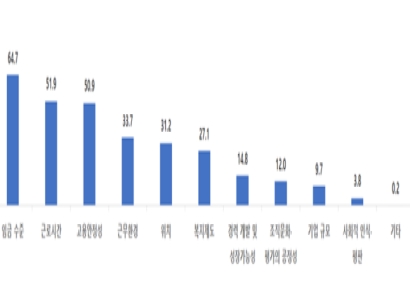 "Please Pay Me at Least 3 Million Won a Month": More Than Half of Young People Today Prioritize "Working Conditions" Over Company Size
- Selling Like Crazy Every Year... 30-Year-Old Hetbahn Takes on a New Challenge: Tastes Better Than "Mom's Home Cooking" [On-Site Report]
- "Americans Would Be Amazed If They Came": Wide-Eyed at a Sight They've Never Seen Before... Foreigners Also Fall for K-Baseball [K-Holic]
- "Hey, Lady, Teach Your Kids to Behave!" ... 300,000 Won in Cash and a Bodily Injury Claim Demanded Over Child's Door Ding
- Beachgoer Finds 'Plastic' That Turns Out to Be Perfume Ingredient Worth More Than Twice as Much as Gold
The concern is that this joint intervention may not end at simply “saving the yen.” Outlets like Nikkei have analyzed that Asian currencies, including the won, could start seeing an impact. Now that the U.S. is starting to use exchange rate issues as a new negotiation card, the prospect of currency questions with other trading partners becoming part of trade talks has also increased. It also looks unlikely that Korea can remain unaffected by this trend.
© The Asia Business Daily. All rights reserved. Unauthorized AI training and use prohibited.