Doosan May Pay More Than Contract Price to SK... What Is the 'Earn-out' Clause? [M&A Know-How]
Additional Payment Based on Performance: The “Earn-out” Clause
Linked to SK Siltron’s EBITDA Over 8 Years
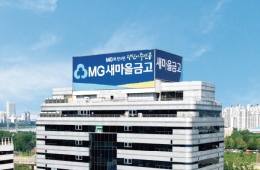
2.3 trillion won. This is the base purchase price listed in the recent stock purchase agreement between Doosan and SK Siltron. The transaction covers 70.61% of SK Siltron shares: SK’s 51% direct holding and another 19.61% through a total return swap (TRS) agreement. The 29.39% stake owned by Chey Tae-won, Chairman of SK Group, is not included in this deal.
However, this figure may not represent the final payment. This is because the agreement stipulates that Doosan might pay additional amounts several years later, depending on SK Siltron’s future performance. On August 10, in the "M&A Essentials" segment, we will take a closer look at the 'earn-out' clause in the Doosan·SK stock purchase agreement.
![Doosan May Pay More Than Contract Price to SK... What Is the 'Earn-out' Clause? [M&A Know-How]](http://www.asiae.co.kr/news/img_view.htm?img=2026080711301473407_1786069814.jpg)
M&A Safeguard That Narrows Buyer·Seller Price Gap
An earn-out is a mechanism where, if a company meets certain performance metrics or predefined conditions, the buyer pays additional compensation to the seller. Unlike an installment payment, payment obligations arise only if the conditions are satisfied. Ina Ye, a researcher at Korea Investment & Securities, explained, "This structure allows Doosan to limit its initial acquisition cost outflow, while SK is positioned to benefit from a portion of future gains that may be realized."
This earn-out has three branches: business performance, quality certification, and asset sales. The core provision is the EBITDA condition, which applies over the eight-year period from 2027 to 2034. The baseline EBITDA will be raised incrementally from 890 billion won to 1.7 trillion won. If the actual EBITDA exceeds these milestones and the detailed conditions are met, SK will receive an amount calculated as 40% of the excess, multiplied by the 70.61% equity stake—meaning about 28.2% of the surplus EBITDA will go to SK.
DS Investment & Securities interpreted the scheme as also applying a carryforward deduction, where shortfalls from previous years are first subtracted from subsequent excesses. Kim Suhyeon, an analyst at DS Investment & Securities, said, "If there is a 90 billion won shortfall from the previous year, only the remaining 10 billion won will be paid out. According to the formula, just 2.8 billion won of that 10 billion won goes to SK. Essentially, the hurdle for profit sharing is quite high."
![Doosan May Pay More Than Contract Price to SK... What Is the 'Earn-out' Clause? [M&A Know-How]](http://www.asiae.co.kr/news/img_view.htm?img=2026080711301573408_1786069815.jpg)
Quality certification and asset disposals are also linked to additional payments. If SK Siltron secures quality certification for four designated items by the end of June 2029, it will receive about 17.65 billion won per item—or roughly 70.6 billion won if all certifications are achieved. If SK SiltronUSA and other overseas subsidiaries’ assets are sold above book value, 70.61% of the profit from those sales will also go to SK.
"Sale During Industry Upturn... Future Value Calculated Later"
Not all M&A deals contain earn-out provisions. These are generally used when buyers and sellers have different views on future growth potential and use future performance as a way to reconcile those differences.
SK Siltron is not a fledgling startup with no track record, but rather a mature manufacturer with an established business. However, it’s important to note that this transaction takes place at the beginning of a turnaround in the wafer industry cycle. For Doosan, it is not necessary to factor all future recovery expectations into the initial purchase price, while for SK, if operating results improve significantly after the sale, it can secure part of those additional profits. Researcher Kim commented, "From the perspective of SK shareholders, there could have been regret over a sale at the start of a wafer industry rebound, but the earn-out clause allowing the company to recoup some profits through 2034 should allay those concerns."
Recently in the Korean M&A market, earn-out provisions are being utilized quite frequently. In the sale of SK Specialty in 2024, up to approximately 153 billion won will be paid additionally, depending on management performance and new business revenue, while if targets are missed, SK must pay about 17 billion won. Last year, DoubleU Games acquired an initial 60% stake in Turkish company Paxi Games, with the remaining 40% to be purchased under an earn-out structure that pays up to 40 million dollars over three years, based on future performance.
"Stakeholder Interests Last Eight Years... Disputes May Arise"
![Doosan May Pay More Than Contract Price to SK... What Is the 'Earn-out' Clause? [M&A Know-How]](http://www.asiae.co.kr/news/img_view.htm?img=2026080713170973482_1786076229.png)
The unusually lengthy earn-out period in this deal is also noteworthy. While earn-out terms in Korean M&A practice usually span two to three years, SK Siltron’s agreement will track performance for eight years, from 2027 to 2034. This means Doosan and SK will remain financially tied for a considerable period even after the transaction has closed.
These long durations increase the risk of disputes. This is because key decisions that impact performance—such as follow-on investment, expenses, and operational timing—are handed over to the buyer after the acquisition. In fact, when Krafton acquired U.S. gaming company Unknown Worlds for 500 million dollars in 2021 and agreed to an earn-out of up to 250 million dollars based on future results, previous shareholders later accused Krafton of delaying game releases and firing management to avoid triggering earn-out payments, resulting in litigation. The parties finally reached settlement last month.
Hot Picks Today
 "Expensive, Smelly and Scary"... What's Happened to the "Honeymooners' Paradise" Tourists Have Abandoned?
- Women Who Say "A Husband's Annual Salary of 100 Million Won Is a Given"... Matchmaking CEO: "They Talk About It Like It's Nothing"
- "I Want to Eat Like Koreans..." Foreigners Who Once Opened Ramen Packs Now Keep Gochujang in Their Pantries
- [2026 Parliamentary Audit] They Vowed to Grow Domestic App Marketplaces, but Criteria Still Favor Google and Apple
- "They Said Today Was the Cheapest..." "Let's Get Wedding Jewelry!" Why Did the Luxury Brand Crowds Flocked To Cut Prices by 1.08 Million Won?
Yang Seungsu, a researcher at Meritz Securities, analyzed, "The SK Siltron M&A is structured so as not to put immediate acquisition cost pressure on both parties, yet still reflects the potential for future improvement in performance and company value. For Doosan, the obligation is limited because any additional payments are strictly contingent on concrete results."
© The Asia Business Daily. All rights reserved. Unauthorized AI training and use prohibited.