"In This Weather, Without 'Shade Structures'... Government Expands Heatwave Mitigation Facilities"
First Introduced in 2015, Now Nearly 40,000 Shade Structures Nationwide This Year
Local Governments Roll Out a Variety of Innovative Shade Facilities
As the extreme heatwave continues for an extended period, the government is expanding heatwave mitigation facilities that are closely connected to daily life, such as shade structures.
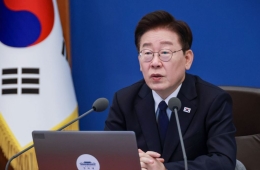
On August 7, Kwangyong Kim, Head of the Disaster and Safety Management Headquarters at the Ministry of the Interior and Safety, stated, "We will continue to increase the number of daily-life-friendly heatwave mitigation facilities, such as shade structures, so that everyone in the country can feel safer from the heat in everyday life." He emphasized, "Now that heatwaves have become common due to climate change, protecting the lives and safety of the people is the government's most important responsibility."

On the 25th, when a heatwave warning was issued in most regions nationwide, citizens were waiting for the signal under shade shelters at a crosswalk in downtown Seoul. Photo by Hyunmin Kim kimhyun81@
View original imageThis summer, the heatwave has been relentless, breaking the highest temperature record in 122 years since meteorological observation began in 1904.
The government has activated Level 2 of the Central Disaster and Safety Countermeasures Headquarters and is maintaining a pan-government all-out response system, utilizing all available media to inform the public of heatwave safety guidelines.
In particular, the government has consistently provided local governments with heatwave response funding (Special Disaster and Safety Grant Tax) to increase the number of daily-life-friendly heatwave mitigation facilities. As a result, the number of shade structures nationwide rose sharply, from 5,662 in 2019 when the first comprehensive survey was conducted, to 39,514 as of 2026.
Shade structures for urban pedestrians were first introduced in June 2015. The first example was when Seocho-gu, in Seoul, installed a foldable parasol-shaped shade called the 'Seoripul Ondumak' for citizens waiting for pedestrian signals under the harsh sun. In 2023, the Seoripul Ondumak was also selected as the first and best case in government innovation.
Initially, the legal status and installation standards under the Road Act were unclear. However, in 2017, the Ministry of Land, Infrastructure and Transport recognized shade structures as “road auxiliary facilities,” establishing safety and specification requirements. The Ministry of the Interior and Safety then created the “Guidelines for Installation and Management of Shade Structures for Heatwaves” in 2019, standardizing installation criteria and laying the foundation for systematic management.
Hot Picks Today
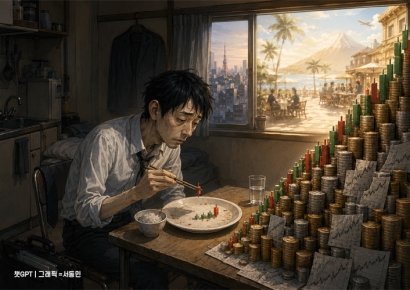 "Surviving on One Meal a Day to Invest 3.5 Million Won Monthly... 'FIRE' Craze Sparks 'NISA Poverty' in Japan"
- "Correction Over for Samsung and SK hynix" "670,000 for Samsung, 4.7 Million for SK hynix": Why Global IBs Remain Optimistic
- Naver Chairman Lee Haejin Meets with Brookfield Chairman for Follow-up Talks on AI Factory Project
- Causing Trouble Without a Simple "Sorry"... The Reason Behind the 'Gen Z Stare' Revealed
- Nongshim Third-Generation Executive Sangyul Shin to Wed SKT Employee on the 13th
Since then, local governments have introduced various shade structures tailored to regional characteristics and technologies. Examples include: the temperature and wind sensing “smart shade structures” and converting cold wave shelters to heatwave shelters in Gwangjin-gu, Seoul; the “cooling fog combined shade structure” in Buk-gu, Busan; the “yellow shade structures linked with the yellow carpet” for children's protection zones, and shade structures combined with round benches for the elderly in Cheonan, South Chungcheong Province.
© The Asia Business Daily. All rights reserved. Unauthorized AI training and use prohibited.