[Reporter’s Notebook] The Pitfalls of the “Easiest and Fastest Way”
Youth Debt-Fueled Investing Surges... Losses Disrupt Life Plans
"Stocks Are the Only Ladder": The Turmoil Sparked by Anxiety
![[Reporter’s Notebook] The Pitfalls of the “Easiest and Fastest Way”](http://www.asiae.co.kr/news/img_view.htm?img=2026080619494972686_1786013389.jpg)
"I didn't even have a decent home, let alone any significant assets saved up. Maybe that's why I became so impatient." "I started to think that I needed to earn at least as much as everyone else."
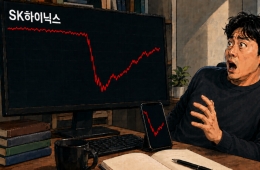
While interviewing individuals who took on debt to invest in stocks and then suffered losses, I heard stories like these. Nine out of ten of those interviewed said they invested due to similar psychological reasons, and, in the end, found themselves in even deeper trouble than others. Stories ranged from a graduate student surviving on one meal a day after failing to recover their initial investment, to an investor whose debt doubled as they tried to pay it off, and to a victim who was scammed while attempting to secure emergency cash. Sighs of regret echoed in my ears.
The losses did not end in their brokerage accounts. After balances built up through leveraged investments and borrowing collapsed, important life plans such as studies, marriage, and childbirth were shaken. The desperation to at least recover their principal made them targets for investment chat rooms and repeated scams. Among the 726 court verdicts involving investment-related issues, some involved harming family members or giving up on life. Stock market volatility has become not just an individual win-or-lose event, but a community-wide cost, shaking the future of young people and increasing crime.
It was in fact young people who took even riskier bets in the market. From the end of 2024 to June 2026, during the KOSPI rally, the balance of margin loans taken out by people in their 20s increased by 145.5%, and for those in their 30s, by 137.3%—higher growth than for those in their 40s (114.7%) and 50s (111.7%). The expectation that diligent saving of earned income could help today’s younger generation close the asset gap has now faded. Driven by impatience and the urge to capitalize, they chose risky investments in hopes of growing their wealth.
It is hard to dismiss this simply as individual greed. The government positioned capital market revitalization as a key tool for building public wealth, and the market saw a rapid rise in high-risk leveraged and inverse products. Combined with group psychology fueled by social networking services (SNS), the market was shaken by the "fear of missing out" and the "fear of losing at the slightest drop." On the other hand, there were not enough mechanisms in place to moderate overheated risk-taking or to absorb those risks. Policies failed to effectively warn investors of potential losses or protect vulnerable investors.
Hot Picks Today
 "There Was Such a Star Performer at SK"... The Top 2Q Earnings Surprise Missed While Watching Only Hynix
- “Told to Apply as a New Graduate Without Experience”…Samsung Employees Frustrated as Path to SK hynix Is Blocked
- "Let's Clean Out Korea!" Foreign Tourists Flock, Going Wild Over This 3,000-Won Item
- [Extreme Heatwave] South Korea Trapped in a Pressure Cooker... Triple Threat of Soaring Food Prices, Drought, and Aquaculture Crisis
- "I Always Made Sure to Eat Naengmyeon..." Food Poisoning Cases Surge by 28%—What's Behind the Increase?
President Lee Jae-myung has said since his candidacy that "revitalizing the Korean stock market is the fastest and easiest path to sound asset growth for the people." The reality—that many investors who followed that path have been saddled with debt—is worth reflecting upon. The core of the problem is not stocks themselves, but the belief that stocks can deliver quick riches or rapid social mobility. For ordinary people, it is most appropriate for stocks to be a means of preparing for retirement through long-term investment. While it was the market that drove semiconductor stock prices up in the short term, it was the government’s hasty policies that poured fuel on the fire. Now, we must instill the understanding—especially among those seeking a ‘ladder to wealth’—that long-term investment is the only true answer, and steer them in that direction. This is the lesson the government must take from past mistakes.
© The Asia Business Daily. All rights reserved. Unauthorized AI training and use prohibited.