The Era of 3 Million Won Starting Pay for Grade 9 Officials... Government to Improve Treatment for Junior Public Servants
"Key Work Plan for the Second Half of 2026"
Gradual Increase in Designated Recruitment Quota from 6% to 10%
The government has decided to raise the starting monthly salary for Grade 9 civil servants to around 3 million won starting next year in an effort to enhance competitiveness within the public sector.

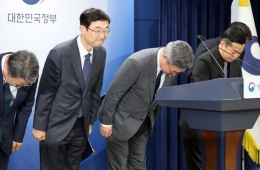
On August 5, the Ministry of Personnel Management announced this plan as part of the "Key Work Initiatives for the Second Half of 2026" during a work briefing presided over by President Lee Jaemyung at the State Guest House of the Presidential Office.
To improve treatment for junior civil servants, whose pay is relatively low, the government will increase the monthly salary for Step 1 of Grade 9 civil servants to around 3 million won next year. The current starting annual pay for Grade 9 civil servants, including base salary and various allowances, is 34.28 million won, or an average of 2.86 million won per month.
The overall pay raise rate for all civil servants for next year is also expected to be determined soon. Previously, the Civil Service Pay Commission reached a final agreement to increase next year's salaries by 3.4 to 3.9 percent. After a review by the Ministry of Economy and Budget, the specific increase rates will be reflected in the budget proposal for the following year.
The government will also lower barriers for local youth to enter public service. The proportion of Grade 9 open competitive regional recruitment, which currently accounts for about 6 percent of the total, will be expanded to around 10 percent by 2028. In addition, eligibility requirements for the Grade 7 and Grade 9 Regional Talent Recommendation Program will be relaxed so that more young people from local areas can apply for public positions.
Furthermore, a new “regional extra point system” will be introduced to favor applicants who have lived long-term in non-metropolitan areas. For recruitment of civil servants on the condition of local service, an additional 3 percent will be awarded to candidates who have resided in the area for more than 15 years.
To reduce situations where young people give up applying for public positions due to career or academic requirements, recognized career experience for civil service recruitment will be broadened. The hiring process will now recognize experience as individual entrepreneurs (such as founding a startup) and relevant work experience prior to acquiring certifications. The system will also be improved to allow those expecting to receive academic degrees to be eligible to apply.
The government is also speeding up efforts to foster “expert civil servants” who build specialized expertise through long-term service in a specific field. In areas requiring specialized knowledge—such as artificial intelligence (AI), patent technology screening, and industrial safety supervision and investigation—the government plans to secure more than 1,200 expert civil servants by 2028. In addition, a “sub-specialist track” will be established, creating a separate career route from Grade 6 as a specialist to senior specialist.
For positions requiring specialized knowledge from the private sector, the number of open positions will be increased to more than 500 by 2030 to attract external talents. Ministries will also be allowed to autonomously set private sector-level salaries for certain fields and positions.
In addition, a "Grade 5 Early Promotion System" will be implemented, allowing outstanding Grade 6 civil servants to be fast-tracked to Grade 5 after performance and competency evaluations. A new "Grade 6 Open Competition System" will also be introduced, providing capable Grade 7 civil servants with the opportunity to advance to Grade 6 more rapidly than before.
Hot Picks Today
 "Even New York Taxi Drivers Are Talking About the KOSPI; South Korean Market to Top 9,000 Again Within a Year"... 'Wall Street's Stock-Picking Ace' Names His Picks
- Gimbap Is a Huge Hit in the U.S.... Yet Disappearing from Menus in Korea
- '100 Million Won Nomination Bribe': Kang Sunwoo Sentenced to 2 Years, 6 Months in First Trial... Plans Appeal (Roundup)
- Incheon Knife Rampage Suspect: "I Chose People Who Looked Weaker Than Me"
- 220 cm-Tall 26-Year-Old Woman Dies Less Than a Year After Giving Birth... Deadly Complications Hidden Behind 'Gigantism'
Choi Dongseok, head of the Ministry of Personnel Management, stated, "The transformation of government that citizens actually sense ultimately depends on how competently the public sector works, how responsibly it acts, and whether civil servants receive proper compensation," adding, "We will swiftly implement personnel reform tasks to create a vibrant public sector."
© The Asia Business Daily. All rights reserved. Unauthorized AI training and use prohibited.