When Is the Best Time to Exchange Currency Before Traveling to Japan? [Weekend Money]
First Joint FX Market Intervention by the U.S. and Japan in 30 Years
U.S. Sells Euros and Buys Yen—Goal: 'Defending the U.S. Treasury Market'
Japan Maintains Lowest Rates Despite Massive Debt
"Weak Yen Structure Remains Unchanged"
On July 31, the United States and Japan jointly entered the foreign exchange market to buy Japanese yen. This marks the first time in nearly 30 years since 1998 that both countries have joined forces to purchase yen. The Federal Reserve Bank of New York sent a signal by conducting a “rate check” with trading banks a day earlier, inquiring about exchange rates, and then, on July 31, sold euros and bought yen on behalf of the U.S. Treasury. The Bank of Japan (BOJ) is also estimated to have intervened for two consecutive days, injecting between 6 trillion to 8 trillion yen. The dollar-yen exchange rate, which had been hovering in the 160 yen range, dropped to the 155 yen range intraday on August 3.
Cha Young-hoo, a researcher at Eugene Investment & Securities, analyzed in a recent report that the effect of this intervention “is nevertheless likely to be short-lived.” He explained that this is because the structural factors behind the weak yen still remain.
Why Did the U.S. Step In to Buy a Foreign Currency? ...Protecting the U.S. Treasury Market
![When Is the Best Time to Exchange Currency Before Traveling to Japan? [Weekend Money]](http://www.asiae.co.kr/news/img_view.htm?img=2026080616385172551_1786001931.jpg)
Foreign exchange intervention is usually carried out by a country when its own currency is unstable. It is unusual for the United States to step in and buy yen.
Researcher Cha saw the purpose as defending the U.S. Treasury market. Japan is the world’s largest foreign holder of U.S. Treasury securities, with holdings amounting to about $1.14 trillion. To defend the yen, Japan needs dollars, and if it sells U.S. Treasuries to secure those dollars, U.S. interest rates would be pushed up. To protect its own market, the United States is thus forced to help Japan so that it does not sell its Treasury holdings.
This character is also evident in the way the intervention took place: the United States bought yen not by selling dollars but by selling euros. This allows the yen to strengthen without lowering the value of the dollar.
Interest rates are already burdensome. The yield on the 10-year U.S. Treasury note has risen by 0.5 percentage points just this year, and the 30-year yield has reached the 5.2% range, approaching levels seen during the financial crisis. Capital expenditure forecasts for hyperscalers (big tech companies operating large-scale data centers) continue to be revised upward, but Alphabet and Amazon have swung to negative free cash flow (free cash flow is cash generated minus capital expenditures). They will have to fill the shortfall with corporate bonds, but if interest rates rise further, it will be difficult to continue investing in AI.
Highest Debt in the G7, Lowest Interest Rates...The Root Cause of the Weak Yen Remains
![When Is the Best Time to Exchange Currency Before Traveling to Japan? [Weekend Money]](http://www.asiae.co.kr/news/img_view.htm?img=2026080616355372542_1786001753.png)
As of 2024, Japan’s general government debt as a percentage of gross domestic product (GDP) stands at 214%—the highest among the Group of Seven (G7) countries. Meanwhile, long-term interest rates in Japan remain the lowest in the G7. This is because the BOJ has continued to purchase government bonds, suppressing the risk premium (the additional yield required by investors for countries with greater fiscal risk). Japanese long-term bonds do not provide yields commensurate with their fiscal risk.
Money follows interest rates. This is the foundation for the yen carry trade, where investors borrow yen at low interest rates and invest in assets of countries with higher yields. Since 2000, the real value of the yen has fallen by 57%.
However, it is not easy for the BOJ to quickly raise interest rates. If long-term rates rise, Japanese financial institutions—holding large amounts of government bonds—would see valuation losses, and the government’s interest expenses would increase. Although the BOJ ended its YCC (Yield Curve Control, a policy that keeps long-term interest rates within a certain range) in March 2024 and is reducing its government bond holdings, it has stated that it could increase its government bond purchases regardless of its plans if yields surge.
Moreover, the government has ambitious spending plans. Prime Minister Sanae Takaichi’s cabinet announced a public and private investment roadmap of $2.3 trillion over 14 years last June, and has also pledged to lower the food consumption tax rate from the current 8% to 1% for two years beginning April 2027. It is still unclear how the resulting decline in tax revenues will be compensated for, raising concerns about further issuance of deficit-covering government bonds. It is thus difficult to either raise rates or reduce debt.
The Won Strengthened by 20, but..."After August, It May Rise Again"
![When Is the Best Time to Exchange Currency Before Traveling to Japan? [Weekend Money]](http://www.asiae.co.kr/news/img_view.htm?img=2026080616361672543_1786001776.png)
This intervention also left a mark on the Korean won exchange rate. During July 30-31, when Korea, the United States, and Japan simultaneously intervened in currency markets, the dollar-won exchange rate fell by about 20 won at the closing price. With the recent tendency for the won and yen to move in the same direction strengthening, concerns over further intervention could act as upward pressure on the won. However, if the yen’s strength proves short-lived, the force supporting a stronger won will also be limited.
Until August, there are several factors favorable to the won. These include the period for interim corporate tax payments and repatriation of export proceeds—such as the funds for SK hynix ADR (American Depositary Receipt)—back to Korea. After that, however, circumstances could change. The ongoing increase in overseas asset investment by Korean residents will persist as a factor gradually weakening the won.
Hot Picks Today
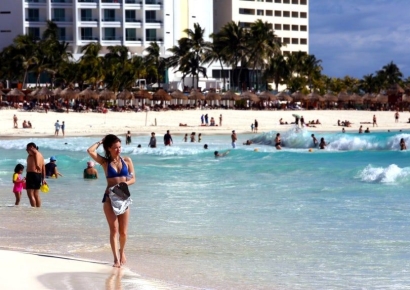 "Expensive, Smelly and Scary"... What's Happened to the "Honeymooners' Paradise" Tourists Have Abandoned?
- Women Who Say "A Husband's Annual Salary of 100 Million Won Is a Given"... Matchmaking CEO: "They Talk About It Like It's Nothing"
- "I Want to Eat Like Koreans..." Foreigners Who Once Opened Ramen Packs Now Keep Gochujang in Their Pantries
- [2026 National Assembly Audit] Safety violations persist after radiation exposure accidents; nuclear plant Accident Management Plans stalled for seven years (comprehensive)
- "They Said Today Was the Cheapest..." "Let's Get Wedding Jewelry!" Why Did the Luxury Brand Crowds Flocked To Cut Prices by 1.08 Million Won?
Researcher Cha noted, “Despite the unusual nature of U.S. cooperation, unless there is progress in government fiscal discipline, further rate hikes by the BOJ, and a rate cut from the Federal Reserve, the effects of the intervention will be difficult to sustain in the long term.” He added, “After August, renewed attention to Korean capital outflows will likely push the won-dollar rate above 1,480 won by the end of the year.”
© The Asia Business Daily. All rights reserved. Unauthorized AI training and use prohibited.