Concern Over Rental Market Turmoil? Democratic Party Considers Easing Residency Requirements for Non-Resident Single Homeowners
Real Estate Policy Response Meeting
Reviewing Expanded Criteria for Recognizing Non-Residency
Exceptions for School and Overseas Stays Already Considered
Ongoing Debate Over Equity in Tax Burdens
Monitoring Redevelopment Projects and Assessing Youth Housing
Final Judgment on Supply Measures Reserved Until Additional Government Action
The Democratic Party of Korea has decided to consider ways to apply tax policies more flexibly to non-resident single households. While the recent government real estate tax reform plan aims to increase the tax burden on non-residents, the party appears intent on preventing broader ripple effects in the monthly and annual rental markets. It is expected that, during the upcoming National Assembly discussions, various measures will be included to recognize periods of non-residency as residency in cases of unavoidable circumstances. The party also decided to reserve judgment on much-anticipated supply initiatives until additional government measures are announced.
During a Democratic Party real estate policy response meeting hosted by the Seoul Metropolitan Party at the National Assembly on August 6, participants discussed measures to supplement government policies, focusing on these issues. Youngbae Kim, head of the Seoul Metropolitan Party, stated, "Many concerns have been raised regarding non-resident single households, so we plan to examine the matter in conjunction with the Seoul Metropolitan Council." Gihyung Oh, another Assembly member, added, "There are calls for a more flexible approach to non-resident single households, and we aim to gather a broad range of opinions."

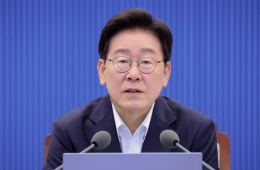
On the 6th, a real estate policy meeting of the Democratic Party Seoul Metropolitan Council was held at the National Assembly Members' Office Building. From the left, Democratic Party Representatives Youngbae Kim, Jeongae Han, Policy Committee Chair, Insoon Nam, Vice Speaker of the National Assembly, Seongjun Jin, and Gihyung Oh. Photo by Yonhap News.
View original imageThe tax reform plan announced by the government on August 3 centers on increasing property holding taxes for ultra-high-priced properties and non-resident households. For non-residents, the basic deduction has been lowered to 900 million won, compared to 1.4 billion won for residents, and the long-term holding special deduction has been converted to a residency deduction.
However, the government has stated that certain circumstances—such as studying or working in another region, overseas stays, or providing family care—will be recognized as residency periods when calculating capital gains or comprehensive real estate taxes. In addition, for newly-built homes acquired through redevelopment or reconstruction, half the construction period will be counted as residency, and for registered rental properties, houses for construction rental or those located outside designated regulatory zones will have their rental periods recognized as residency. Despite these changes, various problems have been raised—including differences in how capital gains tax and comprehensive real estate tax are recognized, as well as requests to include additional reasons—prompting lawmakers to collect more opinions and discuss them in the National Assembly.
Assemblyman Oh stated that the main aim of the government's tax reform plan is tax rationalization, rather than directly influencing housing prices. However, as the increased holding tax for high-value homes could lead to higher overall tax burdens, there are some concerns that public opinion could worsen, especially in certain regions.

The Democratic Party also plans to monitor unregulated urban renewal projects being promoted within Seoul. While redevelopment and reconstruction projects can to some extent increase housing supply, there is concern that home demolitions could exacerbate shortages in the monthly and annual rental markets. Assemblyman Kim commented, "Mayor Sehoon Oh emphasizes the provision of homes through urban renewal, but we are worried about the problems caused by home demolition, especially regarding rental market challenges for young people. We will review these issues from multiple angles, including the broader housing ladder problem faced by the younger generation."
Even within the ruling party, there is consensus that Seoul faces a housing supply shortage. Yet, conflicts often arise between government, ruling party, and the Seoul government regarding measures for expanding housing supply. At the meeting, most participants agreed that more housing supply is needed, but decided to make detailed decisions after the government’s upcoming announcement of additional supply measures. Assemblyman Kim said, "We will discuss the details after reviewing the government's plan."
The housing construction and development industry continues to call for deregulation to encourage housing supply. Industry experts believe more proactive measures, such as easing financial restrictions, are needed to boost supply. However, there has not been any discussion in the ruling party about relaxing loan regulations for supply expansion. The industry argues for a shift away from aggregate limits on project financing (PF), recommending instead a qualitative approach based on the viability of each project, or differentiated regulations depending on housing type and project stage.
Hot Picks Today
 "Ruined Because of Korea" Even with a Sharp Rally, No One Buys... Japanese Market Sways with KOSPI
- '1,670,000 Won to 1,170,000 Won': SK hynix Hits Lower Limit Shock, Pre-market Opening Price Controversy
- "Don't Be Sad, Mom Was Very Happy"... Son Battling Illness for Life Saves Four Before Passing Away
- Seoul’s 39-Degree ‘Extreme Heat’ Is Just the Beginning... Experts Warn: “It Will Persist Until 2050”
- "Unsettled by Korean Goods, Just Throw Them Away" — Japanese Netizens Respond with Harsh Comments to Relief Supplies
The industry also advocates for new programs involving participation from policy banks or pension funds, and for removing interim payment or relocation loans from aggregate restrictions. Other suggestions include reintroducing purchase and lease registration only for local apartments as a measure to stimulate regional economies, temporarily waiving higher tax rates for these regions, reinstating temporary capital gains tax cuts for the purchase of unsold homes in regional areas, and exempting regional properties from the stress DSR requirements.
© The Asia Business Daily. All rights reserved. Unauthorized AI training and use prohibited.