[The Editors' Verdict] Democratic Party Convention Now Dominated by Those Born in the 1960s
The Democratic Party No Longer Boldly Selects Young Leaders
Politics Can Only Regain Dynamism When a New Generation Steps Up
![[The Editors' Verdict] Democratic Party Convention Now Dominated by Those Born in the 1960s](http://www.asiae.co.kr/news/img_view.htm?img=2026081108403475954_1786405234.jpg)
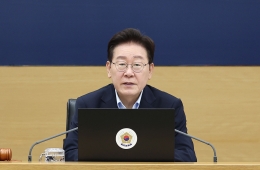
The Democratic Party's national convention, where the new leadership of the ruling party will be elected, has turned into a stage for those born in the 1960s. All three candidates running for party leader—Kim Minseok, Jung Cheongrae, and Song Younggil—were born in the 1960s. Another commonality among them is that all three became members of the National Assembly in their 30s.
Kim was elected to the National Assembly at the age of 31 in the 15th general election in 1996. Song was elected at the age of 37 in the 16th general election in 2000, while Jung was elected at 39 during the 17th general election in 2004.
At that time, Korean politics boldly opened the door to a new generation. Drastic nominations led to voter choices, and young politicians proved themselves with their abilities. These three were not the only examples of bold recruitment of young politicians. Han Byungdo, acting leader of the Democratic Party, also entered the National Assembly for the first time at the age of 36.
The younger generation was not simply used as a backdrop for established politics. They were put forward as symbols of reform and given real power. It was for this reason that Kim Minseok, as a young politician, was nominated as the ruling party’s candidate for Seoul mayor at 37. Young politicians entering the political arena inspired hope among their peers. Many young people came to expect that their own generation could one day take center stage in politics.
The experiment at that time proved successful. Young politicians did not remain a one-time event, but instead grew to become a mainstay of Korean politics. Thirty years have passed since those born in the 1960s became a dominant force in politics. They still remain mainstream. Meanwhile, the generations following them have struggled to become central figures. Those born in the 1970s, 1980s, and 1990s remain on the periphery. The political order dominated by those born in the 1960s has become a barrier to generational change. The dynamism of Korean politics has faded.
The main election lineup for the Democratic Party’s August 17 national convention is a symbolic illustration of this reality. All three candidates for party leader and all eight candidates for the Supreme Council were born in the 1960s. Of the 11 candidates, the youngest is Han Minsoo, born in 1969, who is 57 years old this year. There are no candidates in their 20s to 40s, nor even in their early 50s.
It is not that there were zero younger entrants to the August 17 national convention. In the leadership race, Koh Minjung (born in 1979) and Kim Bomi (born in 1989) announced their candidacies. For the Supreme Council, candidates included Kim Hyungnam (born in 1989) and Jeong Mincheol (born in 2001). However, all of these candidates in their 20s to 40s were eliminated during the preliminary rounds. Commentators have pointed to the combination of an incumbent-dominated political structure and the negative effects of factional, ‘line-up’ politics as the reason.
Hot Picks Today
 "There’s Good Reason for Samsung’s 600,000 Won Target Price... Stock Surges on Expectations of At Least Tenfold Increase in Shareholder Returns"
- "Regardless of Income, 500,000 Won Per Person, 2 Million for a Family of Four"... This Place Begins Livelihood Support Payments
- "Working in Heatwaves Is Already Tough"...More Heat Exposure Leads to Faster Aging
- "Even a One-Time Payment of 77 Million Won Isn’t Enough"—Russia's Forced Conscription Now Targets Workplaces and Streets
- "Cooler Than Air Conditioning?"...Sudden Midnight Stench and Burst: The Story Behind China's 'Natural Cooling Item'
The August 17 national convention makes it difficult to find traces of the Democratic Party’s previous willingness to boldly select young leaders. Competition is fierce, to the point that concerns have been raised about disorder and overheating, but there is little sign of dynamic change for the future. Even with a new leadership, existing issues are unlikely to be resolved. The vitality of politics is only sparked when a new generation takes the central political stage, not when power is simply transferred within the same generation.
© The Asia Business Daily. All rights reserved. Unauthorized AI training and use prohibited.