Youngbae Kim: "Seoul Is a Tough Battleground, Arrogance Is Not an Option" [Current Affairs Show]
[Interview] Kim Youngbae, Democratic Party of Korea Lawmaker
"Policy Chief Kim Yongbum Should Exercise Self-Restraint"
"Will Work on Follow-up Measures to Amendment of Criminal Procedure Act"
■ Broadcast: The Asia Business Daily "So Jongseop's Current Affairs Show" (Monday to Friday, 4-5 PM)
■ Host: So Jongseop, Political Specialist ■ Director: Producer Lee Miri
■ Guest: Youngbae Kim, Democratic Party of Korea (August 5)
※ When quoting this article, please make sure to cite "So Jongseop's Current Affairs Show".
So Jongseop: Hello, everyone. Welcome to So Jongseop's Current Affairs Show. We’ll have a lively talk with Assemblyman Youngbae Kim of the Democratic Party of Korea. Thank you, Assemblyman Kim, for taking the time out of your busy schedule to join us.
Youngbae Kim: Hello, this is Youngbae Kim.
So Jongseop: You are the sole candidate for the Democratic Party of Korea’s Seoul City Party Chairman position. It seems you are busy meeting with party members these days.
Youngbae Kim: After losing the Seoul mayoral race in the last local election, there is a strong sense of crisis. And because the struggle for party leadership is so intense within the party, I feel that, at least in Seoul, instead of holding a competitive primary, the party members have instructed me to play the role of a platform for concerted cooperation to secure victory in the general election and to prepare for a potential runoff Seoul mayoral by-election. That makes the responsibility on my shoulders even heavier. Even though I’m running unopposed, party members still have to vote, so I’m telling them about my determination to get the work done properly.
So Jongseop: What was the main reason you decided to run for Seoul City Party Chairman?
Youngbae Kim: The biggest reason was the enormous shock of losing the Seoul mayoral election. The President is only one year into office, but we lost the Seoul mayoral race. That was a clear warning. Seoul citizens basically sent a strong message, telling us to get our act together. That’s why I decided, after much thought, that we need a Seoul City Party that responds to such calls. If I become Chair, even if there’s a Seoul mayoral by-election next year, I won’t run as a candidate—I intend to act as a supervisor, like a good manager such as Hiddink. That is my decision.
So Jongseop: Why do you think the party lost the Seoul mayoral election?

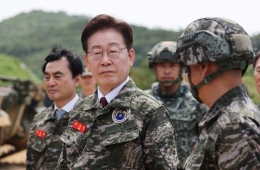
Kim Youngbae, a member of the Democratic Party of Korea who ran unopposed for the position of Seoul City Party Chairman, appeared on the program "So Jongseop's Current Affairs Show" on the 5th for an interview.
View original image6·3 Seoul Mayoral Election: Policy Preparation Lacking, Campaigns Mishandled
Youngbae Kim: The main reasons lie in failing to meet the high expectations of Seoul citizens and the pride they have as residents of a global city. There are two core issues. First, from real estate policies and beyond, voters felt our policies were not adequately prepared. This included significant dissatisfaction among young people.
If you are the ruling party, you should compete based on your vision for real estate as well as youth job creation. Instead, it proceeded with an arrogant attitude, as if everything was already secured. In my view, that was the first major cause of our shocking defeat.
The second reason is that the candidate and those leading the campaign, including the Seoul City Party, mishandled campaign efforts, falling into complacency and assuming victory. They appeared to take the election for granted, expecting voters would automatically support them. The complacency of the Seoul City Party and candidate’s campaign staff was the second cause. Above all else, this result should be seen as a stern warning and wake-up call for all politicians, including the National Assembly members. We must accept this as a clear signal to stay alert and diligent.
To lead both the Lee Jaemyung administration and the Democratic Party of Korea to success in Seoul and win the upcoming general election, we need someone at the Seoul City Party with strong policy expertise and political acumen, who also understands the field. Though my capability is limited, I intend to bring all my experience to bear in preparing for both the general election and a possible Seoul mayoral by-election. If the Democratic Party loses a Seoul mayoral by-election next year, do you think the general election held right after would turn out fine? It could become a crisis severe enough to destabilize the entire government. That’s how grave the upcoming general election will be. If I am inaugurated as Seoul City Party Chairman, I will immediately switch to an all-out emergency mode and begin preparations.
Key words: Everyday Politics, Millennials & Gen Z, and On-site Communication
So Jongseop: What are the key themes in your all-out emergency strategy?
Youngbae Kim: There are two main policy focuses. The first is improving people’s lives—in other words, winning trust that real estate issues, housing, and jobs will get better. That can be summed up as "everyday politics." The second has to be Millennials & Gen Z. Seoul is a city of opportunity and challenge, and is South Korea’s showcase city. It shapes the country’s future, so a party without a vision is unfit to lead the capital. So, I see Millennials & Gen Z as the second key theme. Thirdly, on-site communication is essential. In the early days of President Lee Jaemyung’s administration, he was praised for working well based on his direct communication with citizens and his understanding of the real world. But lately, that has dulled a bit. Now the Seoul City Party needs to step up and take on crucial tasks that the President cannot manage alone by saying, "We’ll take responsibility for Seoul"—this is what I mean by on-site communication.

Democratic Party of Korea lawmaker Youngbae Kim (right) said, "Seoul has become a difficult area for the Democratic Party, having lost three consecutive mayoral elections."
View original imageSo Jongseop: You said Seoul has become a difficult region for the Democratic Party, but aren’t most of Seoul’s National Assembly members from your party? Why do you see it as a tough region?
Youngbae Kim: That’s a misconception that could be dangerous for the Democratic Party if we become complacent. When I was first elected as Mayor of Seongbuk District in 2010, the population of Seoul was 10.3 million. Now, after 15 years, it’s dropped by almost exactly 1 million, to 9.3 million. Most of those who left—mainly 30- and 40-somethings—moved to Gyeonggi Province or elsewhere. As a result, Seoul’s population is now aging rapidly.
Younger people tend to have less wealth, so those who remain are relatively wealthier. It’s hard to appeal to Seoulites solely by branding ourselves as the party of the middle class and working class. That is a structural factor. The second factor is that, as the economy and the Han River Belt prosper, Seoul draws more attention from the world. That increases real estate values, including apartments, making the city more attractive to more conservative voters, relatively speaking, compared to the Democratic Party’s base. We have lost three consecutive mayoral elections in Seoul, and even in the 2025 presidential election, when President Lee Jaemyung was elected, the progressive camp lost to the conservatives by 3% in Seoul. Going forward, Seoul will be a much more challenging region than before, and the Democratic Party must be clearly aware of that.
Seoul Has Become Difficult for the Democratic Party—Conservatives Outnumber Progressives
So Jongseop: Public sentiment in Seoul is especially sour regarding real estate. With overall public opinion not very favorable, how do you view the situation?
Youngbae Kim: First, let me clarify that the government didn’t just announce new real estate tax policies. The government’s budget process begins on September 1, when the regular session of the National Assembly opens, so the budget bill must be submitted to the Assembly on that date. The Ministry of Planning and Budget needs to announce new budget legislation by late July to prepare the drafts, get them passed in the Cabinet, and signed off to be sent to the Speaker of the National Assembly. That’s why a comprehensive package of tax proposals was announced at this time.
Even though it might look as if only new real estate tax plans were unveiled, in fact that’s not the whole story. Second, I’d point out that the real estate tax measures are not intended punitively to collect more money or to target the wealthy with penalties. The public is aware of this. Just look at Samsung and SK: even their excess tax revenues this year are expected to exceed 100 trillion won, perhaps reach 200 trillion won. So what does this mean? Although the stock market is fluctuating wildly now, compared to before, it’s at more than double its previous activity levels.

On the 6th, a real estate policy meeting of the Democratic Party of Korea Seoul Metropolitan Council was held at the National Assembly Members' Office Building. The person on the far left is Representative Kim Young-bae. Photo by Yonhap News Agency
View original imageWith the capital market activated, money that had flowed into real estate for speculative purposes is being used more productively, and the real estate market itself is being normalized. Preferential tax treatment for certain groups is being scaled back, leveling the playing field and boosting fairness. That’s what we call the normalization of real estate taxation. This is the context for the recently announced package.
So Jongseop: What do you think needs to be done next?
Youngbae Kim: First, we need to thoroughly explain the announced tax plan. As mentioned, it is crucial to explain that this is not about punishing the wealthy. The Democratic Party has been plagued by accusations of being unduly punitive toward owners of multiple homes, so there are now various measures to dispel that perception. We tried to ensure fairness by examining both owners with multiple properties and those with a single valuable property, and, for ultra-high-value homes, the burden was increased, while for middle-class homes worth less than 3 billion won, the comprehensive real estate holding tax burden was reduced, offering real benefits to the middle class.
However, some worry that merely adjusting tax rates without increasing housing supply won't do much to stimulate transactions, and that since taxation is focused on owner-occupiers with a single property, owners of multiple homes or those with nonprincipal homes still face heavier burdens. This could lead to higher rents or jeonse prices, or even speculative demand being drawn into mid-range areas from 2 to 3 billion won, causing volatility across Seoul and increasing housing anxiety among ordinary citizens—especially as loans remain hard to access. Citizens have these concerns. We plan to carefully review these issues and, as the bill still needs to pass the National Assembly by early December (about three months from now), the Democratic Party will take full responsibility for making necessary revisions and for communicating openly with citizens.
Additional Attention Needed for Supply and Middle-Class Burdens
So Jongseop: On August 6, members of the Democratic Party from Seoul are expected to meet to discuss the real estate issue. What do you plan to discuss?
Youngbae Kim: I think there are two main areas to address. One is the potential for increased burden on the middle class, and how we can prevent that. The other is, of course, the supply issue. The supply question extends to non-apartment areas—which are more than 50% of Seoul—such as redevelopment and reconstruction. Comprehensive housing and supply solutions for ordinary citizens are somewhat lacking in the current package. I believe our party must focus on these core elements as well.
So Jongseop: Your standing committee is the Public Administration and Security Committee. With the passage of the criminal procedure amendment, public concern has grown. Even the President has spoken about the need for checks on police authority. Which areas do you think need further actions?
Youngbae Kim: The ruling party, including myself, must take full responsibility for ensuring that citizens’ human rights are not violated. There are widespread concerns about a “dinosaur police force.” Internally, a dedicated department will handle supplementary investigations within the Serious Crime Investigation Office, known as the Jung Suchung. When prosecutors request supplementary investigations, if the crimes are not serious, Jung Suchung won’t take charge. Even with standard offenses, if a request is delayed, the dedicated team at Jung Suchung can handle supplementary investigations promptly. We’ve created double and triple-layered safety mechanisms. If a suspect or defense attorney feels dissatisfied, they can always request a meeting with a prosecutor to report any suspicions about the police, so that supplementary investigations can be undertaken immediately. We have also established this system by law.
Nevertheless, if concerns still arise, there is the National Police Commission. We are making it more substantial, with both an Investigation Review Committee and an inspection body under its umbrella so that any suspicious or irregular investigations, cover-ups, or improper interventions can be immediately inspected. The inspection body will be empowered to act in real time, and the Investigation Review Committee—which includes outside experts—can instantly review contested cases. With 130,000 police personnel and nearly 200 police stations nationwide, further safeguards and procedures will be added, especially targeting seven major crimes like crimes against women and children and sexual violence. We are also preparing further legislation, so please be patient while we perfect these follow-up measures.
So Jongseop: What about personnel and intelligence in the police force? The information branch extends nationwide, and there are concerns over the independence of police appointments.
Youngbae Kim: There are ongoing measures to prevent the Commissioner General or local precinct chiefs from directly receiving investigation reports, and this separation will be maintained. The internal independent inspection system is key, and to make it function properly, the National Police Commission must include many external members and have more actual power than the Commissioner General. This is a matter to be resolved through legislation, and we are engaged in sufficient discussions with the Office of the President.
Ensuring Independence in Police Appointments Through a Substantive National Police Commission
So Jongseop: Guaranteeing independence in police appointments seems highly important as well.
Youngbae Kim: There have always been claims that the Blue House’s Senior Civil Affairs Office effectively controls police appointments. Not to get into every detail, but generally, the President must supervise the Commissioner General and check the overall functioning of the police. That implies some natural involvement in appointments. Therefore, for true checks and balances, neither the Minister of the Interior nor the Office of the President should interfere. Ultimately, the National Police Commission, if made more substantial, is the only way to resolve these issues. That’s why the commission’s strengthening has already been made a critical state project by the National Policy Planning Committee, even since President Lee Jaemyung’s transition committee. I’ll do my utmost, as this will be a key issue in the regular National Assembly session.
So Jongseop: With the introduction of single-stock leverage ETFs, the stock market has been highly volatile, and responsibility is being discussed regarding policy chief Kim Yongbeom and others. What is your view?
Youngbae Kim: Serving as a presidential aide is truly a double-edged sword. As a direct conduit for the President’s intentions, aides work to explain and communicate the meaning and direction of presidential policy to the public and the political world, aiming to fulfill their role as a national policy control tower. On the other hand, ministers and senior officials sometimes criticize the aides for making presidential intentions too visible, for being overly assertive, or for actions that the President might later regret. Praise is rare when the market index goes from 3,000 to 9,000, but when it falls or becomes volatile, calls for dismissal arise. It’s almost a destiny of the position.
And it’s not only Korea’s stock market—volatility is just as severe in the United States. Stock prices swing wildly, sometimes shifting 5-10% in a day on a single comment from President Trump. Sometimes it is reported that only Trump profited, while everyone else lost money. In such an atmosphere, civil sentiment hardens, so those in authority must be even more cautious and strive for public trust by exercising self-restraint and diligence.
Policy Chief Kim Yongbeom Must Exercise Self-restraint as Public Anger Rises
So Jongseop: Do you think he should be held accountable?
Youngbae Kim: With the regular National Assembly session approaching and major mega-projects already announced, shouldn’t these at least result in legislation and budgetary policy by the end of this year? In addition, Korea-U.S. investment ties are just beginning. With massive foreign investments on the horizon, it’s crucial to have a trustworthy policy channel with the U.S. government. Even though there is public anger and some controversial issues, I think it is better to give it a little more time.
So Jongseop: Are you saying that Policy Chief Kim Yongbeom should be more self-restrained?
Youngbae Kim: As I said earlier, I hope he will exercise self-restraint, act more cautiously, and work to gain public trust. He must remain aware that he is under intense public scrutiny and should keep a lower profile for now.
So Jongseop: This concludes our interview with Youngbae Kim, Assemblyman from the Democratic Party of Korea. Thank you for your insights today.
Youngbae Kim: Thank you.
Hot Picks Today
 "South Koreans Are All Buying It to Take Home"... This "Drug" Costs 350,000 Won in Korea but Just 80,000 Won in Japan
- "Buy While It's Cheap"... Retail Investors Snap Up KRW 30 Billion in Bank Gold Bars as Prices Fall, Flocking In at a Frenzy
- "I Won't Be Able to See My Own Funeral When I Die"... U.S. Grandmother Holds "Living Funeral" for Her 80th Birthday
- "After Calculating Our Bonuses, It's at Least 3 Billion Won; Feels Like We've Escaped the Working Class"... Samsung Electronics DS Couple's Post
- "Bride Lee Dogyeong, Groom Lee Dogyeong"... Couple Share the Same Name and Date of Birth: "This Must Be Fate"
![Youngbae Kim: "Seoul Is a Tough Battleground, Arrogance Is Not an Option" [Current Affairs Show]](http://www.asiae.co.kr/news/img_view.htm?img=2026080613403272118_1785991233.jpg)
© The Asia Business Daily. All rights reserved. Unauthorized AI training and use prohibited.