[This Week’s Books] The Price of Prosperity and Others
![[This Week’s Books] The Price of Prosperity and Others](http://www.asiae.co.kr/news/img_view.htm?img=2026080610453571838_1785980734.jpg)
500 Years of Economic Hegemony
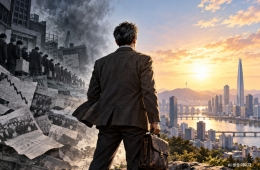
The history of the global economy is less a chronicle of the winner than it is a ledger rewritten every time the source of power changes. Kim Joungho does not view the last 500 years of economic hegemony—from the Age of Exploration in the 16th century to the AI revolution—solely as the rise and fall of nations like Spain, Britain, the United States, or China. He traces the movement of wealth and power through six key elements: oil, semiconductors, shipbuilding, defense industry, nuclear power, and the dollar. While the book's scope is vast, ranging from the collapse of the Mongol Empire and maritime dominance, to the Industrial Revolution, world wars, Bretton Woods and the dollar system, its primary question remains clear: What did a hegemonic nation seize first in its era?
The book moves quickly and has a wide perspective. The sections that reinterpret semiconductors from “slave parts” to a strategic asset, oil as a diplomatic weapon beyond energy, and the dollar as the language of an unshakeable empire, resonate directly with contemporary Korean readers. However, by condensing 500 years of world history into a single volume, fractures and exceptions in each region are inevitably overlooked, and the logic of hegemony sometimes appears as a single lens explaining everything. Nevertheless, it serves the purpose of placing often segregated discussions—like the US-China conflict, K-semiconductors, K-shipbuilding, and K-defense industry—onto a single, long historical timeline. It reminds readers that today's industrial news is really just the next chapter in an enduring competition for hegemony. (Written by Kim Joungho | Bodanaeun)
![[This Week’s Books] The Price of Prosperity and Others](http://www.asiae.co.kr/news/img_view.htm?img=2026080610460171840_1785980761.jpg)
The Science of Decision-Making
Regret usually appears after a decision has already been made, masquerading as if it was always there from the beginning. Jeong Hoon deconstructs the familiar self-reproach—“Why did I make that choice at the time?”—using the vocabulary of behavioral economics, business administration, psychology, and data science. Through cases such as the Yellowstone Wildfire, prosecutor errors, survivorship bias, the chicken game, groupthink, and failures of market intervention, we see that poor judgment often begins with illusion or overconfidence rather than ignorance. The author, who holds a doctorate in technology management with a specialty in AI and brings experience in data analysis and AI model development in finance, argues that decision-making is not a matter of intuition, but a process designed to reduce error.
As you read, you realize that decision-making is less about decisiveness, and more about knowing what you don’t yet understand. The book cautions against confusing prediction with inevitability, notes how deep immersion can actually narrow your perspective, and describes how organizations without checks on decision-makers can quickly descend into tragedy. The breadth of examples—from public policy to business strategy to investment decisions—can occasionally feel textbook-like. Yet, the central message stands out in a time when AI recommends, predicts, and summarizes: the task that remains for humans is not to choose faster, but to cultivate better doubt. (Written by Jeong Hoon | Hankook Munhwasa)
![[This Week’s Books] The Price of Prosperity and Others](http://www.asiae.co.kr/news/img_view.htm?img=2026080610462971843_1785980788.jpg)
The Price of Prosperity
How much human prosperity has been built atop the ruins of destruction? Sunil Amrith rewrites 800 years of civilization—from the 13th-century expansion of the Mongol Empire and imperialism, to the Industrial Revolution, world wars, reliance on fossil fuels and urbanization, public health and agricultural innovation, and finally the climate crisis—as a story of progress and destruction unfolding hand in hand. Advancement has never worn only the face of progress. Pollution of rivers, disappearance of forests, and the transformation of animals and the freedoms of others into exploitable resources have always accompanied it. This book, introduced as an NPR Best Book of the Year and winner of the British Academy Book Prize and the Dayton Literary Peace Prize, is a massive work of environmental history that weaves together more than 40 maps and photos along with extensive archival materials.
Though a thick volume, its critical perspective is sharp. Every time humanity believed it had overcome the limits of nature, it entered a system of even greater dependence and destruction. The flow from explorers carrying diseases like smallpox and measles, to empires dreaming of immortality through fossil fuels, and the inequalities and ecological costs left by global trade are all connected threads. By framing the climate crisis not as today’s science news but as a habit of civilization, the book carries weight. For readers who were taught to be proud only of the history of prosperity, it finally reveals the price tag for what humanity has gained. (Written by Sunil Amrith | Translated by Choo Sunyoung | Ibom)
![[This Week’s Books] The Price of Prosperity and Others](http://www.asiae.co.kr/news/img_view.htm?img=2026080610472871850_1785980848.jpg)
Involution
Once the promise that running faster would bring you ahead is shattered, what remains is a strange standstill. What Chinese youths call “neiquan” does not refer to the speed of competition, but to the loss of direction. The Gonglao Collective documents this sense of despair through the voices of young people who have worked as debt collection interns, cram school teachers, streaming platform interns, automobile company buyers, kindergarten teachers, and massage therapists. For a generation told that “studying is the only ladder,” what they found after enduring diplomas, internships, 996 working hours, and cycles of unpaid labor was not more choices, but fiercer competition.
“Tangping” is not simply a declaration of laziness, but a state of refusing to participate in a race that offers no further reward. The reason the book does not remain just about Chinese youth is precisely this. Korea’s “N-po” generation, Japan’s Satori generation, and the West’s “quiet quitting” all have different names, but share the fatigue of labor and achievement that ultimately fails to improve life. This book does not paint young people as mere objects of pity; rather, it raises the question: If we remain in the same place no matter how hard we run, is the problem found in those who do not run, or in the very structure that demands constant running? (Written by Gonglao Collective | Translated by Hong Myung-kyo | Nal)
![[This Week’s Books] The Price of Prosperity and Others](http://www.asiae.co.kr/news/img_view.htm?img=2026080610480371855_1785980883.jpg)
The Wrong Greeting
In Jo Eun’s poetry, greetings often go awry. You think you have recognized someone, only to discover you were mistaken; you think you ignored someone, yet it leads to misunderstanding. This subtle misalignment establishes the mood for her entire poetry collection. Debuting in 1988 in World Literature, the poet’s sixth collection emerges after eight years and is comprised of 51 poems divided into four parts. As seen in the long silences of “Sitting Together Here,” the yoga class and bodies of old age in “Sunshower,” or the dazzling brightness and shadows at one’s side in “Someone Else’s Happiness,” her poems linger away from the direct center of life.
A good poetry collection is quietly unsettling, even without grand declarations. The sentences of The Wrong Greeting neither embellish forgiveness, sorrow, aging, nor recovery. Among friends who say, “Let’s live today as if there’s no tomorrow,” the narrator stands in a position neither sad nor happy. That ambiguity is the unique power of Jo Eun. Moments of precise understanding in life often come amidst misunderstanding and confusion. The greetings in this collection are delivered imperfectly, but thanks to that imperfection, we are able to face the long-avoided truths of our lives. (Written by Jo Eun | Moonji Publishing)
![[This Week’s Books] The Price of Prosperity and Others](http://www.asiae.co.kr/news/img_view.htm?img=2026080610482471858_1785980904.jpg)
The Annals of Joseon Crime
Beneath the familiar surface of Joseon as a nation of etiquette and morality, there existed a much rougher and more brutal face. Jeong Myungsub excavates records of honor killings, revenge killings, gambling, forgery, kidnapping and abduction, organized crime, and even exam-cheating from historical sources. Crimes in the book—such as the 1533 case of a child named Gae-chun found in Hanyang with both feet severed—are not read as bizarre tales, but as a cross-section of a society where systems, class distinctions, poverty, and violence intertwined.
Hot Picks Today
![[Exclusive] "Forecasts of Over 10 Billion, but Only 100 Million Earned"... 95% Followed This Pattern: Why Are KOSDAQ Special Exception IPOs Inflated? [KOSDAQ Inflated IPOs]①](https://cwcontent.asiae.co.kr/asiaresize/93/2026100609060151026_1791245160.jpg) [Exclusive] "Forecasts of Over 10 Billion, but Only 100 Million Earned"... 95% Followed This Pattern: Why Are KOSDAQ Special Exception IPOs Inflated? [KOSDAQ Inflated IPOs]①
[Exclusive] "Forecasts of Over 10 Billion, but Only 100 Million Earned"... 95% Followed This Pattern: Why Are KOSDAQ Special Exception IPOs Inflated? [KOSDAQ Inflated IPOs]①
- "She Once Tried to Stop Her Son from Gaming"—60-Year-Old Chinese Woman Becomes Popular Game Streamer
- "My Debt Is 73 Million Won"... Sharing Every Repayment Led to an Unexpected Turn
- "Drinking This in the Morning Is Like Drinking Alcohol"..."Doctors Warn: Never Consume It"
- Is 'KOGUMA' Coming Too?... "Japan in Serious Trouble" - Archipelago on High Alert Ahead of Holidays
It is not only the sensationalism of crime that fascinates. Crime has always revealed what a society prohibited, what it neglected, and whose pain it processed carelessly. The Annals of Joseon Crime breaks away from the romanticized view of Joseon as a traditional society, and instead exposes the shadows of alleys, markets, exam halls, and government offices where laws and regulations failed to reach. The reason it reads as both a history book and a crime reportage is clear: human desire and violence barely changed even as dynasties fell, and the records quietly preserve their brutal repetition. (Written by Jeong Myungsub | Kyobo Book Centre)
© The Asia Business Daily. All rights reserved. Unauthorized AI training and use prohibited.