"Prosecutors Facing Bottleneck and Identity Dilemma in Moving to SCIA"
Involvement of Prosecutors With Around 10 Years' Experience Is Essential
Mismatch Between SCIA and Prosecution Rank Structure
Briefings Fail to Address Key Questions
"Everything Is Still Under Discussion" -- Lack of Information Cited
C


The Major Serious Crimes Investigation Agency (Jungsoo Agency), set to launch on October 2, is already facing challenges with securing personnel as its first hurdle. For the successful establishment of the agency, it is essential to recruit mid-career prosecutors with around 10 years of experience in handling major cases. However, within the Prosecutors' Office, there is a lukewarm response toward joining the agency due to concerns over demotion and changes in employment status to that of an investigator. While a mass transfer is not expected, there are predictions that experienced prosecutors or senior officials nearing retirement may apply to be so-called "Jungsoo Agency First Penguins" for the sake of enhancing their resumes.
The government has also proposed incentives. Prosecutors can be appointed as investigators at the Jungsoo Agency without a separate exam if they express their intention to move by April 30 of next year. Under temporary special provisions during this period, they will continue to receive the same salary as in their prosecutor role. Chiefs of district prosecutors’ offices will be appointed at level 1, deputy chief prosecutors at level 2, prosecutors with over ten years of experience at level 3, and those with less than ten years at level 4 as investigators. Regardless of level, their official status will ultimately become "judicial police officer."
Discontent over 'Empty-Handed' Briefings: "Is This an Employment Scam?"
On the frontlines, the lack of information and insufficient communication about the Jungsoo Agency are being criticized. The agency's preparatory task force held closed recruitment briefings in cities such as Busan, Changwon, and Gwangju starting the previous day, but attendance among rank-and-file prosecutors was low due to inadequate notifications. A third-year junior prosecutor said, "I only received the guidance note on the 4th, but never received specifics on the schedule or venue," adding, "There's even talk that each division should at least send one representative since there is no information sharing."
At the previous day's briefing by the preparatory task force, prosecutors raised detailed questions about personnel matters and working conditions, but only received responses that everything was still "under discussion." Questions concerning the rotation criteria for long-serving staff, and the future of specialist investigators in areas such as narcotics or digital forensics, were also met with, "Nothing has been decided." Sensitive questions about promotion opportunities compared to police officers, salary step increases, and the size of the special bonus for major crime investigations got similar answers: "Needs review of staffing levels" or "Will be decided after appointment," with no clear guidelines provided. One prosecutor who attended the briefing remarked, "When every answer is just 'still under discussion,' people are starting to joke that this could amount to an employment scam."

Unclear Job Assignments and Identity Crisis: Worries of a "Resume-Building Stopover"
The prosecutors' cautious and lukewarm attitude stems from several risk factors. First of all, there is a significant mismatch with the existing rank structure of the Prosecutors' Office. For example, prosecutors with over ten years of experience are assigned level 3 positions, but there are only 22 such posts for the entire country (excluding the main office), which is expected to cause severe bottlenecks in personnel management. An 11th-year prosecutor commented, "Those with less than ten years start at level 4, but even if you accumulate more years of legal experience, a promotion to level 3 is not guaranteed. With those conditions, there's just no incentive to go." A chief prosecutor added, "The prosecutors who are best at investigations, those with around 10 years’ experience, will be going to director-level posts at levels 3 or 4. In reality, this means they’ll have little opportunity to do actual investigative work, and the quality of investigations is bound to decline sharply."
One deputy chief prosecutor said, "The origin of the term 'prosecutor' itself lies in the act of indictment; the core identity of a prosecutor is to secure convictions through prosecution. If all you do is investigate and then have to hand off cases without seeing the outcome in court, it isn’t any different from being a police officer—which is exactly why so few are willing to transfer."
Hot Picks Today
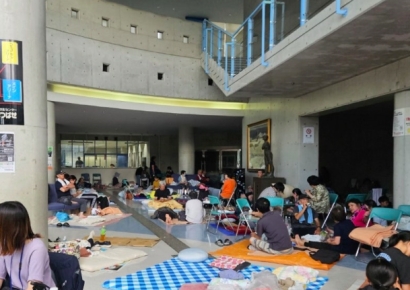 "Unsettled by Korean Goods, Just Throw Them Away" — Japanese Netizens Respond with Harsh Comments to Relief Supplies
- "I Thought Stocks Would Rise... But I'm Quitting": Retail Investors Exit as Samsung Electronics and SK hynix Falter
- "Fears of Severe Cases Rising"... COVID-19 Positive Rate Soars to 20%, but Treatments Remain Out of Reach in China
- "We Provide Towels": Naked Guests, Staff in Uniforms... The Bold Survival Strategy of a US Restaurant
- "I Don’t Go to Restaurants": Foreign Tourists Hooked on 'K-Delivery' as Soon as They Arrive in Korea
Both within and outside the legal community, there are concerns that, rather than attracting those with a strong sense of mission for long-term service, the Jungsoo Agency may simply become a "career laundering station" for those preparing to move to law firms. It is anticipated that the agency may become a brief stopover for prosecutors who want to pad their resumes with "Jungsoo Agency investigator experience" for a year or two before opening a law practice.
© The Asia Business Daily. All rights reserved. Unauthorized AI training and use prohibited.