"Wearing Hot Pants and Off-the-Shoulder Tops to Work?"... Unexpected Office Attire Debate Stirs Controversy
Debate Over Acceptable Office Attire
"TPO Standards" vs "Personal Freedom" Clash
With the ongoing heat wave showing no signs of abating, office workers' attire has become noticeably lighter. Not only are sleeveless tops and shorts—once rarely seen in the workplace—making an appearance, but more revealing outfits such as off-the-shoulder tops and leggings are as well. As a result, debate is spreading over the question of "how far is too far" when it comes to office dress codes.

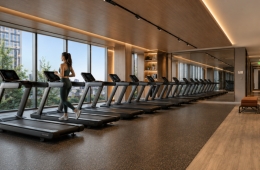
Image generated by artificial intelligence (AI) to aid understanding of the article. Gemini
View original imageThe controversy was sparked by a recent online post titled "How far is okay for office attire?" The author, identified as A, wrote after witnessing more daring outfits worn by office workers around office buildings in downtown Seoul, which stood in stark contrast to previous norms. A used this observation to question the standards of what is now considered acceptable, and how times have changed.
Though referring to themselves as “old-fashioned,” A remarked, “In my generation, I would have thought, ‘Are you really wearing that to work?’ I’m genuinely curious about where the line is drawn today.” For A, the limit for acceptable office attire was “a denim skirt above the knee” or “shorts that are not too short.”
However, A recounted seeing actual office workers wearing “off-the-shoulder tops,” extremely short “hot pants,” “sleeveless tops,” “a leopard print chiffon mini skirt,” as well as items like “slippers,” “Crocs,” and “caps.” A commented, “I could understand it in somewhere like Hongdae, the fashion industry, or a business run by a young CEO, but isn’t this excessive by Time, Place, Occasion (TPO) standards in a regular office?”
"Keep Basic Workplace Decorum" vs "Personal Freedom Should Be Respected"
The post sparked sharply divided reactions. On one hand, some argued that a certain level of standard is necessary: “Excessive exposure or overly casual outfits are inappropriate in a typical office,” and “A minimum standard of neatness and courtesy is required in a company setting.” Many emphasized that, because external perceptions and the organization’s image are at stake, attire is part of social norms.
On the other hand, there were plenty of responses arguing for personal freedom. “There’s no need to assign so much meaning to others’ clothing,” “People are just making practical choices in the heatwave,” and “As long as slippers or Crocs are changed into indoor shoes, there’s no problem,” were among those opinions. Others argued, “Each industry and company has different standards, so applying a rigid standard is meaningless,” and “If the job doesn’t involve meeting clients, what you wear doesn’t impact work performance.”

Citizens commuting to work around Sejong-daero, Jung-gu, Seoul on the 29th of last month. This image is not directly related to the article content.
View original imageBetween Freedom and Norms... Need for Organization-Specific Solutions
Experts analyze this debate as not simply a generational conflict, but rather as a transitional phenomenon resulting from the spread of self-regulated dress codes—pioneered by the IT and startup sectors—across all industries without clear guidelines. They point out that, especially as work arrangements diversify, the absence of unified in-house guidelines leads to ongoing friction among employees due to differing perspectives.
Hot Picks Today
 "Unsettled by Korean Goods, Just Throw Them Away" — Japanese Netizens Respond with Harsh Comments to Relief Supplies
- "Hyungji Selling Headquarters Amid 700% Debt Crisis... Even Robots Take a Back Seat [Why&Next]"
- [Breaking] Sell Sidecar Triggered as KOSPI Plunges
- "Fears of Severe Cases Rising"... COVID-19 Positive Rate Soars to 20%, but Treatments Remain Out of Reach in China
- "I Don’t Go to Restaurants": Foreign Tourists Hooked on 'K-Delivery' as Soon as They Arrive in Korea
Therefore, instead of blanket regulations, many are calling for flexible dress code standards that take into account industry, the presence of external meetings, and the work environment—along with consensus-building within the company.
© The Asia Business Daily. All rights reserved. Unauthorized AI training and use prohibited.