[Editorial] Politics Should Stay Out of Solutions for Stock Market Volatility
We caution against attempts by political circles to use recent stock market volatility as a tool for political strife. If there were flaws in the introduction of financial products or risk management, it is only natural to determine the causes and hold those responsible accountable. However, to conclude that complex market fluctuations are the result of a government failure and immediately demand a parliamentary investigation amounts to nothing more than a political offensive.
Earlier this year, instability in oil prices, interest rates, and exchange rates drove volatility in global stock markets. Subsequently, concerns about the profitability of artificial intelligence (AI) investments and the outlook for the semiconductor industry led to turbulence in global semiconductor stocks, with this shock spreading to the domestic market. The volatility in the Korean market was amplified by the high weighting of Samsung Electronics and SK hynix. According to the Korea Capital Market Institute, one-third of the increase in KOSPI 200 volatility in the first half of the year originated from these two stocks.
Supply and demand clashes also intensified market swings. While individuals, anticipating further gains, moved to buy, foreign and institutional investors focused on profit-taking and portfolio adjustments. Regression analyses by the same institute show that such supply-demand conflicts among investor groups accounted for 17% of the changes in KOSPI volatility. As for single-stock leveraged products, the institute noted that their impact cannot be assessed as definitive since their contribution was analyzed over just 32 trading days, making statistical conclusions premature. Ultimately, it is reasonable to interpret that a common shock—namely, the re-evaluation of the AI and semiconductor industries—interacted with concentration in certain stocks and supply-demand conflicts in the domestic market, thereby amplifying volatility.
The key issue now is policy response. The fundamental solution lies in scaling up more growth companies to rival Samsung Electronics and SK hynix. It is essential to establish an environment, regulations, and growth capital so that world-class companies can emerge in sectors like software, bio, robotics, and energy. In addition, improving corporate governance, disclosure practices, and shareholder returns is necessary so that excellent mid-sized and growth companies are properly valued.
It is neither appropriate to single out a leveraged product as the cause of all turmoil nor to neglect risks on grounds that causality has not been firmly established. Based on sufficient data, it is necessary to rigorously verify impacts and proactively review safety measures, including investment limits, margin requirements, and risk disclosures. This episode of volatility should be leveraged as an opportunity to broaden the investment universe and reassess the soundness of the capital market.
Hot Picks Today
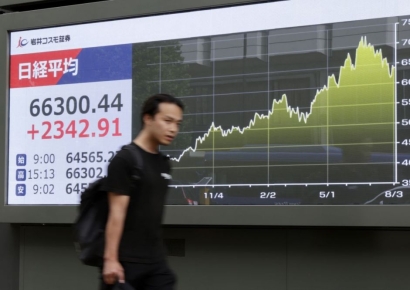 "Ruined Because of Korea" Even with a Sharp Rally, No One Buys... Japanese Market Sways with KOSPI
- '1,670,000 Won to 1,170,000 Won': SK hynix Hits Lower Limit Shock, Pre-market Opening Price Controversy
- Lost 40 Million Won and Desperately Sought Help, Only to Be Scammed Again... Ruthless Investment Leading Room Fraud [Jangmi's 'Debt' Investment] ②
- "Wearing Hot Pants and Off-the-Shoulder Tops to Work?"... Unexpected Office Attire Debate Stirs Controversy
- "I Don’t Go to Restaurants": Foreign Tourists Hooked on 'K-Delivery' as Soon as They Arrive in Korea
The objective of government policy should not be the defense or recovery of a specific index level. The long-term goal must be to transform the structure of the stock market. Measures should be taken to strengthen underlying systems so that stock concentration, supply-demand clashes, and excessive high-risk products do not distort prices. While political oversight is necessary, political behavior that claims credit when prices rise and blames mismanagement when they fall only erodes trust in the market. The capital market is a domain for sober policy, not one for heated political maneuvering.
© The Asia Business Daily. All rights reserved. Unauthorized AI training and use prohibited.