Blue House: "President Personally Leading Real Estate Supply Speed Battle... Seeking Solutions Beyond Past Practices"
Sung Ki-hong: "We are not trying to control housing prices through taxation"
Tax Reform Plan: "Protection for single-home owners, adjustment of burden on multiple-home owners"
Measures for rental markets likely to be included in supply polic
The Blue House has announced that it will soon unveil additional real estate measures focused on expanding housing supply and rationalizing housing finance. The recently announced real estate tax reform is not a short-term fix to rein in housing prices, but a measure to enhance tax fairness. The administration’s approach is to promote market stability primarily through expanded supply.

President Lee Jae-myung is speaking at the ministry briefing on the Ministry of Education, the National Education Commission, the Ministry of Culture, Sports and Tourism, and the National Heritage Administration held at the State Guest House, Cheong Wa Dae on August 5, 2026. Photo by Yonhap News Agency
View original imageSung Ki-hong, Chief of Public Relations and Communication at the Blue House, stated on CBS Radio’s “Park Seong-tae’s News Show” on the 6th, “We are formulating a multifaceted policy that includes expanding housing supply and rationalizing housing finance. We plan to present these policies, including supply issues, to the public as soon as possible.” Regarding the timing of the announcement, he said, “It has not been finalized yet, but we will announce it without delay.” The government is comprehensively reviewing ways to secure available sites to accelerate supply, expedite the implementation of existing supply plans, and provide financial support.
Referring to President Lee Jae-myung chairing a 7 hour and 30 minute real estate and stock market review meeting on August 3, the day he returned from an overseas trip, Sung noted, “The President’s top priority was to find ways to expand supply as quickly as possible and present those to the public.” He added, “The government is approaching this with great urgency—we are, in effect, racing against time. The President is personally managing administrative hurdles and regulations that have been obstacles to supply.”
In this context, the government is re-examining measures to expedite procedures and enhance the business feasibility of previously announced but slow-moving supply sites, such as the Gwacheon Racecourse and Taereung Golf Course. Sung stated, “The sluggish progress of previous supply measures was largely due to administrative issues and various regulations acting as barriers. The President is instructing ministries to devise solutions that break with past conventions in order to secure additional supply.”
He distanced the administration from the notion that the recently announced real estate tax reform is an attempt to curb housing prices through taxation. “The government does not intend to control housing prices through real estate taxes,” said Sung. “The purpose of the tax reform is to rationalize the tax system for real estate in line with fair and equitable taxation.”
The reform plan is designed to maximize protection for single-home owner-occupiers, while imposing greater burdens on expensive homes, non-owner-occupied residences, and multiple-home owners during both holding and disposal. “Protecting single-home owner-occupiers as much as possible and gradually adjusting the burden on homes above a certain value, non-owner-occupied homes, and multiple homes is the core of the plan,” Sung explained.
In response to concerns that an increased tax burden might be passed on to tenants and worsen monthly or long-term rental housing shortages, the government pledged to pursue supply measures and tenant support simultaneously.
Sung said, “The impact on monthly and long-term rental transactions must be considered not just from a tax perspective, but also from the balance of supply and demand. The government will continue to expand the supply of public rental housing and pursue measures to ease housing costs for young people and those without homes.”
He added, “Related content may be included in the soon-to-be-announced supply-side measures. We intend to fundamentally stabilize the monthly and long-term rental markets by expanding housing supply.” However, the specific volume of public rentals and the scope of financial support for monthly or long-term rentals are likely to be disclosed when the supplementary measures are announced.
Regarding differences between the central government and Seoul City on matters such as lifting greenbelt restrictions and utilizing quasi-industrial areas in Seoul, the government pledged to continue consultations. Blue House policy chief Kim Yong-beom and Seoul Mayor Oh Se-hoon reportedly agreed in part to expand housing supply by using quasi-industrial land, but differed on the issue of lifting the greenbelt.
Sung stated, “Agreement has been reached on some areas, while disagreements remain in others. We will continue to coordinate on the remaining issues.” He emphasized, “The central government alone cannot resolve supply problems; the proactive and forward-looking attitude of local governments is also crucial. The central and local governments will discuss and adjust their differences together.”

Sung Ki-hong, Chief of Public Relations and Communication, is briefing at the Blue House press conference room on the appointment of the new Minister of Government Coordination on July 10. President Lee Jae-myung has appointed Im Gi-geun, Deputy Minister of Planning and Budget, as the Minister of Government Coordination. 2026.7.10 Yonhap News
View original imageThe Blue House plans to focus policy resources on advancing the actual timeline for new housing units to become available. Rather than simply announcing new candidate sites, the government intends to review the entire supply process—including permits, land acquisition, infrastructure development, and groundbreaking—to address bottlenecks. Sung said, “Past governments repeatedly announced supply measures, but these often failed to yield results the public could truly feel. This time, the President will personally monitor progress, aiming to secure both housing volume and speed.”
Hot Picks Today
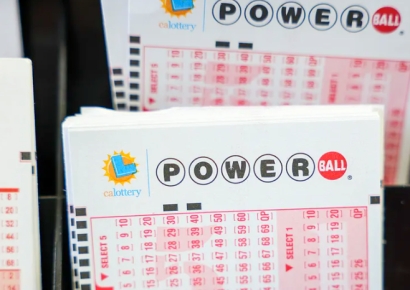 He Left It in the Car and Forgot... "I Nearly Collapsed with Joy": Man Wins $1.48 Million Lottery
- Goldman Sachs Cuts KOSPI Target by 25%... "Excessive Pessimism, Still Attractive"
- "'Nodding Off' on the Subway? Here's Why Koreans Are Getting Even Less Sleep"
- FSS Uses AI to Track Illegal Loan-Sharking Rings' "Scapegoating" Tactics
- Beachgoer Finds 'Plastic' That Turns Out to Be Perfume Ingredient Worth More Than Twice as Much as Gold
Meanwhile, Sung acknowledged that the Blue House is aware that single-stock leverage Exchange Traded Funds (ETFs) have contributed to increased stock market volatility recently, and said additional measures would be considered if necessary. Regarding calls for responsibility from policy chief Kim, Sung remarked, “It is more important now to closely observe the market and manage countermeasures than to assign personal responsibility,” emphasizing that the priority should be placed on market stability and institutional improvements.
© The Asia Business Daily. All rights reserved. Unauthorized AI training and use prohibited.