Iranian Foreign Ministry: "Agreement Reached on New Hormuz Route"... Will Vessel Control Be Handed to Iran?
"Not a Full Opening"
Concerns Grow Over Expanded Iranian Control
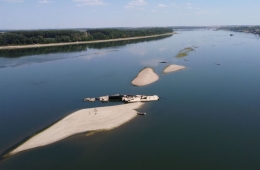
As Iran and Oman have reached an agreement on safe shipping lanes and geographic coordinates for merchant vessels passing through the Strait of Hormuz, negotiations to reopen the strait have entered their final phase. However, this agreement does not mean the complete opening of the strait, and there are concerns that, since a significant number of vessels entering the Persian Gulf may fall under Iranian oversight, it could effectively acknowledge Iran’s control over the passage.

According to Bloomberg News, The Wall Street Journal (WSJ), and other sources on August 5 (local time), Esmail Baghaei, spokesperson for Iran’s Foreign Ministry, stated that Iran and Oman have agreed on the geographic coordinates for proposed safe shipping lanes for merchant vessels passing through the Strait of Hormuz.
Spokesperson Baghaei said, “Iran and Oman have been negotiating for the past two months with the goal of establishing safe passage routes for merchant ships,” and added, “After reviewing technical, legal, security, and environmental aspects, both sides agreed on the proposed geographic coordinates.”
He explained that a joint statement outlining the key points of the agreement between the two countries is currently in the final review and drafting process. In addition, while emphasizing that the negotiations are making progress, he added, “If certain third parties do not interfere with the negotiations, an agreement will be reached.”
WSJ, citing multiple sources, reported that the provisional agreement includes a system whereby vessels heading into the Persian Gulf will use a route near Iran, while those exiting will use a route near Oman.
The arrangement requires inbound ships to coordinate passage with Iranian authorities and outbound ships with Omani authorities. The agreement is to be applied for an initial period of 60 days, and reportedly does not allow Iran to levy transit or service fees on vessels.
However, WSJ reported that it is unclear whether even voluntary payments for security or search-and-rescue costs would be restricted. The draft has been shared with the United States, regional countries, and Iran’s leadership, and is currently awaiting final approval.
Concerns Over the De Facto Recognition of Iran’s Control Over the Strait
Kazem Gharibabadi, Deputy Foreign Minister of Iran, stated that if the agreement is implemented, existing temporary lanes will be closed, and a significant part of the entry route for vessels into the strait will pass through Iranian territorial waters. He emphasized, “This agreement does not mean the full opening of the Strait of Hormuz,” and added, “Specific conditions need to be fulfilled for full opening of the strait.”
Iranian state broadcasting also reported that the agreement between Iran and Oman does not mean the immediate opening of the strait, and that changes in the actions of the United States are a prerequisite. For this reason, there are concerns that this agreement could effectively mean recognition of Iran’s control over the Strait of Hormuz, which the United States and Gulf states have so far denied.
Ellen Wald, Senior Fellow at the Atlantic Council Global Energy Center, said, “The key question is whether this agreement is effectively handing Iran control over maritime transit,” and added, “If Gulf countries use lanes that require Iran’s approval, it would implicitly transfer control of the strait to Iran.”
Gulf countries are also reportedly concerned that the temporary agreement could entrench Iran’s influence. Oman is continuing discussions with other Gulf states to ensure that Iran will not have veto power over energy shipments.
Prospects for Normalized Shipping in the Strait Stabilize Global Oil Prices
Nevertheless, if shipping operations in the Strait of Hormuz are normalized, increased transport of crude oil and natural gas could help ease supply concerns in the global energy market. As expectations for the agreement grew, international oil prices stabilized. Brent crude traded at around $79 per barrel.
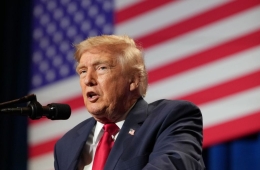
On the previous day, U.S. President Donald Trump said that negotiations with Iran are “going very well” and that there could be progress within 48 hours. President Trump and U.S. administration officials have repeatedly claimed that a deal to reopen the Strait of Hormuz is imminent.
However, Iran is distancing itself, stating that it has not recently held official negotiations with the United States. Deputy Minister Gharibabadi acknowledged receiving messages from the U.S. side requesting negotiations, but insisted that no talks are currently taking place between the two countries.
Hot Picks Today
 "Ruined Because of Korea" Even with a Sharp Rally, No One Buys... Japanese Market Sways with KOSPI
- '1,670,000 Won to 1,170,000 Won': SK hynix Hits Lower Limit Shock, Pre-market Opening Price Controversy
- "Wearing Hot Pants and Off-the-Shoulder Tops to Work?"... Unexpected Office Attire Debate Stirs Controversy
- Seoul’s 39-Degree ‘Extreme Heat’ Is Just the Beginning... Experts Warn: “It Will Persist Until 2050”
- "Unsettled by Korean Goods, Just Throw Them Away" — Japanese Netizens Respond with Harsh Comments to Relief Supplies
If an agreement over the Strait of Hormuz is reached, there is also the possibility that the United States and Iran may resume negotiations on nuclear programs and sanctions relief. However, there remains the possibility that hardliners in Iran’s Revolutionary Guard could oppose the agreement, or that the deal could fall through or the resumption of shipping could be delayed since the specific conditions the United States would have to fulfill have not yet been made public.
© The Asia Business Daily. All rights reserved. Unauthorized AI training and use prohibited.