Bessent, U.S. Treasury Secretary, Says "Abenomics Era Is Over"... Indirectly Calls for Rate Hike in Japan
Bessent: "The Asian Financial Crisis of the 1990s Was Triggered by the Weak Yen"
Scott Bessent, U.S. Secretary of the Treasury, stated that "the era of Abenomics is over, and (now) it is the time of Takaichinomics" regarding Japan's economic reforms. This is interpreted as a suggestion that Japan should move away from its low interest rate policy.
According to the Nihon Keizai Shimbun (Nikkei) on August 5, Secretary Bessent said in an interview with Nikkei the previous day that, regarding Japan's economic reforms since the administration of Shinzo Abe, "15 years of economic stimulus have established a continuous and solid economic foundation."
Nikkei interpreted this as Secretary Bessent indirectly urging Japan to move away from its low interest rate policy, pointing out that the large-scale monetary easing that has continued in Japan since Abenomics has been a major factor in the weak yen.
While Secretary Bessent did not directly call for a rate hike in Japan, he stated, "I have known Kazuo Ueda, Governor of the Bank of Japan, for 15 years," adding, "He has excellent market instincts, and I trust him deeply."
This statement is also seen as an indirect indication that Secretary Bessent is hoping for a rate hike by the Bank of Japan.
The Bank of Japan kept the key interest rate unchanged at 1.0% on July 31. However, after the rate decision, Governor Ueda made a hawkish statement at the press conference, saying, "If we judge that financial conditions remain accommodative, there is a possibility we may speed up the pace of rate hikes."
Secretary Bessent stated that the recent coordinated intervention by the United States and Japan to purchase yen in the foreign exchange market stemmed from concerns that currency selling could spread across Asia.
He explained, "Many Asian currencies are linked to the yen," and "The Asian currency crisis of the 1990s was triggered by a significant weakening of the yen."
Meanwhile, the Takaichi Cabinet has set a basic policy in the emergency Cabinet meeting to push for a temporary reduction in the food consumption tax rate from 8% to 1% for a two-year period starting in April 2027.
There are concerns in the market about the fiscal burden from the reduction in the food consumption tax rate, with expectations that it could also be a factor in the rise of long-term government bond yields.
Hot Picks Today
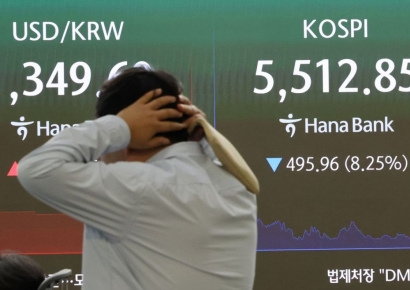 "Samsung Electronics at 70,000 won, SK hynix at 200,000 won"... Why the gloomy outlook despite 'record-breaking earnings'?
- "No Need to Hire a Model"... The 25-Year-Old Woman Who Entered Social Media with a Face That Cost Just 1,500 Won [AI Content: The Bright and Dark Sides] 1
- "I Invested KRW 10 Million, Only KRW 2 Million Is Left" ... 77% Plunge Sends Retail Investors Who Piled Into Samsung Electronics and SK hynix Leveraged ETFs Crying Out
- Woman Found Collapsed Barefoot on Street, Leaving 3-Year-Old Child Unattended... Turns Out She's Part of a "Wealthy Royal Family"
- "The leggings are all see-through. It's so embarrassing to look at," complaints prompt Lululemon to fire development staff.
In relation to this, a senior U.S. government official told Nikkei, "The decision belongs to the Takaichi administration, but there are two options: accept the tax cut or strive for a decrease in the inflation rate," adding, "If it were up to me, I would choose the latter," thereby pressuring for a rate hike.

© The Asia Business Daily. All rights reserved. Unauthorized AI training and use prohibited.