1,400 Trillion Won in National Assets: System Overhaul After 76 Years, New National Asset Framework Act in the Works
Integrated Management System Encompassing Real Estate, Virtual Assets, IP, and Securities
Establishment of a Central Control Tower and Introduction of the AI-Based 'K-Asset Cloud'
In order to efficiently manage the nation’s assets, which now exceed 1,400 trillion won, the government will completely revise the State Property Act, which was legislated in 1950, for the first time in 76 years. In addition, it will seek to enact a new Basic National Assets Act, encompassing emerging asset types such as virtual assets and intellectual property rights (IP). The “K-Asset Innovation Project” has been launched in earnest, shifting away from a passive management system focused solely on ownership and preservation, toward an active strategy centered on value creation and maximizing national wealth.
Breaking Away from the Outdated 1950 Framework: Integration Beyond Real Estate into Finance, IP, and Virtual Assets

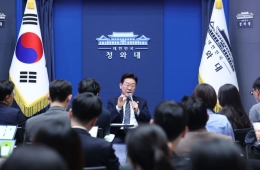
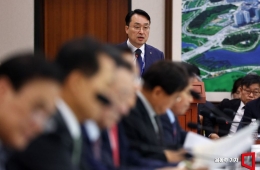
On August 6, the government announced these measures in a briefing on the “National Asset Management System Overhaul Direction,” held as part of the Emergency Economic Headquarters meeting and the Economic and Structural Innovation Ministers meeting, chaired by Deputy Prime Minister and Minister of Economy and Finance Koo Yoonchul. At the core of this reform are the redefinition of the concept of assets and the establishment of customized regulations for each asset group. The existing State Property Act, which has retained its real estate–centric structure since 1950, has limited the effective management of assets with different characteristics, such as in-kind investments, securities, or IP, as well as newly emerging assets like virtual assets.
In reality, the scale of state-owned assets increased dramatically from 188.3 trillion won in 2001 to 1,402.7 trillion won last year, yet the management system remained confined within the dichotomous structure of administrative and general property that dated back more than 70 years. To address this, the government will overhaul the law, establish the Basic National Assets Act, and introduce independent chapters for each core asset group to provide tailored management frameworks.
First, real estate, which accounts for more than half of all assets and amounts to 711 trillion won, will move beyond compartmentalized management. An integrated management process will be established for joint use with local governments and other entities, and the development guidelines for idle assets will be unified. IP, valued at approximately 2.3 trillion won, will benefit from a significant extension of the current maximum usage period of five years, and a new “National IP Bank” will be established to oversee unified management of usage contracts and profit distribution.
Additionally, securities and equity holdings valued at 328.7 trillion won, which are currently managed in a fragmented manner by special accounts and funds, will be reorganized so that the criteria for exercising voting and shareholder rights are unified. In particular, for virtual assets held by the state through confiscation or donation—currently amounting to around 78 billion won—the government plans to clarify the legal grounds for management, stipulating auctioning immediately after acquisition as the principle. However, detailed procedures such as segmented auctions will be formalized to prevent market disruption.
Governance Overhaul and AI-Based “K-Asset Cloud” Construction
The governance and data systems dedicated to integrated management will also undergo significant restructuring. The government will expand and reorganize the current State Property Policy Committee into the “National Asset Management Committee,” which will include private sector experts to review and determine national asset master plans and management strategies. Each central government agency will appoint a “National Asset Officer,” responsible for overseeing legal compliance and database integration. The authority of the Korea Asset Management Corporation (KAMCO), the dedicated executive agency for management and disposal, will also be strengthened.
Data-driven management infrastructure will be established in phases. Asset information from the state, local governments, and public institutions will be linked to the digital budget and accounting system (dBrain), and AI chatbots will be introduced to the administrative network to support legal interpretations and more. Starting in 2027, the government plans to develop an AI-based dedicated database, tentatively titled “K-Asset Cloud,” to automatically analyze and match optimal asset utilization, thereby introducing a supply-demand management system.
Hot Picks Today
 "It's Just Normal in Korea" Foreigners Marvel at Seoul Subway, Hailed as "Hypermodern"
- "Please Let Me Go Home"... Customers Trapped in Department Store Parking Lot for 5 Hours Vent Their Anger
- "I Should Enjoy It After Retirement": Prices Quadruple... Memberships Over 100 Million Won Popular, but Closures Mount
- “The Strong Drink This” Goes Viral on Social Media... What China's Millennials and Gen Z Are Hooked on After Ditching Coffee and Milk Tea
- "Come Live With Me on My Farm": Man Sells Everything and Travels 1,930 km, Trusting a Beautiful Woman

Going forward, the government will operate a public-private working group headed by the director-general of the Treasury Bureau within the Ministry of Economy and Finance to design the framework for the Basic National Assets Act. After commissioning a research study with the Korea Development Institute (KDI), it plans to prepare a draft bill for the Basic National Assets Act by the end of this year.
© The Asia Business Daily. All rights reserved. Unauthorized AI training and use prohibited.