"In the End, It’s All About Supply"...Song Younggil, Chung Cheongrae, and Kim Minseok Respond to Real Estate Policy Questions
Questions on Real Estate Policies
Kim Minseok: "In Yongsan, Office Space Should Be Reduced and Residential Increased"
Chung Cheongrae: "Need to Closely Monitor the LH Split-Up Risk"
Song Younggil: "Speed of Supply Is Key... Financial Suppor
The Democratic Party of Korea's presidential candidates unanimously emphasized the importance of "supply" in relation to the Lee Jaemyung administration's real estate policy on August 5.
The issue of "real estate policy" became a hot topic during the second debate for the party's president held at KBS on August 5.
Candidate Song Younggil, during his turn to ask questions, said, "The most controversial issue is that the Long-Term Holding Special Deduction is only recognized for people who actually reside in their property, while those who own a home long-term but live elsewhere are being given a grace period but will ultimately lose this benefit," adding, "There are concerns that this could effectively make rental properties disappear from the market." When asked to evaluate the administration's tax policy, Song reiterated the issue of taxation on the Long-Term Holding Special Deduction, emphasizing, "This aspect needs to be minimized." He continued, "Unless these non-resident homeowners sell their home to emigrate, they are likely to simply buy another home after selling. If all their gains are taxed, they won't be able to afford a new home of the same class," and stressed that "the legislative process requires prudent adjustments."
Candidate Kim Minseok stated in relation to the real estate issue, "You are well aware that tax policy should not be approached as a punitive measure or merely for tax revenue purposes," adding, "Fundamentally, the most crucial solution is to reliably guarantee supply, including resolving the issue of properties being withheld from the market." He further mentioned, "Although the government is pursuing policies to ensure supply, there are still challenges due to disagreements among ministries on the ground." In effect, he pointed out that compartmentalization among ministries and local governments is creating problems with supply-related matters.
Candidate Jeong Cheongrae also commented, "It is difficult to control the real estate market through taxes," adding, "Ultimately, the problem that must be solved is supply, but right now there is a serious deficiency in that regard." Jeong said, "We pledged to supply 1.4 million homes during the presidential election, and Korea Land & Housing Corporation (LH) was supposed to deliver 550,000 units. However, LH is now facing a crisis of being split up," and asserted, "Examining the LH situation thoroughly first is a crucial policy for ensuring supply."

Song Younggil, Kim Minseok, and Jeong Cheongrae (from left) the Democratic Party of Korea presidential candidates pose before the TV debate held at KBS in Yeouido, Seoul on August 5, 2026. Photo by National Assembly Press Corps
View original imageRegarding a related question about the Lee Jaemyung administration's top priority, Song also said, "I argued for supply at all costs," stressing "the speed of supply is essential." He went on to add, "Supply alone is not enough; unless real homebuyers have sufficient financial support to actually own homes, the solution is incomplete." He emphasized, "We must ease regulations on real estate project financing (PF) to revitalize the local construction industry; otherwise, it will be difficult to improve the people's livelihood," and promised, "If I become party leader, I will work to relax real estate PF rules and revitalize the real estate construction market, supporting revitalization in the regions through local considerations."
Jeong also noted, "The real estate problem is an enormous and dangerous wave, even if it's not visible at the surface," stating, "The completion rate is only 40 to 50 percent of last year's level. We need to boldly remove administrative regulations, relax financial and fiscal restrictions, and, if there's no issue, quickly demolish buildings in green belts or military facilities to speed up new construction." Regarding next year's planned real estate taxation and related issues, he said, "The government's tax system will ultimately be established through National Assembly legislation, but the party, administration, and the Blue House must carefully institutionalize any shortcomings," and added, "Once the party congress concludes, we should roll up our sleeves to discuss how to ensure supply and meet the promise of delivering 1.4 million homes."
Hot Picks Today
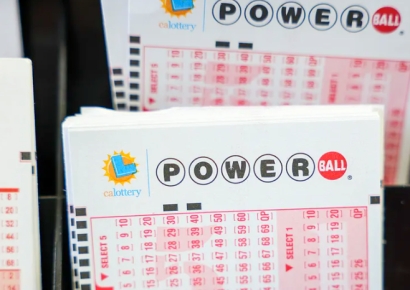 He Left It in the Car and Forgot... "I Nearly Collapsed with Joy": Man Wins $1.48 Million Lottery
- Goldman Sachs Cuts KOSPI Target by 25%... "Excessive Pessimism, Still Attractive"
- "'Nodding Off' on the Subway? Here's Why Koreans Are Getting Even Less Sleep"
- "Please Pay Me at Least 3 Million Won a Month": More Than Half of Young People Today Prioritize "Working Conditions" Over Company Size
- Beachgoer Finds 'Plastic' That Turns Out to Be Perfume Ingredient Worth More Than Twice as Much as Gold
Kim concluded, "The cornerstone of real estate policy is, after all, supply," explaining, "It's not easy to secure the amount of supply needed in Seoul and the metropolitan area. For instance, in the case of Yongsan in Seoul, the city and central government keep negotiating, but I believe that compared to the city's perspective, office space should be reduced and residential space increased."
© The Asia Business Daily. All rights reserved. Unauthorized AI training and use prohibited.