Ministry of Justice Unveils ‘Second Half 2026 Work Plan’... “Strict Response to Daily Life Crimes, Revision of Breach of Trust Law”
From Strengthened Response to Drugs and Phishing
to Recovery of Pro-Japanese Assets and Abolition of Statutes of Limitations for State Violence
Four Key Initiatives: Public Safety, Economic Revitalization, Human Rights, and Legal Innovation
The Ministry of Justice will strengthen its response to crimes affecting daily life in the second half of the year, such as drug offenses and voice phishing. At the same time, it will ease the burden on corporate management through the revision of the breach of trust law and regulatory relaxation, as well as accelerate protection for vulnerable groups and the resolution of historical injustices.

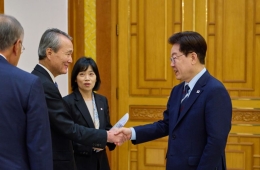
On August 5, the Ministry of Justice reported its "Work Plan for the Second Half of 2026" to the Presidential Office. With the vision of "A nation where people are safe and justice respects human rights," the ministry plans to focus on four key areas: 1) creating a safe nation for the people, 2) implementing practical legal administration to revive the economy, 3) fostering a society that respects the value of human rights, and 4) driving legal innovation towards the future.
The Ministry of Justice announced as achievements in the first half that both the number of voice phishing cases and total damages fell by 35.3 percent year-on-year, and that 304 perpetrators of financial securities and virtual asset crimes were indicted, with 381.4 billion won of illicit profits preserved for forfeiture. In the area of drug crimes, 264 individuals were apprehended, including members of eight drug crime syndicates, and the nation's largest-ever cannabis smuggling case was uncovered, involving 636 kilograms of marijuana. Through international judicial cooperation, a total of 135 suspects from 23 countries, including major Philippine drug leaders, were extradited to Korea.
For the second half of the year, the ministry will continue to concentrate the capabilities of the pan-government Voice Phishing Task Force, the Government Joint Investigation Headquarters for Drug Crimes, and the Joint Investigation Division for Financial Securities and Virtual Assets to address crimes affecting daily life. For drug offenders, a step-by-step management system will be implemented, including a re-offense risk assessment within one month of commencing probation, and dedicated drug correctional facilities will be expanded. To prevent juvenile crime, a specialized juvenile protection institution, separate from adults, will be established, creating a comprehensive K-Juvenile Crime Prevention Process from diagnosis of the causes of delinquency to post-management.
Protection for crime victims will also be reinforced. The ministry is developing a mobile app that will allow victims to view the real-time location of offenders wearing electronic monitoring devices, and it will promote legal amendments in the second half to include dating violence as grounds for provisional protective measures. A new system will also be established to enable police to share the real-time locations of offenders.
In the economic sector, investigations into unfair trade practices will be strengthened. The Ministry of Justice announced that in the first half, it uncovered collusion involving daily necessities such as flour, sugar, oil, and starch syrup, worth a total of 3.36 trillion won, and indicted 66 individuals. The ministry plans to continue responding to these issues through dedicated teams for stabilizing daily life and prices established at 18 prosecutor's offices nationwide, in cooperation with the Fair Trade Commission.
For the breach of trust crime, which has been cited as a significant burden on business management, the ministry will revise the elements constituting the offense and promote alternative legislation to prevent gaps in punishment. The mandatory disclosure system for management expenses, previously applicable to apartment buildings, has been extended to commercial buildings and will be further expanded to include officetels and other non-apartment buildings, aiming to resolve the problem of opaque management fees.
Immigration and entry-exit policies will also be refined. To alleviate labor shortages in regional manufacturing, the ministry implemented a "Skilled Seasonal Worker Visa for Agriculture and Fisheries" in the second half, allowing longer stays for skilled seasonal workers. It is also introducing the "Local Vitality Small Business Employment Special Exception Program," which relaxes foreign employment requirements for small businesses in areas with declining populations. The number of countries eligible for automated entry and exit screening has been expanded from four to 42. Additionally, the ministry will shorten the processing period for electronic medical tourism visas and expand designated tourism areas beyond the metropolitan region in the second half.
In the area of human rights, a "Livelihood Account" system has been introduced to guarantee up to 2.5 million won per month as a non-seizable minimum living fund. The Korea Legal Aid Corporation is providing free counseling and litigation support to those applying for personal rehabilitation or bankruptcy and to victims of illegal private lending. To protect foreign workers, a dedicated number for human rights violations has been added to the Foreign Workers' General Call Center, and, upon receiving a report, an "Immigrant Human Rights Violation Investigation Team" will conduct on-site investigations within 24 hours. To improve the issue of elderly or ill individuals who are unfit for labor being uniformly detained in labor facilities, the grounds for suspending labor facility detention execution will be expanded, and suspended sentences for summary fines will be introduced.
The ministry will also address historical injustices. To confiscate assets unjustly accumulated by pro-Japanese collaborators, the "Committee for the Investigation of Pro-Japanese Assets" will be reestablished in the second half to continue investigations and recoveries. Legislation will also be promoted to abolish the criminal statute of limitations for offenses resulting from state violence and to grant special civil statute of limitations for related claims for damages, through the "Special Act on the Statute of Limitations for State Violence Crimes."
The ministry stated it will continue to offer free legal advice to companies expanding overseas and publish legal guidebooks by country. In addition, it will introduce artificial intelligence (AI) throughout the justice administration, including the management of high-risk involuntarily committed patients at the National Institute of Justice using AI behavioral analysis systems and the pre-screening of foreign arrivals. The ministry also plans to expand the securities class action system, currently limited to securities, to help provide relief for small and numerous victims.
Hot Picks Today
 "The Transfer Failed, but 'Ding-Dong,' Money Came In"... KRW 32.5 Billion Financial Incident at Toss Bank
- Shark 'Bukkangi' Missing... Oil Spill off Busan North Port Raises Concerns
- "Made 12 Billion Won Cleaning Up Other People's Dog Poop With Just a Rake"... 'Poop Scoop Millionaire' Is All the Rage in the U.S.
- Special Counsel Reviews Deceased's Suicide Note... Is "Preventing Controversy" Within Its Investigative Authority?
- Woman Who Bought Economy Ticket Causes Uproar, Demands "Put Me in Business Class," Delays Flight
Minister of Justice Jeong Seongho said, "We will do our utmost to protect the daily lives of our people from crime and contribute to economic revitalization and the protection of the national interest through creative innovation."
© The Asia Business Daily. All rights reserved. Unauthorized AI training and use prohibited.