Assemblyman Jo Incheol Seeks Solutions for Fiscal and Authority Balance in Unified Special City
National Assembly Forum on August 6
Discussing Improvements to Fiscal Systems Between Gwangju's Autonomous Districts and Jeonnam's Cities and Counties
"Pursuing Special Act Amendments... Unification Outcomes Must Enhance Citizens' Lives"
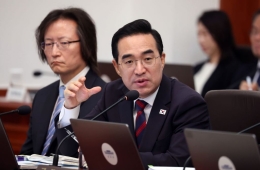
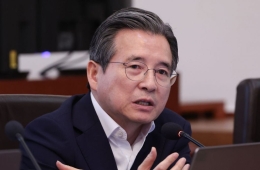
Jo Incheol, Member of the National Assembly (Seogu-gap, Jeonnam Gwangju), will host a parliamentary forum to seek solutions to the fiscal and authority imbalance between Gwangju’s autonomous districts and Jeonnam’s cities and counties, an issue raised following the establishment of the Jeonnam Gwangju Unified Special City.
Assemblyman Jo announced on August 5 that the forum, titled "A Truly Unified Special City Realized Through Balanced Autonomy," will take place at 10:00 a.m. on August 6 in Meeting Room 9 of the National Assembly Members’ Office Building.
This forum is jointly organized by eight National Assembly members from the Gwangju region, together with the Association of Mayors, County Governors, and District Chiefs of the Republic of Korea, and will be hosted by the Korea Research Institute for Local Administration.

The forum will diagnose the institutional limitations arising as Gwangju’s five autonomous districts and Jeonnam’s twenty-two cities and counties have maintained separate fiscal and administrative systems after the launch of the unified special city. It will also discuss measures for establishing a balanced fiscal and authority structure.
Currently, Jeonnam’s 22 cities and counties receive the ordinary grant tax directly from the central government, while Gwangju’s five autonomous districts are subject to the adjustment grant system instead of qualifying for the ordinary grant tax. Therefore, there have been ongoing calls for institutional improvements to enhance the fiscal stability and predictability of the autonomous districts even after the unification.
Assemblyman Jo explained, “This issue is not about the advantages or disadvantages of a particular region, but rather a task to seamlessly connect different fiscal systems to ensure the stable settlement and competitiveness of the unified special city.”
The keynote presentation will be delivered by Hong Keunseok, a research fellow at the Korea Research Institute for Local Administration, who will discuss “Measures for Balancing Fiscal Powers and Authority Between Basic Local Governments in the Jeonnam Gwangju Unified Special City.”
The presentation will review and compare various institutional improvement options, including ▲raising the adjustment grant rate for autonomous districts, ▲direct provision of the ordinary grant tax to autonomous districts, and ▲converting autonomous districts into general cities.
The subsequent comprehensive discussion will be chaired by Professor Jung Jongpil of the Local Government Officials Development Institute (President of the Korea Local Finance Association), with academic, local government, research institute, and media experts participating to discuss realistic directions for institutional reform.
Assemblyman Jo further stated, “Unification should not mean Gwangju disappearing, but Gwangju and Jeonnam growing together. Only when autonomous districts and cities/counties advance together in a balanced fiscal and authority framework, and citizens receive equal administrative services regardless of their locality, will a true unified special city be achieved.”
Hot Picks Today
 "Should Get at Least 45 Million Won Salary" "Can't Give Up on Large Companies"... Young People Say There Are No Places to Apply
- Unemployment Benefits to Drop from 1.98 Million to 1.76 Million Won per Month...Employment Insurance Premium Rate to Rise from 1.8% to 2%
- iPhone 18 Production Cost Jumps by 410,000 Won... "Even Xiaomi Prices Soar by 200,000 Won" as Phone Costs Surge in China
- BJ Gwajupseyeon and Kay Booked for 'Taking Psychotropic Sleeping Pills'
- Chinese Lecturer Who Murdered Female International Student Identified as Jung Changseong, 31
He added, “Based on the policy solutions derived from this forum, we will swiftly pursue follow-up legislation such as the amendment of the ‘Special Act for Establishing the Jeonnam Gwangju Unified Special City’ so that the outcomes of unification can result in improved quality of life for citizens.”
© The Asia Business Daily. All rights reserved. Unauthorized AI training and use prohibited.