Choo Mi-ae Declares "770 Billion Won Supplementary Budget Cut Inevitable" ... Announces 'Gyeonggi Province Financial Emergency' on the 5th (Comprehensive)
Gyeonggi Province Governor Chu Mi-ae officially declared a "fiscal emergency" for Gyeonggi Province on August 5 and launched a high-intensity fiscal austerity campaign. The core measures include cutting work-related expenses for the governor and senior officials, thoroughly reviewing all wasteful budgets, protecting essential public welfare expenditures, and pushing for structural reforms in revenue streams.
Governor Chu held an emergency press conference at the Gyeonggi Provincial Government briefing room on the same day, addressing the province's financial situation. She stated that it is unavoidable to formulate a supplementary budget that reduces expenditures by 770 billion won, and announced that Gyeonggi Province would pursue four key emergency steps: intensive expenditure restructuring, innovation within the civil service, protection of essential welfare budgets, and reforming its revenue structure, in order to overcome the fiscal crisis.
Chu stated, "The fiscal crisis did not arise overnight, and setting it right will also take time," adding, "As this is an inevitable decision, I will fulfill my responsibility to the residents of the province."
She further commented, "We're in a situation where it's difficult not only to pursue new policy promises but even to maintain ongoing programs as they are," and explained that "Immediately after taking office, I learned that our fiscal reality was far more severe than expected. Within the provincial government, the true scope and seriousness of this crisis were not being adequately shared." She explained the reason for publicly disclosing the fiscal emergency by saying, "If we do not face the situation squarely, we cannot find a solution."
Governor Chu emphasized that the current financial hardship is not a temporary issue, but a structural problem. "If we do not take action now, we could fall into a vicious cycle of issuing new local bonds in 2-3 years just to pay off existing debt. Next year, we will likely see a further decline in revenues and an increase in mandatory expenditures, worsening the fiscal environment," she warned.
She especially criticized the way public finances were managed in the 8th popularly-elected term.
According to Chu, last year, Gyeonggi Province issued local government bonds in three rounds totaling 943 billion won, using 99.6% of the statutory ceiling of 946 billion won. In addition, an ordinance revision in May last year allowed the use of earmarked funds for the general account, and through three supplementary budgets, a total of 558.8 billion won from various special funds was transferred into the general account via an integrated stabilization account.
As a key example, she cited the Inter-Korean Cooperation Fund. "Out of the 38.4 billion won in the Inter-Korean Cooperation Fund, about 34 billion won was transferred to the general account, leaving a current balance of only 4.4 billion won," she pointed out, adding, "If we execute the planned projects this year and next year, the fund will effectively be exhausted, making it difficult to promote peace and cooperation projects in border regions."

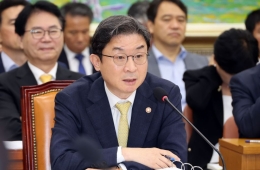
Gyeonggi Province Governor Chu Mi-ae is holding an emergency press conference on the financial situation of Gyeonggi Province on the 5th. Photo by Gyeonggi Province
View original imageShe continued, "Earmarked funds that should have been reserved for emergencies were instead used to fill general fiscal shortfalls. By siphoning off funds and issuing excessive local bonds to get through the immediate crisis, we missed the golden hour to normalize our finances."
Governor Chu also stated that a significant share of essential welfare projects currently lacks proper budgetary allocations. Key public welfare programs, including 123.4 billion won for elderly long-term care, as well as initiatives for pediatric emergency care centers, support for eco-friendly school meals with premium agricultural and livestock produce, postpartum care support, meal subsidies for kindergartens, elementary, middle, and high schools, family care allowances, crop disaster insurance, and public management of city buses, are all facing budget shortfalls.
She noted, "For some projects, only 9 months’ worth of budget has been allocated, not enough for the full year, so after October, we will face a 'half-done budget' where funding runs out."
Governor Chu identified Gyeonggi Province's weak revenue structure as the root cause of the fiscal crisis. "Unlike Seoul, Gyeonggi Province lacks stable tax bases such as local corporate income tax and is heavily reliant—over half—on acquisition tax, which is highly susceptible to real estate market fluctuations," she explained.
In fact, acquisition tax revenues shrank by approximately 30%, from 11 trillion won in 2022 to 8 trillion won this year. On top of this, due to expansion of public rental housing and direct development by Korea Land and Housing Corporation (LH) in the Phase 3 new town projects, acquisition tax income is now projected to decrease from the previously estimated 650 billion won to only about 230 billion won.
She also noted that while the province spends vast sums to build infrastructure such as power, water, and transportation networks in efforts to attract large companies like semiconductor manufacturers, the resulting local corporate income tax is assigned to the cities and counties, not to the provincial budget, indicating a need for systemic reform.
Governor Chu explained, "Of Gyeonggi Province’s total 41.7 trillion won budget for this year, only about 3.5 trillion won—less than 10%—can be used at the province’s policy discretion. In contrast, the welfare budget already accounts for 49% of total expenditures, and with an aging population, it is likely to exceed 60% in the future."
Accordingly, she announced immediate implementation of severe expenditure reduction measures, including cuts to all sorts of work-related expenses for the governor and senior officials. She also said Gyeonggi Province would immediately halt all wasteful budgeting and spending, re-examine from scratch any one-off, populist, or non-essential programs, and rigorously re-evaluate the necessity of unnecessary events, customary research contracts, and private outsourcing projects to decide whether to proceed.
Governor Chu stressed, "I will scrutinize the budget with the utmost attention to detail, as if examining it under a microscope, saving every minute and every second," adding, "Starting with the governor and senior officials, we will take the lead and set an example."
She also announced plans to reform the civil service organization: restructuring executive staff offices directly under the governor, breaking down barriers between provincial departments and public institutions, and redeploying staff more efficiently. All existing projects will be re-evaluated for duplication and efficacy, aiming to improve overall efficiency in budget execution.
However, Governor Chu made it clear that the fiscal crisis would not be used as a reason to neglect essential welfare demands. "We will protect the vital public welfare budgets that are absolutely necessary to the very end," she stated, pledging continued support for the financially vulnerable and for the residents' quality of life without disruption.
She also emphasized that expenditure restructuring alone cannot resolve the fiscal crisis, and that institutional reforms are needed to normalize the revenue structure. She said the province would urge the central government and the National Assembly to address instability in revenue streams centered on acquisition tax, expand local consumption tax, and rationally distribute tax revenues generated by corporate relocations. At the same time, Gyeonggi Province would push for relief from the excessive provincial cost burden associated with state-subsidized projects.
Governor Chu stated, "Recently, we submitted a proposal to the Ministry of Economy and Finance for institutional reforms to improve Gyeonggi Province’s fiscal structure, and we have shared the realities of the situation with the Gyeonggi Provincial Council and requested their cooperation. Overcoming the fiscal crisis requires the government, the National Assembly, the provincial council, the civil service, and the residents of Gyeonggi Province to all come together as one team."
Hot Picks Today
 "30,000 Won in Korea, 70,000 Won in Japan"—Koreans Fill Suitcases as Illegal Direct Purchases Soar
- "Will Burst Within 3 Years, Gather Gold and Bitcoin"…World's Largest Hedge Fund Founder Warns
- In Korea, It's a Beloved Side Dish... But Miami Spends $4.1 Million to Remove 9,000 Tons from Its Beaches
- "Just a Day After Her Birthday" 8-Year-Old Girl Dies from 'Brain-Eating Amoeba' Infection After Swimming in Lake
- "Never Experienced This in My Aviation Career": Crew Shocked as Stranger Unexpectedly Enters First-Class Suite
She added, "I will boldly cut what is unnecessary and pursue fair fiscal reform. I will do my utmost from my position to restore the trust of our residents."
© The Asia Business Daily. All rights reserved. Unauthorized AI training and use prohibited.