"Preventing Another Hong Kong ELS Crisis"... Financial Supervisory Service to Strengthen Investor Protection and Internal Controls at Securities Firms
In order to prevent a recurrence of the Hong Kong H Index equity-linked securities (ELS) crisis, securities firms have decided to strengthen their internal control functions, including managing the risk factors of derivative-linked products through the use of checklists during the product manufacturing stage. After sales, a new investor protection system will be established to provide advance notification to investors when the price of underlying assets drops to risky levels.

The Financial Supervisory Service announced on the morning of August 5 at the Korea Financial Investment Association in Yeouido, Seoul, that it held a 'Discussion for Improving the Derivative-Linked Product System' to address these matters.
Seo Jaewan, Deputy Governor of the Financial Supervisory Service, stated, "Due to investor losses related to the Hong Kong H Index ELS and the rise in market volatility, it is time for comprehensive regulatory improvements to preemptively protect investors. Sufficient and timely information must be provided to investors at both the manufacturing and review stages of derivative-linked products, and securities companies must reinforce internal controls such as regular self-inspections."
At the meeting, participants discussed the establishment of an advance product design and review process to allow the derivative-linked product departments to check for risk factors. To achieve this, securities firms will be required to prepare checklists of risk factors for review. The management of underlying assets by securities firms will also be systematized. Product development departments must establish operating standards for managing pools of underlying assets and selecting such assets.
The approval committee for new products will include consumer protection, compliance, and sales departments. In addition, the Chief Officer for Consumer Protection (COO) will be granted the authority to suspend product launches when necessary for investor protection. When selecting new pools of underlying assets or changing existing approvals, the product approval committee's review function will be reinforced, including the periodic evaluation of the appropriateness of assets.
During the sales and post-sales management stages, the emphasis will be on providing timely information and enhancing the internal control functions of the securities firms. When the price of the underlying asset of high-risk ELS products approaches loss-triggering levels, an "ELS Knock-In Proximity Alert" will be sent in advance to investors.
When notifying investors of early redemption deferrals, they must also be informed that mid-term redemption is possible and be provided with the details and procedures. In addition, the self-inspection cycle of high-risk products will be shortened from once a year to once a quarter, and the board of directors will receive reports half-yearly instead of annually. Securities firms will also set internal management ratios for improper sales.
Hot Picks Today
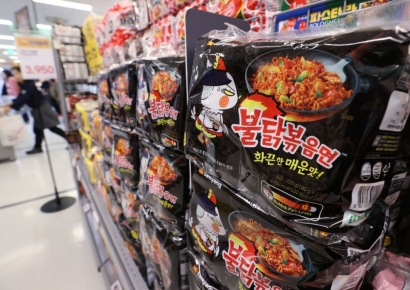 "Earned 500 Million Won in Three Months from Samsung Electronics"... Cash-Rich Samyang Foods' Stock Investment Revealed
- "Can't Stand My Child Falling Behind": US Parents Resort to Gambling and Loans for Back-to-School Purchases
- "Chinese Nationals Sweep Up Cicada Larvae"... 100,000 Won Fine at Hangang Park
- Paek Jongwon's US Visit Sparks Two-Day Stock Surge... Will The Born Korea’s 'K-Sauces' Continue to Thrive?
- "Did They Really Have to Cast a War Criminal Descendant?" Heated Online Debate Over Japanese Actress in Hyukoh's New Music Video
The Financial Supervisory Service plans to revise self-regulatory rules of the Korea Financial Investment Association next month, ensuring that each securities firm reflects the changes in their internal guidelines and completes system improvements within this year.
© The Asia Business Daily. All rights reserved. Unauthorized AI training and use prohibited.