"Shorter Term Deposits Offer Higher Returns"... Reverse Yield Curve in Fixed Deposit Rates
Highest Rates for 3- and 6-Month Deposits Exceed Those for 24- and 36-Month Terms
Longer Terms Usually Mean Higher Rates, But Recent Trends Are Reversed
Stricter Loan Management Lowers Banks' Need for Long-Term Funding
Rising Demand f
Amid a series of deposit interest rate hikes by commercial banks following the Bank of Korea's benchmark rate increase, a 'rate inversion' phenomenon has been observed, where short-term deposit rates are higher than long-term deposit rates.
According to the Korea Federation of Banks on August 5, the top interest rates (including preferential rates) for three-month fixed deposits at the five major commercial banks (Shinhan, KB Kookmin, Hana, Woori, and NH Nonghyup) were found to be between 2.80% and 2.90% per annum. The highest rates for six-month deposits ranged from 3.00% to 3.10% per annum. In contrast, the maximum annual rates for 24-month and 36-month deposits were just 2.40% to 2.75%, and 2.40% to 2.70%, respectively.

Looking at representative products by bank, the highest rates for Shinhan Bank's 'Ssolpyeonhan Fixed Deposit' and KB Kookmin Bank's 'KB Star Fixed Deposit' are 2.85% per annum for a three-month term and 3.00% per annum for a six-month term. However, for 24-month and 36-month terms, the rates drop to 2.60% and 2.40% per annum, respectively.
Similarly, for Hana Bank's 'Hana Fixed Deposit,' the highest rates are 2.85% per annum for three months and 3.00% per annum for six months, but 2.50% per annum for 24 months and 2.40% per annum for 36 months. For Woori Bank's 'WON Plus Deposit,' the top rates are recorded at 2.90% per annum for three months, 3.00% per annum for six months, and 2.50% per annum for both 24-month and 36-month terms. NH Nonghyup Bank's 'NH All-One e-Deposit' offers 2.80% per annum for three months and 3.05% per annum for six months, while rates for 24-month and 36-month terms are 2.70% per annum.
This phenomenon is also evident among internet-only banks. KakaoBank's fixed deposit rate peaks at 3.30% per annum for three months and 3.40% per annum for six months, but falls to 3.00% per annum for both 24-month and 36-month terms. The highest rate for Kbank's 'Code K Fixed Deposit' is 3.30% per annum for three months, 3.40% per annum for six months, 3.10% per annum for 24 months, and 3.15% per annum for 36 months.
Normally, longer deposit periods are associated with higher rates, as banks can manage funds more securely the longer customers entrust their money. However, the recent short- and long-term rate inversion is believed to be influenced by the financial authorities' management of total loan volume. Banks have recently tightened limits on unsecured and mortgage loans, restricted the purchase of mortgage credit insurance (MCI/MCG), and halted accepting applications through loan brokers, among other measures to manage lending. In such circumstances, relying on deposits for funding without being able to increase loans could result in banks only bearing interest costs without generating profit from fund operations. In particular, the more long-term deposits are sold, the greater the long-term interest burden on banks.
An official at one commercial bank explained, "Deposits are recorded as liabilities for banks and generate interest costs. The relevant departments manage the scale of short- and long-term funding and net interest margin (NIM). In an environment where it is difficult to extend loans, banks see little reason to raise funds through long-term deposits."
The possibility of further benchmark rate hikes by the Bank of Korea is also contributing to the short- and long-term rate inversion. If the benchmark rate rises, banks may increase deposit interest rates further. As a result, customers tend to prefer short-term products rather than locking in funds for the long term, in anticipation of potential rate hikes. To prevent customer churn, banks are setting short-term deposit rates higher than long-term ones.
Hot Picks Today
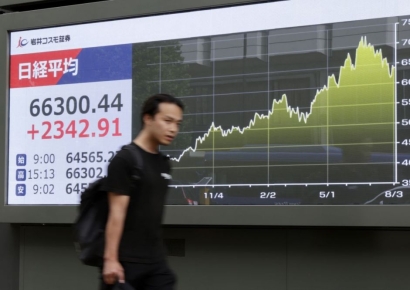 "Ruined Because of Korea" Even with a Sharp Rally, No One Buys... Japanese Market Sways with KOSPI
- '1,670,000 Won to 1,170,000 Won': SK hynix Hits Lower Limit Shock, Pre-market Opening Price Controversy
- [Weather Tomorrow] Searing Heat Grips Korean Peninsula... Most Regions Under Heatwave Advisory
- "Don't Be Sad, Mom Was Very Happy"... Son Battling Illness for Life Saves Four Before Passing Away
- "Don't Worry, That's Just How It Is"... Thai Tourists in Korea Touched by Elderly Man Who Paid for Their Meal
Another commercial bank official explained, "When interest rates are expected to rise, it may be advantageous for customers to choose three- or six-month products and then switch to better rates later, rather than committing to long-term products. As banks compete around popular products, this has led to higher short-term deposit rates."
© The Asia Business Daily. All rights reserved. Unauthorized AI training and use prohibited.