[Inside Chodong] China Dominates the Global Auto Market... Korea at a Crossroads
Chinese Automakers Making Striking Advances
Japan-Specific EV Developed in Just Two Years
Securing Production Bases Across Europe and South America
At BYD's annual general meeting this past June, Chairman Wang Chuanfu unveiled an ambitious goal: to surpass Japan's Toyota and become the world's largest automaker by 2030. Last year, Toyota sold 11.3 million vehicles, while BYD’s total was 4.6 million. Judging by these figures alone, it would seem like an empty promise. However, considering the rapid growth of Chinese automotive companies in recent years, it is difficult to dismiss such statements as mere bravado.
Chinese automakers, which have led the charge in vehicle electrification domestically, are now shifting their focus overseas. This transformation, triggered by shrinking domestic demand and intensifying sales competition, is changing the landscape of the global market. For example, Britain’s experience—where Chinese brands have rapidly gained ground—holds significant lessons for others.
According to the Society of Motor Manufacturers and Traders in the UK, Chinese brands such as BYD and Chery accounted for 15% of new car sales in the UK in the first half of the year. Unlike the European Union, which has shielded itself with tariffs on Chinese electric vehicles, the UK has taken little action, resulting in a situation some have criticized as self-inflicted. The surge in Chinese car sales contributed to a 7.5% decline in UK automobile production compared to the previous year.
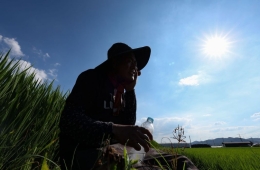
![[Inside Chodong] China Dominates the Global Auto Market... Korea at a Crossroads](http://www.asiae.co.kr/news/img_view.htm?img=2026080217581866545_1785661099.jpg)
Armed with abundant resources, capital, and a robust parts supply chain, Chinese automakers are targeting even markets previously considered nearly impossible to penetrate. On July 28, BYD announced its plan to enter the Japanese compact car market—a space that has long been an impregnable stronghold for domestic Japanese brands and where no foreign carmaker has succeeded before.
It took BYD only two years to develop its Japanese market-oriented electric vehicle, the Laiko. Beyond just developing the vehicle, BYD also created the 'X-Pack,' a new battery architecture that integrates the battery, control unit, current converter, and power distributor into a compact package tailored for small vehicles. The speed of this development is truly remarkable.
China is also rapidly filling gaps left as global firms withdraw from Europe, South America, and Africa. Geely is pursuing the acquisition of production lines at Ford’s Valencia plant in Spain, while Chery acquired Nissan’s factory in South Africa. Great Wall Motors purchased Mercedes-Benz’s plant in Brazil, establishing a local manufacturing presence there.
The domestic market is not immune to these trends. In the first half of this year, Chinese-made vehicles overtook German brands to claim the top spot in Korea’s import car market. Chery’s investment in a stake in KG Mobility has marked the second entry of Chinese capital, following the 2022 Renault Korea-Geely partnership. The infiltration of Chinese capital is already familiar through brands like Mercedes-Benz and Volvo, but the concern is that, with these developments, domestic factories may increasingly be reduced to Chinese export production bases.
Korea now faces a crossroads: compete with China or become dependent on it. Competing in terms of price or production capacity is no longer viable. The only viable path forward lies in future mobility technologies such as electrification and software-defined vehicles (SDVs). At this critical moment, the exclusion of the automotive industry from Korea’s domestic production promotion tax policy is a deeply regrettable decision.
Hot Picks Today
 "I Always Made Sure to Eat Naengmyeon..." Food Poisoning Cases Surge by 28%—What's Behind the Increase?
- “Told to Apply as a New Graduate Without Experience”…Samsung Employees Frustrated as Path to SK hynix Is Blocked
- "If We're Not Married, Let's Live Together"... Gen Z Joins Friends for 'Joint Home Buying' [Zconomy Today]
- Japan Strongly Protests South Korean Survey Vessel Near Dokdo
- "At Age 11, I Was a Joy Brigade Candidate... Forced to Undress in Front of Men": Shocking Testimony from North Korean Defector
![[Inside Chodong] China Dominates the Global Auto Market... Korea at a Crossroads](http://www.asiae.co.kr/news/img_view.htm?img=2026080508490069956_1785887341.jpg)
© The Asia Business Daily. All rights reserved. Unauthorized AI training and use prohibited.



!["Over 1 Billion Won 'Sweat Equity' Rush: Surge of High-Priced Winning Bids for Mid- to Low-Priced Reconstruction Complexes [Real Estate AtoZ]"](https://cwcontent.asiae.co.kr/asiaresize/307/2026042709001641074_1777248016.jpg)

![[Chip Talk] "Slim Down to Ship"... AI Giants Forced into an 'HBM Diet' Amid Memory Shortage](https://cwcontent.asiae.co.kr/asiaresize/307/2026080808443963900A.jpg)