[Second Half Policy Briefing] Lee Orders Ministry of SMEs and Fair Trade Commission to Disclose Delivery App Commission Breakdown
President Orders Action After Complaints Over Delivery App Commissions
Points Out Small Business Debt Burden in Post-COVID Era
Ministry to Foster Innovative and High-Growth Companies in New Sectors
Plans Underway for Basic Social Security System for Small Business Owners
President Lee Jaemyung has highlighted the issue of monopolies in the food delivery app market and instructed the Ministry of SMEs and Startups and the Korea Fair Trade Commission to take measures, such as disclosing the breakdown of commission fees. He also stressed the need for countermeasures regarding the growing debt burden for small business owners following the COVID-19 pandemic.

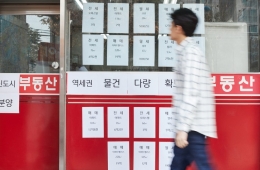
During a Ministry of SMEs and Startups work report at the Blue House on August 4, a self-employed business owner participating as a member of the public panel stated, "After paying delivery app commissions, only about half of our payments remain," and proposed introducing regulations like a commission fee cap. President Lee mentioned public delivery apps as an alternative, saying, "Rather than running them directly, the public sector can participate and support, letting private companies take the lead—this could be one approach." He added, "Direct control of commissions is realistically challenging. If possible, please assume the authority and try to regulate them."
Regarding the disclosure of delivery app commission items, Noh Yongseok, First Vice Minister of the Ministry of SMEs and Startups, replied, "While controlling commission rates is important, it is also effective to require by law the disclosure of how each item, such as platform and delivery fees, is included—currently, these are not made public." In response, President Lee instructed, "Please ensure that the Ministry of SMEs and Startups and the Korea Fair Trade Commission collaborate and take the necessary actions."
Concerning the extension of small business owner loans, President Lee asked, "Are the loans provided instead of direct support during COVID-19 still being extended?" Intae Yeon, Director of the Small Enterprise and Market Service, responded, "We operated an installment repayment system that extended the repayment period by two years and lowered the interest rate by 1 percentage point. Demand was so high that about 95% of the prepared funds were executed."
President Lee further questioned, "With household debt ratios rising due to loans rather than direct support, should that debt be considered the individual’s responsibility?" Director In emphasized, "Bold government support is needed," and added, "There is a fund, such as the Sae Chulbal Fund, for writing off delinquent debt, and I believe the program should not be discontinued but continued."
The Startup Craze Continues: Fostering Innovative Growth Companies

In its work report, the Ministry of SMEs and Startups presented policy directions for the second half of the year, focusing on building a growth ladder from startup to restart and spreading the momentum for growth to local areas and social groups. It will focus investments on innovative companies in five new growth sectors and foster 3,000 national champion enterprises.
In the startup sector, the second round of applications for the "All Together Startup" program will begin in mid-August. The program will select 10,000 people—double the number in the first round—and relax eligibility standards to include those restarting a business within seven years. First-round applicants who were not selected will have preference in reapplication. In order to extend the startup boom to local areas, six additional cities will be designated as startup hubs, following four cities (Daejeon, Daegu, Gwangju, and Ulsan) named in the first half of the year.
Initiatives to foster global innovative companies in new growth sectors are also being launched. The five sectors are: ▲New Security ▲Pharmaceuticals & Biotechnology ▲Climate Technology ▲K-Consumer Goods ▲Manufacturing AI. Each year, 400 companies will be selected and supported through packages combining technology commercialization, guarantees, loans, R&D, and venture investment. Each company can receive up to KRW 40 billion in intensive support over five years. Through the step-by-step "Jump Up" program, which enables promising local small and medium-sized companies to scale up, 3,000 high-growth companies will be developed. Bundled packages including directing and vouchers will be provided for three years, creating a growth ladder from small companies to medium-sized and then to mid-sized enterprises.
The Venture Company Act will be revised so that companies that grow from venture businesses to mid-sized companies can retain special privileges, such as the granting of stock options. In collaboration with the Financial Services Commission, the ministry will establish a system allowing the Fund of Funds to provide follow-up investments from the National Growth Fund into promising AI and deep tech firms. To expand SME exports, a new “K-SME Maru” in New Delhi, India, will offer entry space and manufacturing infrastructure for Korean companies.
Policies will also be introduced to help growth-oriented social ventures scale up. A private capabilities-based scaling program tentatively named "Social Tips" will be launched, and funding supply will increase through impact funds and guarantees. The ministry also plans to establish standards and grounds for support, pursuing the enactment of a Social Venture Act next year.
With the increasing aging of small business owners and the resulting retirement of founders, legislation will be pushed to provide acquisition funding so that employees and executives can acquire and manage these companies—specifically, the "Employee and Executive Corporate Acquisition Special Act." Separately, systems and tax policies will be prepared to vitalize M&A-type inheritance by third parties.
![[Second Half Policy Briefing] Lee Orders Ministry of SMEs and Fair Trade Commission to Disclose Delivery App Commission Breakdown](http://www.asiae.co.kr/news/img_view.htm?img=2026080417345969623_1785832499.jpg)
Designing a Social Security System for Small Business Owners... Introducing Childcare Grants for One-person Small Business Owners
Starting in the second half of the year, the Ministry of SMEs and Startups will work on designing a basic social security system for small business owners. This follows the determination that a social safety net is needed for small business owners who are excluded from social security schemes such as parental leave. The ministry will seek to introduce childcare grants for sole proprietors who are at high risk of career interruption due to childbirth or parenting.
The ministry is also considering introducing a new health care allowance to compensate for income losses during business suspension in order to boost small business owners' health screening rates. The health screening rate for the self-employed stands at only 30.8%, about one-third of the worker rate of 89.3%.
A ministry official stated, "Self-employed business owners can purchase employment insurance voluntarily, but its focus is on unemployment benefits, with little coverage for parental leave or allowances. We are considering reflecting the childcare grant in next year’s budget and will coordinate as soon as the government's proposal is ready, but the amount has not been determined."
From next year, employment and industrial accident insurance for self-employed business owners will also be expanded to cover up to 80% of annual premiums for up to five years. Policy funding will be prioritized for moderately and low-credited small business owners (those with credit grades of 4 or below) and promising growing enterprises, in order to relieve their interest burden. High-credit small business owners will be supported through interest subsidies.
To foster local commercial districts, anchor enterprises (key stores) such as Sung Sim Dang in Daejeon and Terarosa in Gangneung will be nurtured. An "AI Autonomous Restaurant" model will be introduced to handle tasks such as ingredient ordering and shop management with artificial intelligence. Branding and delivery capabilities of traditional markets will be strengthened, and a multifaceted local commercial district policy will be promoted to make local businesses into leading brands.
![[Second Half Policy Briefing] Lee Orders Ministry of SMEs and Fair Trade Commission to Disclose Delivery App Commission Breakdown](http://www.asiae.co.kr/news/img_view.htm?img=2026080417341469622_1785832453.jpg)
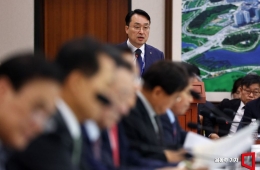
The ministry will reorganize SME support programs to improve efficiency and reduce duplicated or similar projects. The goal is to cut 16% of budgets administered by 16 ministries and agencies, for example, by consolidating all pre-startup projects under the "All Together Startup" program. The ministry will also strengthen project pre-coordination functions, requiring central and local governments to consult with the ministry before establishing or changing SME-related budgets. The SME Policy Council, which oversees substantial policy adjustments, will be elevated to the vice minister of economy level.
Regulatory screening, which assesses the impact of new regulations on startups, will be conducted for pre-startup entrepreneurs in the All Together Startup program. A "joint regulatory demonstration project" will be introduced for startups faced with similar regulatory difficulties, and the ministry is also considering the establishment of a startup-only sandbox program.
Hot Picks Today
 "If You Don't Apply, My KRW 1.7 Million Will Be Gone"... Unclaimed National Pension Refunds Vanish After 'This Deadline'
- "I order out of habit, then regret it when I check my wallet"... Gen Z caught in 'delivery guilt'
- "When I get Home from Work, This Is All I Do, and It's Making Me Stupid"... Short-Form Craze Sparks 'Electronic Drug' Debate in China
- Lee Juwan, Who Forecast Samsung at 70,000 Won and SK hynix at 200,000 Won, Says They're "Still Overvalued"; Others Counter: "Fundamentals Are Solid, Correction Is Excessive"
- "Beef Is Too Expensive, Let's Eat Chicken"... Japan's Dining Habits Shift Amid High Prices and a Weak Yen
Noh Yongseok, First Vice Minister of the Ministry of SMEs and Startups, said, "Over the past six months, we have mobilized all our policy capabilities to enable SMEs and startups not only to recover but to achieve innovative growth. In the second half of the year, we will do our utmost to realize an irreplaceable, advancing Republic of Korea where everyone grows."
© The Asia Business Daily. All rights reserved. Unauthorized AI training and use prohibited.


!["Please Take Them Off!" They Made It All the Way to the Bed... Then "80% of Fecal Bacteria" Struck [Deep Scroll]](https://cwcontent.asiae.co.kr/asiaresize/307/2026101610053063338_1792112730.png)