[Second Half Work Report] Ministry of SMEs and Startups to Invest in 5 Key New Growth Sectors, Foster Leap-Forward Companies, and Introduce Childcare Subsidy for the Self-Employed
Fostering Innovative New Growth Companies:
Up to 40 Billion Won in Support Per Company
Nurturing 3,000 "Leap-Forward Companies"
Among Small and Medium-Sized Enterprises
Launching the Design of a Basic Social Security System
for Small Business Owners
The Ministry of SMEs and Startups has unveiled its policy direction for the second half of the year, focusing on building a growth ladder from startup to business re-challenge and spreading the benefits of growth to regions and various social groups. The ministry will make concentrated investments in innovative companies across five new growth sectors and foster 3,000 nationally representative companies poised to leap forward. It also plans to introduce a childcare subsidy for single-person self-employed individuals and launch the design of a social security system for small business owners.
On August 4, the Ministry of SMEs and Startups conducted its second-half public work report. The ministry has set its goal as “Building an irreplaceable Korea where everyone grows, by establishing a growth ladder for SMEs and ventures and spreading the warmth of growth.”

2026 Second Half Year Plan for the Ministry of SMEs and Startups. Ministry of SMEs and Startups
View original imageContinuing the Startup Boom and Fostering Innovative New Growth Companies
To ensure the ongoing momentum of entrepreneurship, the government will launch the second round of the “Entrepreneurship for All” program in mid-August. The selection scale will double to 10,000 participants compared to the first round. Eligibility will be expanded to include those restarting a business within seven years, and previous unsuccessful applicants will be given preferential treatment if they apply again. To further spread the startup heat to local areas, six additional startup cities will be designated. In the first half of the year, four cities (Daejeon, Daegu, Gwangju, Ulsan) were selected.
The ministry will also fully launch its program to foster global innovative companies in new growth fields. The five core sectors are: ▲New Security ▲Pharma-Bio ▲Climate Tech ▲K-Consumer Goods ▲Manufacturing AI. Each year, 400 companies will be selected to receive bundled support including technology commercialization, guarantees, loans, R&D, and venture investment. Up to 40 billion won per company will be provided for a maximum of five years.

Key Points of Startup Policies in the Ministry of SMEs and Startups (MSS) Work Report for the Second Half of 2026. Ministry of SMEs and Startups
View original imageThrough the “Jump-Up” program, the ministry will foster 3,000 leap-forward companies by providing phased support to promising local small and medium-sized businesses to achieve scaling up. The policy is designed to help these companies climb the growth ladder from small to medium to mid-sized enterprises, with bundled support including mentorship and vouchers over three years.
The ministry will also amend the Venture Business Act so that even when venture companies grow from SMEs to mid-sized enterprises, they can retain special venture privileges such as granting stock options. In collaboration with the Financial Services Commission, a “relay investment” structure will be established, with the Korea Fund of Funds investing in promising AI and deep tech firms, and the National Growth Fund providing follow-up investments. Additionally, the new “K-SME Maru” initiative will be launched to support Korean SMEs’ exports by providing workspace and manufacturing infrastructure in New Delhi, India.
The ministry will also introduce new policies to help social ventures with strong growth potential to scale up. A private-led scale-up program, tentatively named “Social Tips,” will be launched, and capital supply will be expanded through impact funds and guarantees. A Social Venture Act will be pursued next year to set standards and provide clear support foundations for social ventures.
In response to the aging of SME founders and their retirement, the ministry will promote special legislation supporting employees and executives in acquiring such businesses, with a focus on facilitating financing for acquisitions. Separately, new institutional and tax measures will be established to activate M&A-based business succession, encouraging third-party acquisitions.
Spreading the Benefits of Growth to Regional Markets and Small Businesses
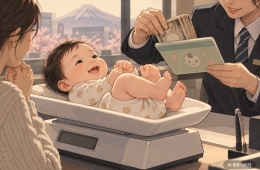
From the second half of the year, the ministry will start designing a basic social security system for small business owners. This reflects the recognition that a social safety net is needed for small business owners who remain outside the protection of current systems such as parental leave. The introduction of a childcare allowance for single-person small business owners—who are highly vulnerable to career breaks due to childbirth or parenting—is also being pursued.
The ministry is considering establishing a “health care allowance” to compensate for business losses and boost health check-up rates among small business owners. The health check-up participation rate among the self-employed is only 30.8%, just one-third of the 89.3% rate among salaried workers.
A ministry official explained, “Self-employed individuals can enroll in employment insurance voluntarily, but the system is mainly focused on unemployment benefits and offers little security in terms of parental leave or allowances. We are considering including the childcare subsidy in next year’s budget and will engage in consultations as soon as the government’s plan is ready, although the exact amount has not been determined yet.”
Additionally, from next year, support for self-employed individuals’ employment and industrial accident insurance will be expanded, covering up to 80% of annual premiums for five years. Policy loans will be prioritized for medium- and low-credit small business owners (with credit ratings of grade 4 or lower) and promising growth-oriented small vendors to ease their interest burden. For small business owners with high credit, interest support will be provided.
For local commercial districts, the ministry will foster anchor companies (key stores) such as Seongsimdang in Daejeon and Terarosa in Gangneung to enhance the value of local business areas. An “AI Autonomous Management Restaurant” model will also be introduced, applying AI technology to tasks like ordering food supplies and store management. Efforts will be made to strengthen traditional markets’ branding and delivery capabilities, and a multidimensional policy will be pursued to help local commercial areas build strong brands of their own.

During the Ministry of SMEs and Startups' second half of 2026 work report, the introduction of social security systems for local markets and small business owners was presented. Ministry of SMEs and Startups
View original imageLegislative Push to Eradicate Technology Theft… Streamlining SME Support Programs
The ministry will seek to amend the SME Technology Protection Act, introducing a “three-part legislative package” to eradicate technology theft. When technology theft occurs, current recommendations for corrective action will be strengthened to binding corrective orders, and those involved will be banned from participating in government tenders. For serious technology theft cases, fines of up to 5 billion won will be imposed, and damage compensation calculations will be made more realistic.
The ministry will also reorganize support programs to improve efficiency, focusing on reducing overlapping or redundant programs for SMEs. All preliminary startup support will be unified into the “Entrepreneurship for All” program, with the aim of cutting 16% from the budgets of 16 ministries and agencies. Pre-coordination functions for programs will be enhanced, requiring central and local government bodies to consult in advance with the ministry when initiating or modifying SME-related budgets. The SME Policy Review Committee, which conducts substantial policy coordination, will be elevated to be chaired by the Deputy Prime Minister for Economic Affairs.
The ministry will conduct “regulation screening” for startups applying for the “Entrepreneurship for All” program, examining the impact of newly established regulations on startups in advance. The ministry is considering including startups within the scope of regulation impact assessments and will establish a dedicated Startup Venture Expert Committee within the Regulatory Rationalization Committee. A “joint regulation demonstration project” will be introduced for startups facing difficulties due to similar regulations, and the creation of a dedicated special regulatory sandbox for startups will also be considered.
Hot Picks Today
 "South Koreans Are All Buying It to Take Home"... This "Drug" Costs 350,000 Won in Korea but Just 80,000 Won in Japan
- "Buy While It's Cheap"... Retail Investors Snap Up KRW 30 Billion in Bank Gold Bars as Prices Fall, Flocking In at a Frenzy
- "I Won't Be Able to See My Own Funeral When I Die"... U.S. Grandmother Holds "Living Funeral" for Her 80th Birthday
- "After Calculating Our Bonuses, It's at Least 3 Billion Won; Feels Like We've Escaped the Working Class"... Samsung Electronics DS Couple's Post
- "Bride Lee Dogyeong, Groom Lee Dogyeong"... Couple Share the Same Name and Date of Birth: "This Must Be Fate"
No Yongseok, First Vice Minister of SMEs and Startups, said, “Over the past six months, we mobilized all of our policy capabilities at the ministry to ensure SMEs and venture companies could move beyond recovery to achieve innovative growth. In the second half, we will do our utmost to bring about an irreplaceable Korea where everyone benefits from growth.”
© The Asia Business Daily. All rights reserved. Unauthorized AI training and use prohibited.