Climate Ministry Accelerates 'Electro-State' for the AI Era... Driving 100GW Renewable Energy and Water Supply Innovation [Business Report]
Responding to Additional Electricity Demand of 7.5GW for Semiconductor Fabs and AIDC
Securing 650,000 Tons of Industrial Water per Day for Honam,
1.5 Million Tons for Yongin
The government has officially launched the process of building a decarbonized Electro-State centered on renewable energy, aiming to address two challenges at once: the surge in electricity demand driven by the artificial intelligence (AI) revolution and the ongoing climate crisis. The plan is to rapidly deploy more than 100GW (gigawatts) of renewable energy and completely restructure the country’s power grid and water infrastructure to ensure a stable supply of electricity and water to advanced industries such as semiconductors and AI data centers (AIDC).
On August 4, the Ministry of Climate, Energy and Environment announced this roadmap during a key business report led by the President at the Blue House. The business plan focuses on power and water supply measures to support three major mega-projects—semiconductors, AIDC, and physical AI—and outlines the timeline for establishing the 12th Basic Plan for Long-term Electricity Supply and Demand (power plan), the introduction of a differentiated electricity pricing system by region, and the creation of a dedicated Circular Economy Office, among other core policy plans.
Seonghwan Kim, Minister of Climate, Energy and Environment, said during a press briefing on July 3, “Since the advent of ChatGPT, we have entered an era where AI not only replaces human labor but also reasons and acts independently. The core of this revolution is semiconductor chips and power—and Korea is the only country in the world equipped with the infrastructure for both chip production and electricity generation.” He went on to say, “This is the perfect opportunity for Korea to become a central nation, comparable to the early days of the Industrial Revolution.” However, he stressed, “We face the challenge of supplying decarbonized power both stably and affordably. The mission of the Climate Ministry is to achieve a stable electricity supply and address the climate crisis without raising electricity prices.”

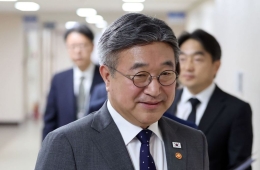
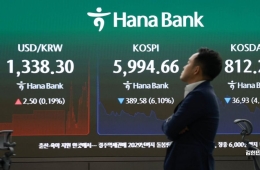
(After the work report on the 4th, Embargo) Sung-Hwan Kim, Minister of Climate Energy and Environment, is giving a preliminary briefing on the second half of 2026 Climate Ministry work report at the Seoul Government Complex Annex in Jongno-gu, Seoul on July 3, 2026. Photo by Jo Yongjun
View original imageSecuring Over 100GW of Renewable Energy Early... Proactive Grid Construction
The government plans to secure more than 100GW of renewable energy early on to meet the anticipated AI-driven electricity demand. For wind power, the supply target remains at 4GW onshore and 3GW offshore by 2030, totaling 7GW, while an additional 30GW of solar power will be secured, beyond the existing targets, to speed up deployment.
To reduce the unit cost of renewable power generation, the current spot market for the Renewable Portfolio Standard (RPS) system will be abolished, and the system will be unified with long-term, fixed-price contracts based on competitive bidding. The expansion of policy finance and attraction of private investment will also proceed in parallel.
The foundation for carbon-free power supply will also be expanded. The government plans to ensure the stable operation of 26 currently active nuclear plants while sequentially completing the construction of Saeul Units 3 and 4, Shin Hanul Units 3 and 4, and small modular reactors (SMRs).
The grid will be constructed ahead of demand. Supply lines for industrial parks in the Honam region will be installed early, and transmission and transformation facilities will be expanded in a timely manner. Battery Energy Storage Systems (BESS) and pumped-storage hydropower will be significantly increased to enhance grid stability. In addition, the government is planning to reform the electricity pricing system to reflect local power supply and demand conditions, and to create a (tentative name) Power Regulatory Agency.

Power Plan Finalized by Year-End… Regional Tariff Differentiation Discussed
Regarding the highly anticipated 12th Basic Plan for Long-term Electricity Supply and Demand, the government announced that it would develop a draft between September and October after engaging the public in discussion and deliberation starting this month. The plan will be finalized in December following reports to the National Assembly and deliberation by the Climate Response Committee. Whether to introduce new nuclear plants and SMRs will also be determined based on public opinion surveys and expert panels.
A differentiated electricity pricing system by region will also be specified. A public hearing will be held in the third week of this month to announce detailed reforms. The plan is to apply industrial electricity rates differently across four regions nationwide, taking into account transmission line usage costs, the degree of local power self-sufficiency, and national balanced development. Minister Kim explained, “We would like to lower rates to the level of China, but that could lead to a deficit for KEPCO. We are designing the system with the aim of ‘break-even,’ considering the gap between metropolitan and non-metropolitan areas but within a range that KEPCO can manage.”
Building a Water Grid… Securing Water for Semiconductors in Full Swing
The water supply system, another key pillar for advanced industries, will undergo a complete overhaul. The government will link the National Basic Water Plan to the power supply plan, and shorten the plan review cycle from five years to two. An integrated water resource management system will be established by linking multi-purpose dams, agricultural dams, and hydropower dams, and water will be flexibly allocated via a ‘water grid’ that operates dams and rivers in an integrated manner.
Alternative water sources, including wastewater reuse, discharge from estuary weirs, and seawater desalination, will be expanded to secure industrial water capacity of 650,000 tons per day for the Honam region and 1.5 million tons per day for the Yongin Semiconductor Cluster. Comprehensive improvements to regional water supply systems, underground water storage dams, and mobile seawater desalination plants are also being actively pursued.
In particular, to secure additional water needed for the construction of the Gwangju semiconductor fab, the government has finalized the ‘raising Dobok Dam’ plan as an alternative to building a new Dobokcheon Dam, which faced strong local opposition and concerns over environmental damage. Minister Kim explained, “By utilizing existing facilities, there are fewer residents to relocate and significantly less impact on the ecosystem.”

Expanding the Circular Economy… Nurturing Green Industries
This year, the government will announce the ‘K-GX (Green Transformation)’ strategy targeting five major high-carbon emitting sectors—steel, petrochemicals, oil refining, cement, and semiconductors—in the third quarter. The target is for electric vehicles to comprise 50% of all new car sales by 2030, alongside advancing the electrification of public and commercial vehicles. Distribution of heat pumps and solar panels will be accelerated, while investments in climate technology, SMRs, next-generation solar cells, and direct-current (DC) power industries will foster green industries as a "second semiconductor" sector.
In the area of the circular economy, the mandatory use ratio of recycled PET materials will be increased to 30% by 2030, and a resource security system will be established to recover and recycle rare earths, cobalt, nickel and other critical minerals from waste electronics and batteries. The government is also discussing the establishment of a (tentative name) Circular Economy Office with the Ministry of the Interior and Safety to oversee these efforts.
Hot Picks Today
 "Expensive, Smelly and Scary"... What's Happened to the "Honeymooners' Paradise" Tourists Have Abandoned?
- Women Who Say "A Husband's Annual Salary of 100 Million Won Is a Given"... Matchmaking CEO: "They Talk About It Like It's Nothing"
- "I Want to Eat Like Koreans..." Foreigners Who Once Opened Ramen Packs Now Keep Gochujang in Their Pantries
- [Exclusive] Wegovy Craze Fuels Illegal Health Supplement Ads... Oversight Falls Short [2026 Parliamentary Audit]
- "They Said Today Was the Cheapest..." "Let's Get Wedding Jewelry!" Why Did the Luxury Brand Crowds Flocked To Cut Prices by 1.08 Million Won?
To respond to climate disasters, AI-based flood management systems and digital twin monitoring systems will be introduced, and management of chemical safety and high-concentration ozone will be reinforced. Minister Kim stated, “With work related to renewable energy, resource circulation, and grid conflict management surging, at least 100 additional staff are needed. We are committed to providing next-generation affordable carbon-free electricity and water in a timely manner, proving Korea’s green transformation and enhancing industrial competitiveness.”
© The Asia Business Daily. All rights reserved. Unauthorized AI training and use prohibited.