Only the Share Price Swings... For 4.61 Million Samsung Electronics Shareholders, All That Matters Is Earnings and the Narrative [This Week's Stock To Watch]
Record-Breaking Earnings, Yet Volatile Share Price
LTA, Dividends, and Cash Flow Provide Downside Support
The stock most widely held by domestic retail investors is, by far, Samsung Electronics. According to Korea Securities Depository, the number of shareholders as of the end of last year was approximately 4.61 million. This means roughly one out of every three stock investors in the country holds the so-called "national stock."
Since last year, Samsung Electronics has seen unprecedented ups and downs that have caused both elation and distress among retail investors. Especially during the past week, shareholders of Samsung Electronics experienced a wild rollercoaster ride. From July 28 to July 30, the stock price dropped for three consecutive days; then, on August 1, it surged by over 20% in a single day. Panic selling followed news of China's advances in domestic semiconductor lithography equipment and SK hynix failing to meet market expectations, but the market skewed in the opposite direction just one day later.
Despite this volatility, there is little dispute over the company's actual earnings. For the second quarter of this year, Samsung Electronics posted preliminary consolidated revenue of 171.4995 trillion won and an operating profit of 89.4924 trillion won. Compared to the same period last year, revenue soared by 130.0% and operating profit skyrocketed by 1,813.8%. Both are all-time quarterly highs, and operating profit surpassed the market consensus of 84.1606 trillion won by more than 6%.
Performance Expectations Jump Sharply Compared to Early Year
![Only the Share Price Swings... For 4.61 Million Samsung Electronics Shareholders, All That Matters Is Earnings and the Narrative [This Week's Stock To Watch]](http://www.asiae.co.kr/news/img_view.htm?img=2026080413532069088_1785819200.jpg)
Analysts' outlooks for Samsung Electronics' earnings have risen sharply over the past year. According to the financial data analysis firm FnGuide, this year's operating profit consensus has grown ninefold from the 39 trillion won range a year ago to around 380 trillion won recently. Korea Investment & Securities forecasts this year's operating profit at 373 trillion won, while Nomura projects 271 billion dollars (about 386.121 trillion won). Whichever estimate you take, performance expectations have now been completely reset compared to the market's projection of around 165 trillion won at the start of the year.
What stands out is that this improvement is not just a one-off cyclical rebound. During its Q2 earnings conference call on July 30, Samsung Electronics specifically addressed the increased share of long-term supply agreements (LTAs). The company outlined the structure of advance payments from memory clients under long-term contracts, as well as plans for treasury stock buybacks for employee compensation—taking a proactive approach to market communication. This contrasts with SK hynix, which, despite delivering record-breaking results, fueled market skepticism by failing to provide a detailed explanation.
"Full-Scale Shareholder Returns Starting 2027"... Rising Dividend Expectations
Another pillar supporting the stock price is dividends. Samsung Electronics has pledged to use 50% of its free cash flow (FCF) generated over three years from 2024 to 2026 for shareholder returns. Mirae Asset Securities projects Samsung Electronics' net profit this year at around 327 trillion won, estimating the expected dividend yield for common shares at 6.7–9.3% and preferred shares at 9.3–13.0%. However, this is partially a result of a declining denominator due to the recent share price drop. Some brokerages peg it at a lower 3–6% range depending on the reference date. Nonetheless, these are still regarded as solid figures.
The period when full-scale shareholder returns will commence is 2027. For the past nine years, Samsung Electronics has assumed an FCF of 60 trillion won every three years and paid a fixed annual dividend of around 9.8 trillion won. However, from 2027, the company’s aggregated three-year FCF is conservatively projected to exceed 800 trillion won, suggesting the scope for a significant increase in base dividends. In addition, with the three-year policy being settled in early next year, there are expectations of special dividends for excess performance. As share prices fall, the projected future dividend yield actually rises, which is why the current market correction is seen as a buying opportunity for long-term investors.
Injun Son, a researcher at Eugene Investment & Securities, said, "Micron Technology in the United States has announced that it will return 100% of excess cash—cash above what’s needed for investment and operations—to shareholders. As memory chipmakers' financial structures rapidly improve, intensified shareholder return policies at competitor firms are expected to spur additional shareholder returns at Samsung Electronics and SK hynix. This will ignite shareholder return competition among memory manufacturers from the second half of the year, potentially boosting stock prices and valuations."
Target Prices Range from 300,000 to 650,000 Won
![Only the Share Price Swings... For 4.61 Million Samsung Electronics Shareholders, All That Matters Is Earnings and the Narrative [This Week's Stock To Watch]](http://www.asiae.co.kr/news/img_view.htm?img=2026080411081468954_1785809294.jpg)
Nevertheless, the divergence in analysts' target prices has never been greater. Before and after the Q2 earnings release, domestic brokerages set targets ranging from a low of 300,000 won to a high of 650,000 won—more than a twofold spread. BNK Securities, which set the lowest target price, cited "the peak of memory demand momentum" as a reason and revised its target from 430,000 won to 300,000 won. The rationale was that, while hyperscalers' AI infrastructure investment is shifting toward efficiency, memory manufacturers are still pursuing large-scale expansions in an optimistic climate—thus raising concerns about oversupply. In contrast, Korea Investment & Securities, viewing the industry structure as fundamentally altered by the increase in long-term supply agreements, raised its target price to 650,000 won. KB Securities also maintained its 600,000-won target, citing sustained AI investment and the prolonged memory supply shortage.
The starkly contrasting outlooks—despite the same set of results—ultimately stem from different views on how long this boom can last. Optimists point to the shift to LTA-centric order structures, as well as growth drivers in high-bandwidth memory (HBM) and foundry operations. Cautious voices, meanwhile, point to one-off costs such as performance bonus reserves and the cyclical nature of the industry.
Ultimately, It's About Earnings and the Narrative
![Only the Share Price Swings... For 4.61 Million Samsung Electronics Shareholders, All That Matters Is Earnings and the Narrative [This Week's Stock To Watch]](http://www.asiae.co.kr/news/img_view.htm?img=2026080411081568955_1785809295.jpg)
Over the near term, the stock price of Samsung Electronics is highly likely to continue fluctuating widely—the market swings of last week prove as much. However, there is little disagreement that the company’s quarterly earnings are hitting all-time highs and that its stable order structure, enabled by long-term contracts, remains fundamentally intact. This is the common ground acknowledged even by securities analysts.
Hot Picks Today
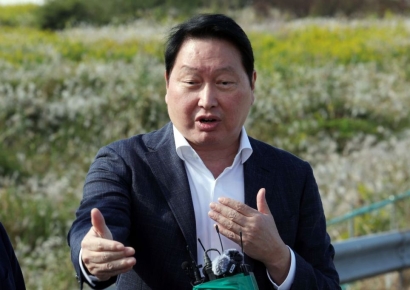 Chey Tae-won's One Remark Sends Stocks Soaring to 'Limit-Up'... This Stock Jumps Despite SK hynix's 3% Drop
- "Only healthy seniors welcome - get sick and leave?"... Senior welfare housing, this eligibility rule is changing
- "Now We're in Our 30s and 40s, and My Husband's the Only One Still Going Strong?" ... Women Tire First While Shopping: What's Happening in Japan?
- "I Thought Only Koreans Were Crazy About It"... This Dish Ranks No. 1 in the World
- "'100% Cat Fur' - It Seemed Unbelievable, but It Was Real... Chinese Shopping Mall Rocked by Shocking Revelation"
Min Sook Chae, a researcher at Korea Investment & Securities, commented, "It is difficult to predict when market concerns will be fully resolved, but the current valuation does not adequately reflect Samsung Electronics’ robust earnings, strong cash generation, and clear shareholder return policy. Instead of focusing on short-term market sentiment, now is the time to pay attention to the company’s mid- to long-term corporate value."
© The Asia Business Daily. All rights reserved. Unauthorized AI training and use prohibited.