After Abolishing the Prosecutors’ Office, SCIA With 2,900 Staff to Launch: “No Gaps in Protecting Citizens’ Rights”
"Protection of Rights and Interests as the Top Priority"
Updates on Organizational Structure, Appointment Decree, and Office Preparations Announced
Prosecutors and Investigators Eligible for Appointment Without Separate Examinations
As part of the government’s reform agenda to abolish the Prosecutors’ Office and separate investigative and prosecutorial functions, the Serious Crime Investigation Agency (SCIA) will be launched this October. The SCIA, which will be responsible for major crimes such as corruption, economic crimes, and drug offenses, is expected to allow the appointment of not only employees of the Prosecutors’ Office but also external personnel. A dedicated department for supplementary investigations upon prosecutors’ requests will also be established.

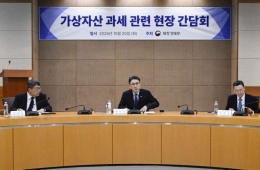
Kim Minjae, Vice Minister of the Ministry of the Interior and Safety and Head of the Preparatory Team for the Serious Crime Investigation Agency. 2026.3.9 Photo by Jo Yongjun
View original imageOn August 4, the Ministry of the Interior and Safety announced the current status of preparations for the SCIA, including its organizational structure, personnel system, and office relocation schedule. Kim Minjae, Vice Minister of the Ministry of the Interior and Safety and head of the SCIA preparatory team, held a briefing at the Government Complex Seoul that day, stating, “After 78 years, the Prosecutors’ Office will disappear into history, and on October 2, the SCIA and the Prosecution Agency will be launched.”
Investigation and supplementary investigation of serious crimes... total personnel of 2,874
According to the organizational plan for the SCIA released by the Ministry of the Interior and Safety, the agency will consist of a main office and six local offices, with a total of 2,874 positions. The main office will be responsible for formulating investigative policy, overseeing and supervising investigations, and implementing policies for the protection of human rights. Each local office will directly investigate serious crime cases that occur within its jurisdiction.
The six local offices will be established based on the jurisdictions of the High Courts, taking into account the convenience of those involved in cases and the seamless connection between investigation, prosecution, and trial procedures.
In particular, the Seoul office, where cases are concentrated, will be reinforced with specialized departments for economic, financial, antitrust, anti-corruption, and drug-related investigations, deploying the largest number of personnel. In addition, joint investigation teams will be established to respond to crimes that directly impact the public, such as voice phishing, financial crime, virtual asset crime, crimes affecting national finances, and drug offenses.
With a recent amendment to the Code of Criminal Procedure allowing the SCIA to conduct supplementary investigations of cases investigated by other agencies, dedicated organizations will be set up. Both the main office and the local offices plan to establish a “Special Investigation Division for Crimes against the Socially Vulnerable” and “investigation teams” respectively, in order to strengthen the protection and rights of victims.
Control mechanisms to prevent the abuse of investigative power and protect human rights will also be introduced. The main office will have an Inspector General, while the local offices will appoint an Investigation Review Officer and a Human Rights Protection Officer to reinforce a system for protecting human rights during the exercise of investigative powers.

A view of the Supreme Prosecutors' Office in Seocho-gu, Seoul. Photo by Yonhap News Agency, September 26, 2025
View original imageSCIA investigators will be appointed as special service officials, and the draft appointment regulations cover standards for recruitment, promotion, evaluation, and disciplinary actions. To prevent investigative and personnel authority from being concentrated in a single body, appointment powers will be distributed by rank among the President, the Minister of the Interior and Safety, and the head of the SCIA.
Currently, prosecutors and prosecutorial investigators serving at the Prosecutors’ Office who wish to transfer may be appointed as SCIA officials without a separate examination. In particular, for prosecutors, a temporary system will operate for approximately seven months (from October 2, 2026 to April 30, 2027), allowing their legal experience and current positions to be considered when assigning them to the equivalent investigator rank.
External professionals such as police officers, lawyers, and certified public accountants may also be appointed as investigators through career-based competitive recruitment. To promote a merit-based personnel system, the government will introduce special promotions and promotion examinations. For those at grade 3 and above (high-level administrators), it will become possible to dismiss personnel through a suitability review process.
Starting August 5, the Ministry of the Interior and Safety will hold briefing sessions for Prosecutors’ Office employees regarding appointments and will accept applications for desired transfers beginning August 7, selecting successful candidates by the end of September.
Selection of private buildings as agency offices..."Preparations proceeding on schedule"
Instead of using the existing Prosecutors’ Office buildings, the SCIA has decided to secure separate facilities. Considering the shortage of suitable public buildings, the government has selected private buildings to house the agency’s offices.
The main office and the Seoul office will be located in the ReneSquare Building in Jung-gu, Seoul, with a lease contract signed on July 30. The local offices have finalized their locations as follows: First World in Gangseo-gu, Busan; Namsan Building in Nam-gu, Daegu; and Hankyung Building in Buk-gu, Gwangju.
At the time of launch, the Daejeon office will use a building located in Sejong City, and for future relocation to the Daejeon area, the agency has applied to relevant ministries to use the vacant site of the former Daejeon Tax Office. The Suwon office will initially operate in a temporary office at the Gyeonggi Credit Guarantee Foundation building, before relocating to its main office in early 2027.
Leasing and construction costs for the main office, Seoul, Busan, Daegu, and Gwangju offices have already been secured with contingency funds, and funds for the Daejeon and Suwon offices are being secured. Essential investigation workspaces will be fully completed to align with the agency’s opening, and the remaining facilities will be constructed in phases until the end of the year.

Organization Chart of the Main Office of the Serious Crime Investigation Agency. Provided by the Ministry of the Interior and Safety
View original imageRecognizing that it will take time to establish an independent criminal justice information system, the SCIA will initially adopt and adapt the Korean National Police Agency’s KICS system for its operations. On the opening day, the agency will first launch core functions focused on case management, while case processing features will be gradually developed and rolled out by year-end.
Vice Minister Kim emphasized, “The establishment of the SCIA is a key milestone in prosecutorial reform, making the separation of investigative and prosecutorial powers a reality. We have meticulously designed the organizational plan and appointment regulations to ensure that the agency is a trusted professional investigative body for the public.”
Hot Picks Today
 "300,000 Won Grant" Shelved at Chuseok to Go to All Residents After All... This City Says It Will Pay Before Lunar New Year
- "Didn't Save This Money to Leave to Our Kids?"... Retired Couples Spend $10,000 on a Single Trip
- Friend Who Went Abroad Goes "Silent"... 617 South Koreans Out of Contact, What's Going On?
- U.S. Gasoline Prices Top Biden-Era Levels in Trump's Second Term Amid Iran War Fallout
- "Stockpile 9 Liters of Bottled Water and Three Days' Worth of Food"... UK on Edge as Nationwide Emergency Preparedness Alert Issued
He continued, “We will secure outstanding investigative personnel and ensure that all necessary preparations—such as office space and information systems—proceed smoothly. We will make certain that there is not a single gap in the protection of citizens’ rights, so that from day one, the SCIA carries out its core responsibilities as a national investigative agency faithfully.”
© The Asia Business Daily. All rights reserved. Unauthorized AI training and use prohibited.