Now Embarrassing 10,000 Target... Securities Firms Quietly Lower KOSPI Forecasts
KOSPI Upper Limit Lowered in Light of Rising Interest Rates
Many Global Players Remain Optimistic

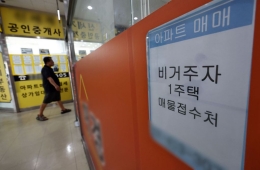
Employees are monitoring the stock market and exchange rates in the dealing room at the Headquarters of Hana Bank in Jung-gu, Seoul, on the 4th, where the KOSPI started rising but then turned to a downward trend. On that day, the KOSPI opened at 6351.38, up 93.93 points (1.50%) from the previous trading day, and the KOSDAQ opened at 748.19, up 10.84 points (1.47%). Photo by Jo Yongjun, August 4, 2026
View original imageWith the recent sharp decline in the KOSPI, securities firms that had forecast the index would reach 10,000 points within the year are now lowering their targets. Rising inflation concerns and higher market interest rates have led to predictions that the stock market could remain range-bound for the time being.
KOSPI Targets Lowered on Rising Interest Rates
According to the financial investment industry on August 5, Daishin Securities lowered its KOSPI target for this year from 11,500 to 9,300 in its market outlook report released on August 3. The revision reflects a downward adjustment in reasonable valuation due to the possibility of a benchmark interest rate hike and the resulting rise in bond yields. Lee Kyung-Min, a researcher at Daishin Securities, explained, "Taking rate increases into account, we have reduced the target price-earnings ratio (PER) for semiconductor stocks from 8 times to 7 times. For non-semiconductor stocks, we also lowered the PER target from 15 times to 11 times, which led to a lower KOSPI target as well."
However, Lee believes that because the KOSPI is currently at an extremely undervalued level, additional declines will be limited, and a stepwise rebound is likely. He emphasized, "Despite improvements in leading indicators such as upward revisions to forward earnings per share (EPS) and a continuing rise in the composite leading indicator, the KOSPI has experienced an excessive decline. Since fundamentals and stock prices have moved in opposite directions, there is ample room for a rebound in share prices—as long as there is no actual deterioration of fundamentals."

Previously, Shinhan Investment Securities also lowered its KOSPI target for the second half of the year from 11,000 to 8,800 on July 30. Noh Dong-Gil, a researcher at Shinhan Investment Securities, stated, "We revised our KOSPI target downward considering rising interest rates and fluctuations in EPS. However, the current 12-month forward PER of the KOSPI stands at 5.1 times, which is only 60% of the reasonable PER of 8.5 times calculated based on interest rates and historical profit margins, indicating a cheap level."
Noh also highlighted that in the past, semiconductor stock prices declined ahead of earnings. He explained, "In the case of Samsung Electronics, after its share price peaked in 2017, forward EPS continued to rise for another eight months. In the 2021 cycle, the share price peak came 17 months before the EPS reached its peak. The assertion that price declines are incorrect because EPS is still rising did not hold in those cases, nor does it hold this time."
For August, Shinhan Investment Securities suggested three possible paths for the KOSPI: 5,700, 6,500–6,600, and 7,200. Noh analyzed, "5,700 is the stress threshold where the 200-day moving average lies, 6,500–6,600 marks a return to the fair value band, and around 7,200 represents the first resistance at the 20-day moving average. The index is expected to move between these levels during the month depending on corporate earnings and market events."

Short-Term Bottom May Reach 5,500, Market Likely to Move Sideways
DB Securities forecasts a short-term KOSPI low of around 5,500, predicting a sideways market for now. DB Securities was among the firms that had seen potential for the KOSPI to rise as high as 11,700 points this year as recently as June. Kang Hyun-Ki, a researcher at DB Securities, commented, "With the recent rise of Chinese AI and semiconductor companies, market narratives have shifted from positive to negative, resulting in deviation from previous trends. Both the previously mentioned positive narrative and the recently discussed negative one have their own validity, so we assess that the stock market will now enter a sideways phase."
While some securities firms are lowering their KOSPI targets, others are keeping theirs unchanged. The global investment bank Morgan Stanley upgraded its investment outlook for Korean stocks to 'Overweight' and maintained its target of 9,000. Morgan Stanley assessed that major domestic semiconductor companies such as Samsung Electronics and SK hynix would support the index from further declines.
Hot Picks Today
 "Sold Early Trusting President Lee, Lost Tens of Millions... Public Outrage Grows over Temporary Easing of Capital Gains Tax Surcharge"
- "Burry From 'The Big Short' Warns of Possible Repeat of 1987 Crash Even as S&P 500 Hits Record High"
- Small Business Owners File First Minimum Wage Cancellation Lawsuit in Nine Years: "We Can't Endure Any Longer"
- Sold Out Immediately After Launch but Lost Principal in Two Months... Will the September Relaunch Succeed Again?
- "It's Haeundae, So What?" "But Not at the Supermarket" -- The Intensifying 'Bikini Debate'
Nomura Securities also left its upper forecast for the KOSPI index at 11,000, as previously suggested in May. Nomura explained, "The recent sharp correction in the KOSPI is more attributable to supply and demand factors—such as foreign selling, reduced room for the National Pension Service to increase its holding of domestic stocks, and the growth of leveraged products—than to any deterioration in corporate fundamentals." The firm also maintained a positive outlook on Korean memory semiconductor companies, including Samsung Electronics and SK hynix.
© The Asia Business Daily. All rights reserved. Unauthorized AI training and use prohibited.