Real Estate Measures: After Tax Tightening, Will Greenbelt and Collective Loan Regulations Be Eased as Incentives? (Comprehensive)
Supply Measures: Will the Government Play the Semi-Industrial Zone and Greenbelt Cards?
Financial Measures: Wider Access to Final Payment Loans, Tighter Restrictions on Jeonse Loans
With the government unveiling a high-intensity tax reform plan that strengthens the Comprehensive Real Estate Tax and Capital Gains Tax, market attention is now shifting to real estate 'supply' and 'financial' measures. There are growing concerns that, unless ground-breaking supply expansion and financial solutions are prepared, the new policy might only deepen market mistrust. As President Lee Jaemyung, immediately after returning from his overseas trip on August 3, emphasized at a closed-door 'Real Estate and Stock Market Review Meeting' held at the Blue House that "we must secure as much supply as possible so that a large number of homes can be supplied as quickly as possible," measures related to supply and housing loans are expected to take shape soon.
Will the Government Tap Semi-Industrial Zones and Greenbelts?
Additional supply measures discussed recently at national debates and through statements by government officials include: the utilization of semi-industrial zones and development restriction areas (Greenbelt), revitalizing urban reconstruction and redevelopment projects, expanding the supply of non-apartment housing, and shortening the schedule for the supply of public land such as the third phase new towns.
Utilizing semi-industrial zones is emerging as a strong option for expanding urban housing supply. This was first raised as a key alternative by Kim Yongbeom, the policy chief at the Blue House, at a Kwanhun Forum held at the end of June.
According to the Seoul Metropolitan Government, semi-industrial zones in Seoul cover a total area of 19.97 square kilometers. Of this, 13.34 square kilometers, or two-thirds, are concentrated in three districts in the southwestern part of the city: Yeongdeungpo, Guro, and Geumcheon. The main advantage of semi-industrial zones is that they are centrally located with well-developed subway networks, so there is no need for large-scale infrastructure additions. These areas have become slum-like as industrial functions have declined, further increasing development pressure.
The 'Greenbelt initiative' has gained attention as a new alternative since Minister of Land, Infrastructure and Transport Kim Yundeok mentioned at the 'National Town Hall on Real Estate Policy' on July 27, presided over by Prime Minister Han Seongsook, that there is now a strong desire to build homes even if it means lifting Greenbelt protections.
The total area designated as Greenbelt within Seoul is currently 149 square kilometers—fifty times the size of Yeouido (2.9 square kilometers). Although the actual area that can be utilized is much lower since most Greenbelt land is hilly woodland, there are still many highly desirable and usable locations in areas such as southeastern Seoul.
The Ministry of Land, Infrastructure and Transport is also considering converting vacant retail and office spaces into residential officetels to be used as rental units for young people and the elderly. Plans to change the purpose of knowledge industry centers in the greater Seoul area into officetels are also reportedly on the table.
The plan is also expected to include the expansion of villa and officetel supply to help resolve the shortage of monthly-rent homes, which has spread from apartments to other housing types such as townhouses, multiplex homes, and multi-family houses.
It remains uncertain whether measures strongly requested by Seoul City—such as revitalizing urban reconstruction and redevelopment—will be included in the final plan. This uncertainty stems from President Lee’s skepticism about increasing home supply through redevelopment at the national debate, as well as policy chief Kim’s comments that urban redevelopment projects are insufficient to quickly increase supply in the short term.

Relieving Final Loan Disbursements, Tightening Jeonse Loans
The government will also revise regulations on real estate finance along with the housing supply measures. The financial package to be announced this month will include normalization of collective loans for genuine homebuyers, such as final payment loans and relocation loans—where supply disruptions have occurred due to strict aggregate household lending caps—while further tightening jeonse loan regulations for management purposes.
The government is currently examining real loan demand to ensure that final payment loans for projects slated for move-in during the second half of this year can be supplied without delay. Authorities are carefully calculating the net increase in household loans. As the financial authorities set this year’s household loan growth target at 1.5% year-on-year, banks’ net lending quotas are quickly being depleted, resulting in many genuine homebuyers unable to access final payment loans. This measure aims to address that issue, and relocation loans are also likely to be relaxed. If new homes, instead of existing homes, are accepted as collateral, loan limits could be increased even under the current loan-to-value (LTV) ratio regulations.
Support for loans targeting genuine homebuyers such as young people, newlyweds, and low-income citizens is also under consideration. Excluding loans for these groups from the aggregate lending cap is being actively discussed. However, raising the LTV ratio has been excluded from the policy review.
On the other hand, jeonse loan regulations will be further tightened. The government views jeonse loans as one factor contributing to rising housing prices and is reviewing a plan to further lower the guarantee coverage ratio. Last year, under the "June 27 Measures," the guarantee coverage ratio in the greater Seoul area was reduced from 90% to 80%, and further reductions are now being discussed. If the guarantee coverage ratio decreases, banks will be exposed to greater losses, which will likely result in lower loan limits.
Hot Picks Today
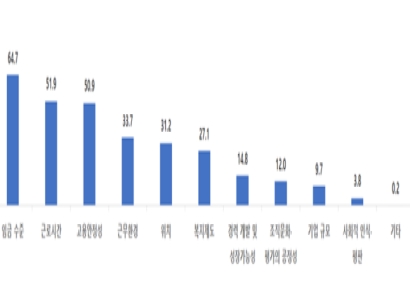 "Please Pay Me at Least 3 Million Won a Month": More Than Half of Young People Today Prioritize "Working Conditions" Over Company Size
- Selling Like Crazy Every Year... 30-Year-Old Hetbahn Takes on a New Challenge: Tastes Better Than "Mom's Home Cooking" [On-Site Report]
- Ran 18 km With 9-Year-Old Tied to Him at the Waist... "Man Banned From Competing for 3 Years"
- "Hey, Lady, Teach Your Kids to Behave!" ... 300,000 Won in Cash and a Bodily Injury Claim Demanded Over Child's Door Ding
- Beachgoer Finds 'Plastic' That Turns Out to Be Perfume Ingredient Worth More Than Twice as Much as Gold
It is also widely expected that new jeonse loan regulations for non-resident single-home owners will be implemented. Last year's "September 7 Measures" reduced the jeonse loan limit for single-home owners in regulated areas from 300 million won to 200 million won, and now lowering the guarantee coverage ratio further or restricting jeonse loans themselves are likely options.
© The Asia Business Daily. All rights reserved. Unauthorized AI training and use prohibited.





![[Market ING] KOSPI Seeks Rebound in Superweek Packed with Corporate Earnings and FOMC](https://cwcontent.asiae.co.kr/asiaresize/307/2026102514484873155_1792907327.jpg)