"Where Are the 'Less Smart Homes'?... Soaring Property Tax Hits Beyond Gangnam to Yeongdeungpo and Yangcheon"
KRW 3.27–4.51 Billion Price Range:
Yeongdeungpo Has Most Expensive Homes After Gangnam's 3 Districts and Yongsan
Property Tax for 114m² Maporaemian Prugio (Non-Occupant)
Rises from KRW 8.11 Million to KRW 11.68 Million
Wangsimni Ten’s
As the government implements a stringent tax reform raising the comprehensive real estate tax rates for high-priced homes, increased tax burdens are expected not only in Seoul’s three Gangnam districts but also in other high-value Han River Belt areas outside Gangnam, such as Seongdong-gu, as well as Yeongdeungpo-gu and Yangcheon-gu, which are home to numerous luxury redevelopment projects. For example, in Mapo-gu, a non-resident owning a 114-square-meter unit in Mapo Raemian Prugio—recently trading at around 3 billion won—would see next year’s property tax bill climb from the current 8.11 million won to 11.68 million won even if the government-assessed value rises by only half of this year’s increase.

At the same time, there is growing expectation that demand for the so-called "smart single property" will shift to homes priced below 3 billion won. Since the threshold for substantial tax increases begins in the mid-3 billion won range, speculative buyers seeking tax savings may target multiple homes in the 2 billion won range, creating a "leveling effect" as demand concentrates on these "less smart" homes.

According to Real Estate 114 as of last month, excluding the three Gangnam districts and Yongsan-gu, the local government area with the highest share of homes valued between 3.27 billion and 4.51 billion won is Yeongdeungpo-gu, where 3,820 homes, or 5.7% of the district’s total, fall in this bracket. This is largely due to the concentration of high-value redevelopment complexes around Yeouido. Following closely are Yangcheon-gu (4.2% or 3,066 units) with its 14 Mok-dong New Town complexes, Seongdong-gu (1.5% or 848 units) and Gwangjin-gu (1.5% or 451 units), both in the Han River Belt. In both Yeongdeungpo-gu and Yangcheon-gu, prices are climbing, particularly for complexes preparing to establish cooperative associations. Notable examples include Mok-dong complexes, as well as Jinju, Sujeong, and Sambu Apartments in Yeouido.
In this price range, the property tax burden increases noticeably, regardless of whether the residence is owner-occupied or held for investment. According to the government’s projections based on the reformed comprehensive real estate tax, a single home owner actually residing in a 3.5 billion won apartment would pay about 200,000 won more than under the current system. For non-residents or those simply holding the home, the tax jumps from 1.918 million won to 8.01 million won, a hefty increase of 6.09 million won.
This expansion of tax burdens to these districts results from the government’s reform focusing on property values rather than the number of homes owned. The government has lowered the taxable base where increased tax rates are felt, significantly raising the tax for ultra-luxury properties. Under the revised plan, the tax rate notably rises for homes exceeding a taxable base of 600 million won. On a government-assessed basis, this equates to approximately 2.2 billion won, or about 3.27 billion won in market value. However, with the basic deduction for owner-occupied single home owners raised from 1.2 billion won to 1.4 billion won, those with homes valued around or below 3.3 billion won are projected to see their tax liability remain about the same or decrease slightly compared to the present system.
Ham Young-jin, Head of Real Estate Research at Woori Bank's WM Sales Strategy Department, noted, "For homes in the 3 billion won range, the tax rate will increase by 0.3 percentage points, so the increased property tax burden will not be as pronounced as for homes in the 1.2–2.5 billion won taxable base range. However, to alleviate the tax burden, demand may shift toward converting non-residential homes in areas where such homes are concentrated into owner-occupied properties."
The expectation that property taxes will rise sharply for mid-high-priced homes in non-Gangnam Han River Belt districts such as Yongsan-gu, Seongdong-gu, and Gwangjin-gu is leading the market to anticipate a surge in buyers looking for properties under the 3 billion won threshold to optimize for lower taxes.
According to the reform plan, the property tax burden for homes in the 2 billion won range will actually decrease compared to the current regime, especially for owner-occupied single home owners. For example, if the government-assessed value of an 84-square-meter unit in Wangsimni Ten's Hill in Seongdong-gu—currently trading slightly above 2 billion won—increases from this year’s 1.411 billion won to about 1.549 billion won next year, an owner-occupier would pay less property tax than under the current system. Assuming no additional deductions for age or holding period, under the current system the tax bill would be 3.481675 million won (a 22% increase from the previous year), but under the reformed plan, it would be just 3.08 million won (a 4.5% increase from the previous year).
In contrast, for a 114-square-meter unit in Mapo Raemian Prugio in Mapo-gu, currently trading around 3 billion won, even an increase of only half this year’s government-assessed value would result in a higher tax burden. If the assessed value rises to 2.376 billion won, the property tax for an owner-occupied single home owner would be 8.19 million won, up slightly from the current 8.11 million won. However, for non-residents, as the basic deduction is cut to 900 million won, the tax bill would rise to as much as 11.68 million won.
Experts believe that with the lowered threshold for higher tax rates, psychological resistance to the revised tax regime will drive buyers to look for smart single properties at lower price points—specifically, homes priced below 600 million won in taxable base, or under 3.27 billion won in market value. Nam Hyuk-woo, Senior Expert in Real Estate at Woori Bank, explained, “A psychological resistance level may form in regions densely populated with homes subject to the higher tax rate. As a result, homes under the 600 million won taxable base in the Han River Belt could emerge as desirable options for tax savings, concentrating demand among those seeking to switch properties."

This simulation data was commissioned by the publication from Woobyoungtak, Senior Specialist at Shinhan Premier Pathfinder.
View original imageBy district, there is a high likelihood that investment demand will concentrate in Gangdong-gu, Gwangjin-gu, Dongjak-gu, and Yeongdeungpo-gu. According to Real Estate 114, these districts have a large number of homes valued between 1.74 and 2.03 billion won in market value, which in taxable base terms is under 300 million won. In Gangdong-gu, homes in this price bracket account for 21.3% of the district’s housing stock; in Gwangjin-gu and Dongjak-gu, the shares are 16.2% and 15.3%, respectively.
Hot Picks Today
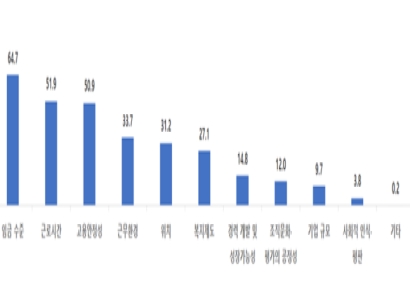 "Please Pay Me at Least 3 Million Won a Month": More Than Half of Young People Today Prioritize "Working Conditions" Over Company Size
- Selling Like Crazy Every Year... 30-Year-Old Hetbahn Takes on a New Challenge: Tastes Better Than "Mom's Home Cooking" [On-Site Report]
- I Thought Only 'Old Guys' Ate It... Young People Are Hooked on This 'Unusual Food' at Risk of Disappearing? [Delicious Stories]
- "Hey, Lady, Teach Your Kids to Behave!" ... 300,000 Won in Cash and a Bodily Injury Claim Demanded Over Child's Door Ding
- Beachgoer Finds 'Plastic' That Turns Out to Be Perfume Ingredient Worth More Than Twice as Much as Gold
As demand for smart single properties under 2 billion won spreads, there are concerns this could drive up the prices of mid- and lower-priced apartments. Ham noted, “Homes in the 2 billion won range are located in areas where steady demand exists due to rental shortages and short-term supply constraints. However, strict lending regulations have made funding difficult, so in these regions, the tax reform may result in prices remaining firm or experiencing a slight upward trend."
© The Asia Business Daily. All rights reserved. Unauthorized AI training and use prohibited.