Enforcement Decree of Special Semiconductor Act Passes Cabinet... National Support System Launched in Earnest
Special Presidential Committee Established
Priority Consideration for Non-Metropolitan Regions Adopted
Expanded State Support for Infrastructure and Specific System for Skilled Talent Development

With the government finalizing the enforcement decree for the special law to strengthen the competitiveness of the semiconductor industry, state support for semiconductor cluster infrastructure and the systematic development of skilled personnel will be launched in earnest.
The Ministry of Trade, Industry and Energy announced on the 4th that the Cabinet had approved the "Enforcement Decree of the Special Act on Strengthening and Supporting the Competitiveness of the Semiconductor Industry." This enforcement decree details matters delegated by the Special Act on Semiconductors enacted in February, and will come into effect on August 11, 2026.
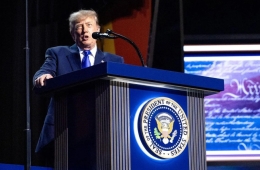
The enforcement decree first sets out the composition and procedures for the 'Special Committee on Strengthening the Competitiveness of the Semiconductor Industry,' which oversees mid- to long-term policies for the semiconductor sector. This committee, chaired by the President, includes the heads of ministries such as the Ministry of Trade, Industry and Energy and other relevant agencies, as well as experts from industry, academia, and research institutes, who together deliberate on basic and implementation plans and other key policies.
The enforcement decree also finalized the principle of prioritizing support for non-metropolitan regions, which was a point of contention during the legislative process. It specifies that "areas outside the Seoul metropolitan area must be considered first" when designating semiconductor clusters. The Ministry of Trade, Industry and Energy’s original legislative notice used the expression "preferential treatment for regions outside the Seoul metropolitan area," but after legal review, the wording was moderated to "given priority consideration." The government explained that this adjustment was to clarify the wording, and that the intent of the legislation remains the same.
The procedures for cluster designation have also been clarified. To apply for cluster designation, an operator must submit a development plan including the core objectives, direction for growth, name, location, area, a current status of the regional semiconductor industry and infrastructure, and plans to foster talent and establish research capabilities. The government will prioritize non-metropolitan regions to support the creation of local semiconductor ecosystems and to promote balanced national development.
Support for essential infrastructure required for cluster creation will also be expanded. The central and local governments can cover between 50% and 100% of the costs of establishing and operating industrial infrastructure. Furthermore, facilities that contribute to redundancy, supply chain stability, or industrial safety can be eligible for full cost coverage. This is intended to reduce the infrastructure burden on companies and ensure a stable production base.
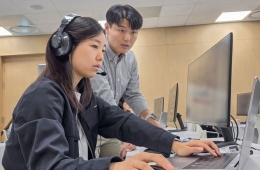
Support for workforce development will also be strengthened. The government will give priority to employment-matching and retraining programs for non-metropolitan semiconductor firms and regional specialists, and has also set standards and procedures for designating specialized training institutions for semiconductors. These measures are aimed at building a talent supply system that meets the needs of industry.
Additionally, the enforcement decree covers procedures for establishing basic and implementation plans, the scope of semiconductor industry statistics, the creation and operation of the Special Account for Strengthening Semiconductor Industry Competitiveness, as well as the delegation of work and other detailed matters.
Hot Picks Today
 Selling Like Crazy Every Year... 30-Year-Old Hetbahn Takes on a New Challenge: Tastes Better Than "Mom's Home Cooking" [On-Site Report]
- "Please Pay Me at Least 3 Million Won a Month": More Than Half of Young People Today Prioritize "Working Conditions" Over Company Size
- A 12-Year-Old Girl Went to the Hospital After Her Blood Pressure Hit 225 and Was Stunned: "What Is This Coral Reef-Like Thing in Her Aorta?"
- "Hey, Lady, Teach Your Kids to Behave!" ... 300,000 Won in Cash and a Bodily Injury Claim Demanded Over Child's Door Ding
- Beachgoer Finds 'Plastic' That Turns Out to Be Perfume Ingredient Worth More Than Twice as Much as Gold
Kim Jeongkwan, Minister of Trade, Industry and Energy, said, "Now that we have established the legal foundation for a national support system for the semiconductor industry, we will work closely with relevant ministries to swiftly carry out the key policy tasks stipulated by the law."
© The Asia Business Daily. All rights reserved. Unauthorized AI training and use prohibited.