"South Korean Stock Market Faces 'Uninvestable' Warning Amid Extreme Volatility, Says US Columnist"
"Time to Ask Whether Investors Are Being Protected"
"Even With an Ongoing AI Boom, the KOSPI Could Be Shunned"
There have been warnings coming from the United States regarding the recent extreme volatility and repeated sharp declines in Korea’s domestic stock market. Experts have pointed out that unless this volatility is reduced to reasonable levels, the market risks becoming "uninvestable." There are even predictions that Korea's market could begin to resemble the Chinese stock market, which once lost investor confidence and underperformed as a result of clumsy government intervention.
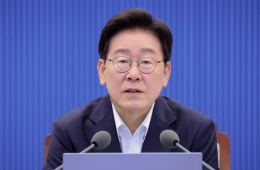
On August 4 (local time), Bloomberg columnist Shuli Ren published a column titled, "Korea Can Also Become Uninvestable."
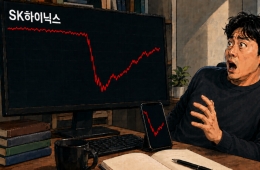
Ren described Korea this year as "the world's hottest and most volatile stock market," citing last month's example where the KOSPI plummeted 40% in just 27 trading sessions. According to Ren, this decline matched the scale of the 2015 crash in China's stock market.

An employee is working in the dealing room of Hana Bank in Jung-gu, Seoul, on the 3rd, as the KOSPI, which saw a historic surge on the previous trading day, opened down more than 3%. Photo by Yonhap News
View original imageShe pointed out that Samsung Electronics and SK hynix—which together account for more than half of the KOSPI market capitalization—are key beneficiaries of the current artificial intelligence (AI) boom, and the KOSPI’s 12-month forward price-to-earnings ratio (PER) stands at just 5.5 times, its lowest in ten years. Such factors, she argued, could highlight undervalued value stocks to institutional investors.
However, Ren emphasized that she does "not agree with such simplistic arguments." She argued that the recent severe sell-off may have actually left investors with psychological trauma.
She identified KOSPI’s volatility as its biggest problem. Extreme volatility deters foreign and institutional investors, who seek stable assets. Ren cited the introduction of single-stock leveraged exchange-traded funds (ETFs) in May as a key cause of this volatility, warning that "unless these products are discontinued, their side effects will persist."
She regarded individual investors—so-called "ant investors"—as having suffered the most from the premature introduction of such ETFs. These investors, she noted, entered the market expecting the government to address the chronic "Korea discount" (the undervaluation of Korean equities), but the recent plunge forced them to shoulder massive losses.
Ren also warned that if these mounting problems are not resolved, the Korean stock market could end up as another failed case like China, rather than riding the wave of the AI boom. The column stated, "In recent years, global asset managers have labeled China as uninvestable because of policy failures and disregard for investors," and observed that "similar concerns are being raised about Korea."
Hot Picks Today
![[Test Drive] The Sealion 7 Transformed by a 2 Million Won Upgrade: "Base Model Buyers Might Feel Shortchanged"](https://cwcontent.asiae.co.kr/asiaresize/93/2026080417033869589_1785830618.jpg) [Test Drive] The Sealion 7 Transformed by a 2 Million Won Upgrade: "Base Model Buyers Might Feel Shortchanged"
[Test Drive] The Sealion 7 Transformed by a 2 Million Won Upgrade: "Base Model Buyers Might Feel Shortchanged"
- 'Single-Stock Leveraged ETF Blow' Crippled KOSDAQ in July... Hopes Rise for a Turnaround in August with 11.38% Surge [Weekend Money]
- Chinese Buyers Retreat from Seoul’s Real Estate Market? Foreign Purchases Plummet by 2,000 [Real Estate AtoZ]
- "If We Don't Get Married, Let's Live Together"... Gen Z Chooses 'Co-Buying Homes with Friends' Over Romantic Partners [Gen Z Around the World]
- Kim Seontae Appears Gaunt After Leaving 'Don Seontae'... 3,000 Thumbs Up for Chungju Mayor's "Come Back" Offer
She concluded by saying, "It is time for the Korean government to reflect on whether it knows what it is doing, and whether novice investors are being properly protected." She added, "While the global AI industry can still be confidently expected to thrive, it is also possible for investors to steer clear of the KOSPI."
© The Asia Business Daily. All rights reserved. Unauthorized AI training and use prohibited.


!["Even a 500 Million Won Jump Is Fine, Self-Residence Buyers Flock to Billion-Won Units"...High Winning Bids Continue for Mid- and Low-Priced Reconstruction Complexes [Real Estate AtoZ]](https://cwcontent.asiae.co.kr/asiaresize/307/2026042709001641074_1777248016.jpg)