Cuba Faces Fourth Nationwide Blackout in a Month Amid U.S. Sanctions
In Cuba, there have been as many as four nationwide blackouts over the past month, effectively resulting in the collapse of the national power grid. The main causes are cited as the U.S. oil blockade and the country's aging power infrastructure. In particular, U.S. sanctions have significantly reduced fuel supplies, and as foreign currency becomes harder to secure, Cuba's ability to repair its power grid has also diminished, according to analysts.

On August 3 (local time), the Cuban Ministry of Energy and Mines announced on social media platform X (formerly Twitter) that after the national power grid was completely paralyzed at 10:43 p.m. the previous day, it began procedures to restart five generators at three thermal power plants. The authorities did not disclose the cause of the blackout.
However, on the same day, the power grid collapsed again during recovery efforts. Lázaro Manuel Alonso, chief of reporting at Cuba's state broadcaster, stated on social media that "despite progress in restoration efforts today, vibrations in the power system led to another collapse of the power grid."
This latest blackout marks the sixth nationwide outage in Cuba this year. It is also the fourth occurrence in less than a month, with previous blackouts on the 6th, 11th, and 14th of last month.
One of the key reasons behind the repeated paralysis of Cuba's power grid is the U.S. oil blockade. The United States is currently increasing economic pressure in an effort to end 67 years of communist rule in Cuba. Blocking large-scale fuel supplies to Cuba is at the core of this strategy.
Earlier this January, President Trump ordered the capture of Nicolás Maduro, President of Venezuela and Cuba's closest ally, and cut off oil supplies to Cuba. He also warned other countries supplying oil to Cuba that they would face punitive tariffs. Since then, President Trump and Secretary of State Marco Rubio have announced substantial expansion of sanctions, pledging to end Cuba's one-party rule.
In response, Cuba presented a pro-market economic reform plan this June, but failed to change the U.S. stance. Cuban President Miguel Díaz-Canel and Cuban authorities maintain that the current political system is not open for discussion or negotiation.
Hot Picks Today
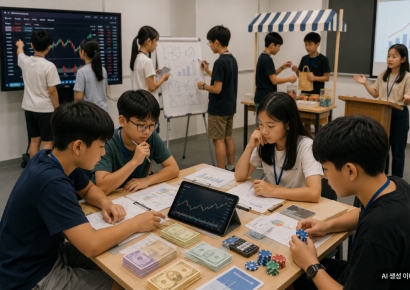 "Money Matters More Than Studying": 2.7 Million Won Camps Fully Booked as Chinese Parents Raise 'Little Buffetts'
- "Lifetime Democratic Supporters Turn Away Amid Stock Crash... Foreign Media: 'Political Burden for President Lee'"
- Jang: "Real Estate Tax Reform Is a Punitive Tax on Homeownership"... Han: "Lee's Refusal Opens the Gates of Hell for the Public"
- "Should You Buy Hynix Tomorrow?"... What Is the 'Rumor About Why Chey Tae-won Said to Buy the Stock'?
- "Thanks to Consumers Turning Away, Twosome Place Enjoys a Boost as Customers Flock Away from Starbucks"
In addition to economic sanctions, the United States is increasing legal and diplomatic pressure on Cuba. This May, the U.S. Department of Justice indicted former Cuban Council of State President Raúl Castro for murder, in connection with the 1996 shooting down of two civilian aircraft. Last month, the State Department released a report claiming that the Cuban government had promoted anti-American activities inside and outside the United States over several decades.
© The Asia Business Daily. All rights reserved. Unauthorized AI training and use prohibited.