U.S. Defends Yen for First Time in 28 Years...Protecting the Treasury Market
U.S. Treasury Yields Set to Rise if Japan Sells Off Holdings
Selling Euros Instead of Dollars to Buy Yen
Shielding Markets from Yen Carry Trade Unwinding
There is analysis suggesting that the United States’ joint intervention with Japan to defend the yen was a measure to prevent additional increases in U.S. long-term interest rates triggered by Japan's potential sale of U.S. Treasury bonds. The possibility that the sharp drop in the yen and the unwinding of yen carry trades could lead to instability in global financial markets is also cited as a reason behind the joint action.

According to foreign media outlets such as Bloomberg and Axios on August 3 (local time), the U.S. and Japanese governments jointly purchased yen in the global foreign exchange market at the end of last month. This was the first time in 28 years, since the height of the Asian financial crisis in 1998, that the United States intervened in the market together with Japan to boost the value of the yen.
The intervention took place after the yen fell to nearly 164 yen per dollar, its lowest level since 1986. After the joint intervention by the U.S. and Japan, the yen rebounded to around 156 yen per dollar. Previously, Japan had spent about 70 billion dollars of its foreign exchange reserves buying yen in April and May, but the rebound effect proved short-lived.
U.S. Treasury Secretary Scott Bessent wrote on X (formerly Twitter), "Friday's joint action in the foreign exchange market was a response to disorderly movements in the yen," adding, "We will not hesitate to participate in further joint interventions if necessary."
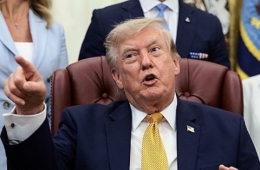
U.S. President Donald Trump also confirmed that Japan had requested assistance. "Japan wanted a bit of help, and we always help Japan," he said.
Preventing U.S. Treasury Sell-off...Buying Yen with Euro
On the surface, this move appears to be aimed at supporting the allied nation of Japan, but in the market, most believe that the United States intervened to defend its own Treasury bond market. Japan is the world's largest foreign holder of U.S. Treasuries. If the Japanese government were to sell a large volume of U.S. Treasuries to secure dollars needed to buy yen, Treasury prices would fall, causing yields to rise.
U.S. long-term Treasury yields are already at elevated levels. The yield on the 30-year Treasury bond recently topped 5.2 percent, the highest since 2007. This is due to increased demand for funds stemming from large fiscal deficits and investments in artificial intelligence (AI) infrastructure, as well as persistent uncertainty surrounding the U.S. Federal Reserve's monetary policy.
The Wall Street Journal (WSJ) analyzed that if Japan sells Treasuries to defend the yen, it could add further upward pressure on already rising U.S. Treasury and market interest rates, fueled by fiscal concerns and policy uncertainty at the Federal Reserve. Axios pointed out that as investors demand higher returns to offset America's ballooning fiscal deficit, the U.S. taxpayer's interest burden could surge.

New York Federal Reserve Bank building located on Wall Street, New York. New York (USA) Photo by Yoonjoo Hwang
View original imageThe method chosen by the United States and Japan in this intervention also reveals the intention to alleviate selling pressure on U.S. Treasuries. The New York Federal Reserve Bank is said to have purchased yen by selling euros on behalf of the U.S. Treasury. Instead of selling large amounts of dollars to buy yen, the United States boosted the yen’s value by intervening in the yen-euro exchange rate.
Japan now has access to dollars by leveraging the Federal Reserve's Foreign and International Monetary Authorities (FIMA) Repo Facility, using U.S. Treasuries as collateral rather than selling them outright. Japanese Finance Minister Satsuki Katayama stated that, when raising funds for future market interventions, Japan would use the FIMA Repo Facility rather than selling Treasuries. Secretary Bessent also indicated he would urge the Fed to expand the scale of this facility.
In effect, the United States boosted the yen by directly buying it and providing Japan a channel for collateralized Treasury loans, thereby shielding the U.S. Treasury market from shock while supporting the yen’s value.
Concerns over Yen Carry Trade Unwinding and Financial Instability
An official at the U.S. Treasury explained that this action was intended to respond to the speed and disorderliness of the yen's depreciation and to prevent uncertainty from spreading to other markets.
The risk that a sharp decline in the yen could trigger instability in global financial markets is also a key reason behind U.S. intervention. Due to Japan’s low interest rates, the yen is widely used as a funding currency in global markets. Investors have utilized "yen carry trades"—borrowing yen at low rates to invest in higher-yielding assets overseas, such as in the United States.
If the yen moves violently or the Bank of Japan raises rates rapidly, investors may unwind their carry trades all at once. In this process, the mass sell-off of global assets—including U.S. stocks and bonds—could sharply increase volatility in financial markets.
Paul Kavey, CEO of East Asia Icon, said, "The United States was likely concerned that a rapid sell-off in the yen could undermine global financial stability."
However, whether joint intervention can fundamentally reverse the trend of yen weakness remains uncertain. While foreign exchange market intervention can move exchange rates sharply in the short term, its effects rarely last unless structural factors such as the U.S.-Japan interest rate gap and Japan’s fiscal problems are addressed.
Hot Picks Today
![The Return of the “Solid One Home”: Non-Resident and Over 4 Billion Won Super-Luxury Assets Face Heavier Tax Burden [2026 Tax Reform]](https://cwcontent.asiae.co.kr/asiaresize/93/2021053012220956323_1622344928.jpg) The Return of the “Solid One Home”: Non-Resident and Over 4 Billion Won Super-Luxury Assets Face Heavier Tax Burden [2026 Tax Reform]
The Return of the “Solid One Home”: Non-Resident and Over 4 Billion Won Super-Luxury Assets Face Heavier Tax Burden [2026 Tax Reform]
- [Weather] "Severe Heatwave Warning" Issued for Seoul...How High Will Temperatures Rise?
- Palantir Q2 Revenue Surges 93%... Shares Jump 11% After Hours
- "Who Shows Up Like That to a Wedding?" Outrage Grows in the US Over Fashion Revealing Underwear
- "Why Diapers Among Adults?" Cooling Goods Boom Amid Heat Wave Hits Japan
Nigel Green, CEO of deVere Group, analyzed, "The market sees this as a currency issue, but it is actually much bigger than that. The joint intervention by the world’s two largest economies shows that stress is building beneath the surface of the global financial system and it is not just a simple exchange rate issue."
© The Asia Business Daily. All rights reserved. Unauthorized AI training and use prohibited.